
 Search Articles


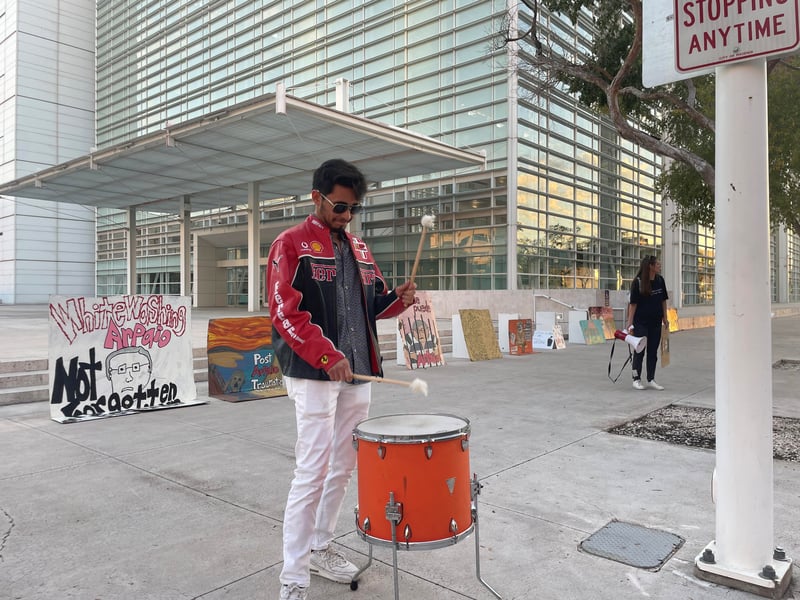
PHOENIX (CN) — A federal judge says he may force Maricopa County to justify public claims that it has spent “hundreds of millions of dollars” on complying with a 14-year-old court order to end racial profiling.
When an independent audit found that the county inflated compliance costs by more than $160 million, U.S. District Judge G. Murray Snow said it would be up to the county to justify the figures. Since then, county supervisors Thomas Galvin, Kate Brophy McGee and Debbie Lesko have continued to rely on the inflated numbers in public statements, frustrating Snow.
“I’ve got Mr. Galvin appearing in a video saying that the county has spent hundreds of millions of dollars on this case,” Snow said in a Friday afternoon hearing. “If you don’t want to justify your costs, I’m not gonna make you justify your costs. But, I’m reluctant that the county can use cost orders both as a sword and as a shield and make statements to the public that may in fact be entirely inaccurate.”
The county never filed a motion clarifying whether it plans to conduct its own audit and missed a deadline to respond to Snow’s order requiring all parties to submit proposed standards for attributing and prorating costs.
Snow didn’t require a justification because neither the original 2007 lawsuit against then-Sheriff Joe Arpaio nor his permanent injunctions mentioned compliance costs. In an October hearing, he added that requiring the county to defend its numbers—including retaining expert witnesses—would only increase costs and detract from the case’s core purpose.
“We took that to heart,” said John Masterson, defense attorney for Sheriff Jerry Sheridan.
Snow laughed.
“Then quit making what may be misstatements in the press,” he shot back.
Maricopa County defense attorney Dominic Draye, new to the nearly 19-year-old case, suggested that telling the supervisors what they can and cannot say would constitute prior restraint.
Snow, visibly irritated by the whole matter, the new attorney has missed countless public meetings intended to update the community on the sheriff’s compliance with court orders, devolving into angry debates over costs based on information that may not be accurate.
“I have a right to require them to justify that information,” the George W. Bush appointee said.
Snow said he will schedule oral arguments in three weeks to determine whether to require the county to break down the $226 million it says it has spent since 2014 complying with the monitor.
Comprising 15 former police chiefs and captains, the monitor reports on the sheriff’s efforts to eliminate indicators of bias in annual traffic stop reports and to address a backlog of civil rights abuse investigations.
To rid itself of the monitor, it must be in compliance with strict guidelines for three years consecutively.
Some progress has been made: traffic-stop reports are cleaner, and the backlog has dropped from 2,000 cases to fewer than 700. But after more than a decade, community members are frustrated by the pace of change. County officials counter that perfection is unrealistic, saying the department has done what it can and deserves credit for its progress.
In December, the county filed a motion for relief from judgment, hoping Snow would agree.
“MCSO has reformed its policies, improved its workforce, and implemented mechanisms to assure that racial profiling never occurs,” the county claims in its motion, filed December 17. This litigation has been a success, and the time has come to allow MCSO to stand on its own two feet, freed of oversight—but always accountable if it violates the law in the future.”
The ACLU, representing the plaintiff class, says progress isn’t enough.
“The county’s effort to end reforms now is like a doctor choosing to end treatment when a patient’s cancer is only partially cured,” Jenn Rolnick Borchetta, deputy director of the ACLU’s Criminal Law Reform Project, said in a press release. “The people of Maricopa County are entitled to complete reform and protection against a return of the Arpaio days, and the county has not yet delivered.”
Sheriff Sheridan joined the county’s motion, though Snow said it makes no difference, as he considers them one in the same for legal purposes. Consequently, Snow ordered the two parties to select a single attorney to represent both of them, rather than make identical arguments in court.
Though it joined the case in 2015 as an intervenor on the plaintiffs’ side, the Department of Justice indicated that it intends to support the defendants’ motion for relief.
Snow said he’ll schedule oral arguments on that motion in at least sixty days, giving the DOJ a month to file a motion in support and the plaintiffs an additional 30 days to respond to it.
 Follow @JournalistJoeAZ
Subscribe to our free newsletters
Our weekly newsletter Closing Arguments offers the latest about ongoing trials, major litigation and rulings in courthouses around the U.S. and the world, while the monthly Under the Lights dishes the legal dirt from Hollywood, sports, Big Tech and the arts.