
 Search Articles


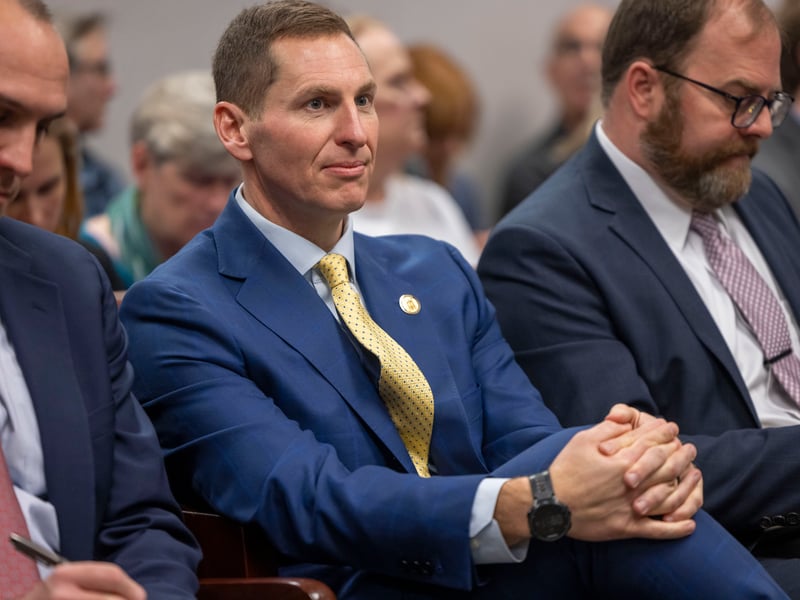
RALEIGH, N.C. (CN) — A federal judge on Monday ended North Carolina Court of Appeals Judge Jefferson Griffin’s challenge of election results for a seat on the North Carolina Supreme Court bench.
Griffin, who trailed his opponent, Associate Justice Allison Riggs, by 734 votes in November, has embarked on extensive post-election legal challenges over the validity of thousands of ballots in an attempt to change the results of his race.
In the six months since his election, Griffin has raised his claims in all levels in state court, federal court and before the Fourth Circuit, which intervened to prevent the state from beginning a ballot-curing process. Monday’s judgment is a critical loss in his endeavor to occupy the sixth North Carolina Supreme Court seat.
U.S. District Judge Richard Myers II found in Riggs’ favor, dismissing Griffin’s request for injunctive relief and granting summary judgment in favor of the state Board of Elections and Riggs, affirming the results of the 2024 election.
The Donald Trump appointee found that discarding the ballots of hundreds of “never residents” — U.S. citizens voting in North Carolina who have never lived in the state — would harm misclassified voters and “violates procedural due process and represents an unconstitutional burden on the right to vote.”
“This case concerns whether the federal Constitution permits a state to alter the rules of an election after the fact and apply those changes retroactively to only a select group of voters, and in so doing treat those voters differently than other similarly situated individuals. This case is also about whether a state may redefine its class of eligible voters but offer no process to those who may have been misclassified as ineligible,” Myers said in his 68-page decision.
The state elections board had indicated in legal filings that it needs to review its count of never residents to confirm it does not include any voters who have resided in the state or who mistakenly indicated that they never lived in the United States. Previously, the state Supreme Court had upheld tens of thousands of ballots challenged by Griffin, but directed the state to discard ballots cast by these voters.
Myers directed the state Board of Elections to certify the results of the election without instituting a cure process or removing any ballots from the count.
Myers summarized his decision with familiar words emphasized by advocates, protesters and attorneys throughout the case: “You establish the rules before the game. You don’t change them after the game is done.”
The judgment also ends several lawsuits filed over potential voter disenfranchisement stemming from the case, including those filed by military spouses and the North Carolina Democratic Party, which had been rolled into the main case.
“This consolidated action concerns an attempt to change the rules of the game after it had been played,” Myers said. “The court cannot countenance that strategy.”
Griffin contended in his post-election challenges that over 65,000 ballots cast by voters who have data missing in the state’s voter roll database should be removed or cured. The state should also require ballots cast by overseas and military voters to be cured, as they were not required to provide photo ID to vote, he said.
He also asked that ballots cast by never residents be invalidated in his race. Many of these voters could potentially be ineligible voters, Griffin argued, although he did not provide any documentation that any ballots were falsely cast.
The plaintiffs argued that retroactive invalidation of ballots of overseas military and civilian voters would violate voters’ substantive due process rights and that a cure process would also violate their equal protection rights.
Myers agreed, finding monetary damages would be “inadequate" to compensate the challenged voters for the loss of their right to vote.
“Dispossessing Justice Riggs of a seat on the North Carolina Supreme Court that she won would constitute a substantial hardship,” he said. “Giving effect to the will of the voters would result in no corresponding hardship for Judge Griffin.”
Griffin did not respond to a request for comment on whether he plans to appeal the decision to the Fourth Circuit, which previously outlined a briefing schedule in the case. He has yet to concede his race.
In a statement, Riggs said: “Today, we won. I’m proud to continue upholding the Constitution and the rule of law as North Carolina’s Supreme Court Justice.” The North Carolina State Board of Elections declined to comment.
This election is the last uncertified state-wide race in the United States and may continue to remain so if an appeal is pursued.
 Follow @SKHaulenbeek
 Follow @shaulenbeek.bsky.social
Subscribe to our free newsletters
Our weekly newsletter Closing Arguments offers the latest about ongoing trials, major litigation and rulings in courthouses around the U.S. and the world, while the monthly Under the Lights dishes the legal dirt from Hollywood, sports, Big Tech and the arts.