
 Search Articles


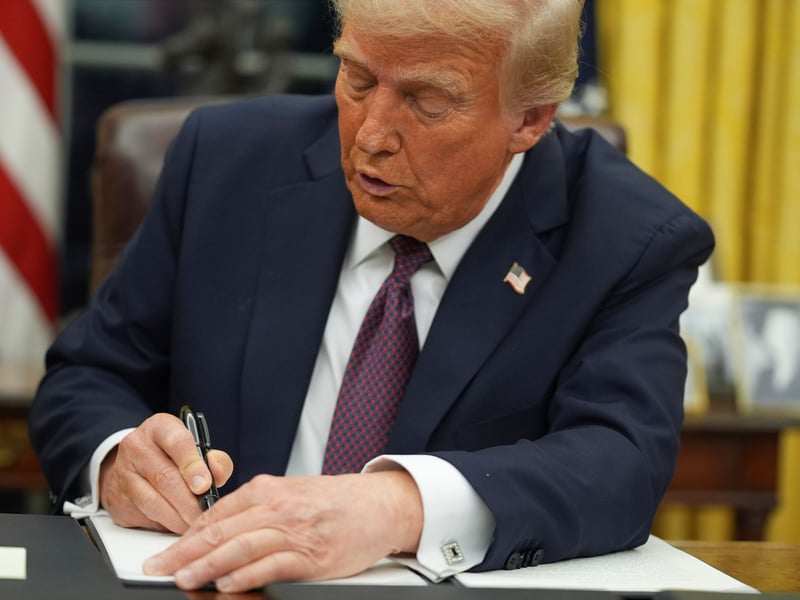
(CN) — In the wake of a Supreme Court ruling in President Donald Trump’s favor, a federal judge on Friday kept in place his own block on the president’s Inauguration Day order to narrow the definition of birthright citizenship.
U.S. District Judge Leo Sorotkin lambasted Trump’s Justice Department for failing to challenge or rebut evidence and arguments by the 18 states who filed suit saying they would suffer irreparable financial and administrative burdens if Trump’s executive order were enforced.
“[T]he defendants complained about the court’s briefing order, sought to reopen questions that are not properly before this court now and quibbled about whether they should be required to participate meaningfully in the process of devising and evaluating narrower alternatives to the court’s original order,” the judge wrote in a 23-page ruling.
Conversely, the plaintiffs “put in the hard work of marshaling the facts and the law to support the causes of action and requests for relief they articulate in this lawsuit.”
“This is what parties — especially those represented by experienced and capable counsel — are expected to do in litigation occurring in courts across this country each day,” said Sorotkin, a Barack Obama appointee.
The judge previously found that losing birthright citizenship even temporarily would have “cascading effects that would cut across a young child’s life (and the life of that child’s family), very likely leaving permanent scars.”
His ruling followed similar moves in New Hampshire, Maryland and Washington state.
Shortly after his Jan. 20 inauguration, Trump issued the order narrowing birthright citizenship to people born to one or more parents who are already U.S. citizens.
Three Democratic state attorneys general led the lawsuit challenging the order: Matthew Platkin of New Jersey, Rob Bonta of California and Andrea Campbell of Massachusetts. The attorneys general of Colorado, Connecticut, Delaware, Hawaii, Maine, Maryland, Michigan, Minnesota, Nevada, New Mexico, North Carolina, Rhode Island, Vermont and Wisconsin also make up the coalition.
Campbell applauded the practical implications of the decision in a post on Bluesky.
“After SCOTUS punted our birthright citizenship case back to the lower courts, a judge in our case just issued an order to reaffirm nationwide relief while the case continues, meaning someone’s U.S. citizenship won’t depend on whichever state they happen to be in at any given moment,” Campbell said.
In a post of her own, New York Attorney General Letitia James wrote, “As we have repeatedly said, birthright citizenship is the law of the land, and we’ll keep fighting to uphold it. No president can rewrite the Constitution with the stroke of a Sharpie.”
The 14th Amendment, ratified in 1868 after the Civil War to establish citizenship for Black Americans post-slavery, mandates that anyone “born or naturalized in the United States, and subject to the jurisdiction thereof, are citizens of the United States and of the state wherein they reside.”
It’s been the longstanding interpretation of the amendment that birthright citizenship extends to those born in the U.S. to parents who are not citizens. Trump’s executive order rejects that interpretation.
“The 14th Amendment has never been interpreted to extend citizenship universally to everyone born within the United States,” Trump proclaimed in his order. “The 14th Amendment has always excluded from birthright citizenship persons who were born in the United States but not ‘subject to the jurisdiction thereof.’”
Following Friday’s order, a White House spokeswoman said the court’s constitutional reading is wrong.
“These courts are misinterpreting the purpose and the text of the 14th Amendment. We look forward to being vindicated on appeal,” Abigail Jackson said in an email.
 Follow @NinaPullano
Subscribe to our free newsletters
Our weekly newsletter Closing Arguments offers the latest about ongoing trials, major litigation and rulings in courthouses around the U.S. and the world, while the monthly Under the Lights dishes the legal dirt from Hollywood, sports, Big Tech and the arts.