
 Search Articles


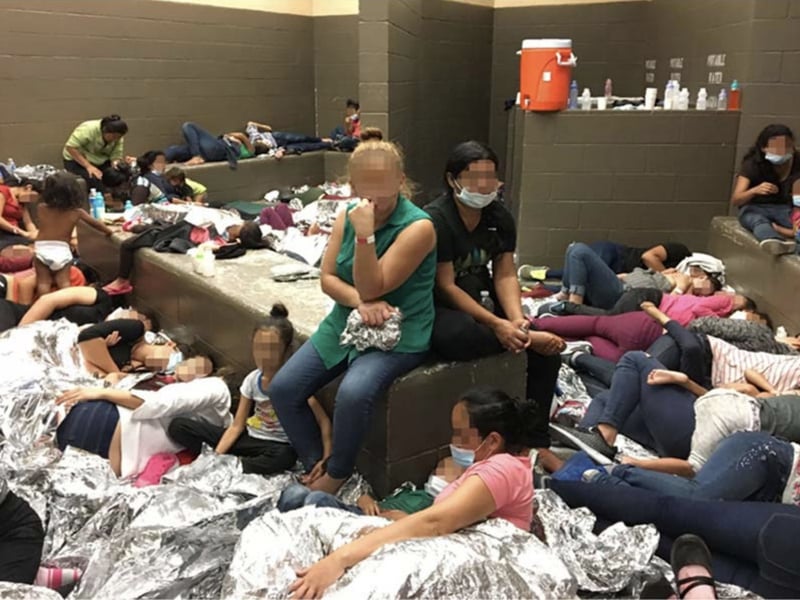
WASHINGTON (CN) — A federal judge Wednesday ordered the Trump administration to explain whether it was unlawfully using congressionally appropriated funds to block members of Congress from conducting surprise oversight visits to Immigration and Customs Enforcement facilities.
Last month, U.S. District Judge Jia Cobb ruled that a new set of ICE policies requiring lawmakers to provide notice of such visits seven days in advance was likely unlawful and beyond the Department of Homeland Security’s authority, freezing the policies for the time being.
In July 2025, a group of 12 Democratic lawmakers led by Colorado Representative Joe Neguse sued the Trump administration over the policy, arguing it was a clear effort to bar lawmakers and the public from witnessing conditions at immigration detention facilities.
Neguse was joined by Representatives Adriano Espaillat of New York, Bennie Thompson of Mississippi, Jamie Raskin of Maryland, Jason Crow of Colorado, Veronica Escobar of Texas, Daniel Goldman of New York, and California Representatives Jimmy Gomez, Raul Ruiz, Robert Garcia, Luis Correa and Norma Torres.
On Monday, Neguse informed the Joe Biden appointee that DHS had blocked three members of Congress from conducting an oversight visit at an ICE facility in Minneapolis last Friday, in spite of Cobb’s ruling.
The attempted visit came three days after an ICE agent shot and killed Renee Good in Minneapolis, raising tensions throughout the country as White House officials blamed Good and labeled her a domestic terrorist.
In a motion to show cause, Neguse argued Homeland Security seemed to merely rework the unlawful policy and had failed to follow the court’s order that it must show that it had not used “a single dollar” appropriated under Section 527 of the 2024 appropriations bill.
The section specifically prohibits DHS from making any temporary modification at an immigration facility that would alter what is observed by a visiting member of Congress.
Cobb pressed the Justice Department to explain how the supposedly new policy does not violate her December 2025 ruling.
Justice Department attorney Amber Richer argued that the new policy used funds allocated under the One Big Beautiful Bill Act, which appropriated $191 billion to DHS, as well as Congress’ short-term continuing resolution, which maintains 2025 appropriation levels through Jan. 30, 2026.
She pointed to a declaration filed by Holly Mehringer, who oversees the DHS budget, stating that the new policy was only recently enacted on Jan. 8 and draws funds exclusively from the Big Beautiful Bill, not the department’s annual appropriations.
Mehringer further said the department had just begun tracking costs incurred to issue and enforce the Jan. 8 policy and would soon be able to adjust its accounting ledgers to ensure the costs are correctly tied to the Big Beautiful Bill.
Richer added that, if the lawmakers have a problem with the new policy, they should either amend their complaint to challenge it directly or bring a new lawsuit.
Cobb commented that she would take Richer at her word as an officer of the court — intentionally misleading or lying in court can lead to disbarment — but expressed doubt that zero funds from the 2024 appropriations bill were used for the newer version of the policy.
Cobb said that even a memo to employees stating that there would be a new version, if it could be tied to the 2024 funding, would amount to a violation of her order.
Christine Coogler, representing the lawmakers from the Democracy Forward Foundation, urged Cobb to rule the agency’s actions as a clear violation, enforce her stay order and allow lawmakers to make surprise oversight visits again.
Coogler argued that the government’s conduct was especially concerning because of the “egregious” conditions at immigration facilities, which currently hold over 69,000 individuals.
She highlighted the fact that four migrants died in immigration custody within the first 10 days of 2026, after at least 30 died in 2025 — the highest level in two decades — and 11 died in 2024.
Congress’ oversight power is a longstanding and central part of the legislative body’s purpose and has repeatedly been upheld by the Supreme Court as necessary for effective lawmaking. The representatives noted in their lawsuit that the power is as “penetrating and far-reaching” as Congress’ appropriations powers, citing the 1959 case Barenblatt v. United States.
That power was extended to impromptu investigations at immigration facilities under the first Trump administration as lawmakers attempted to assess conditions at detention facilities where migrant children were being held.
After lawmakers were rebuffed by immigration officials at the detention centers, Congress included a provision in the fiscal year 2019 appropriations bill codifying members’ right to exercise oversight duties through impromptu in-person visits.
President Donald Trump, the lawmakers noted, signed that provision into law, which prohibited DHS and ICE officials from preventing any member of Congress from entering a DHS facility holding migrant children to conduct oversight.
 Follow @Ryan_Knappy
Subscribe to our free newsletters
Our weekly newsletter Closing Arguments offers the latest about ongoing trials, major litigation and rulings in courthouses around the U.S. and the world, while the monthly Under the Lights dishes the legal dirt from Hollywood, sports, Big Tech and the arts.