
 Search Articles


MANHATTAN (CN) — A federal judge on Thursday approved New York City’s ban on steeped kava beverages, putting to rest a two-year case brought by owners of two locations of the tiki-themed kava cafe Kavasutra.
U.S. District Judge Valerie Caproni, a Barack Obama appointee, opined in a 23-page ruling that the cafes failed to prove that the city’s ban defied the Food and Drug Administration or breached their due process rights.
The argument from Kavasutra hinged on their assertion that steeped kava drinks are considered a single-ingredient food under FDA guidelines, rather than the kava being a food additive to water, which would be subjected to more regulatory scrutiny. A one-day bench trial ensued earlier this year, where Kavasutra attempted to hammer this argument home.
Kavasutra had argued that they do not sell kava as a food additive, but a root plant which is simply mixed with or brewed in water, then run through a filter à la coffee or herbal tea.
Caproni sided with the city in finding that Kavasutra was indeed using kava as a food additive when adding it to water. The judge looked to the federal Food, Drug and Cosmetic Act, which she says clearly finds that water on its own is considered a food, and the kava plant thus a “food additive.”
She noted in her ruling that kava “changes the chemical composition of water from H2O to a liquid that includes kavalactones, chemicals that have hepatotoxic properties.”
“No one can seriously dispute, then, that kava ‘affect[s] the characteristics’ of water, rendering kava a ‘food additive’ under the FDCA when steeped in water,” the judge added.
Kavasutra had also presented an email chain from a FDA regional branch director to Deputy Commissioner of the Department of Health, which the company claimed established the FDA’s stance on kava. But Caproni said the emails were contradictory to themselves and that the deputy commissioner had testified that that she didn’t consider the emails to be “determinative.”
Caproni also dismissed the plaintiffs’ experts, saying that one hadn’t even visited the plaintiffs’ cafes and that the other had not communicated with the FDA on it’s position on kava.
The judge also determined that Kavasutra was not denied due process, writing that they hadn’t established they had a protectable right to sell kava.
“Even if they did have a protectable property interest, their claim would still fail because plaintiffs were afforded meaningful post-deprivation process,” Caproni wrote, adding that Kavasutra had attended hearings at the city’s Office of Administrative Trials and Hearings after its stores were given closing orders.
“The administrative proceedings afforded to Plaintiffs were constitutionally adequate and appropriately guarded against the erroneous deprivation of their rights,” Caproni said.
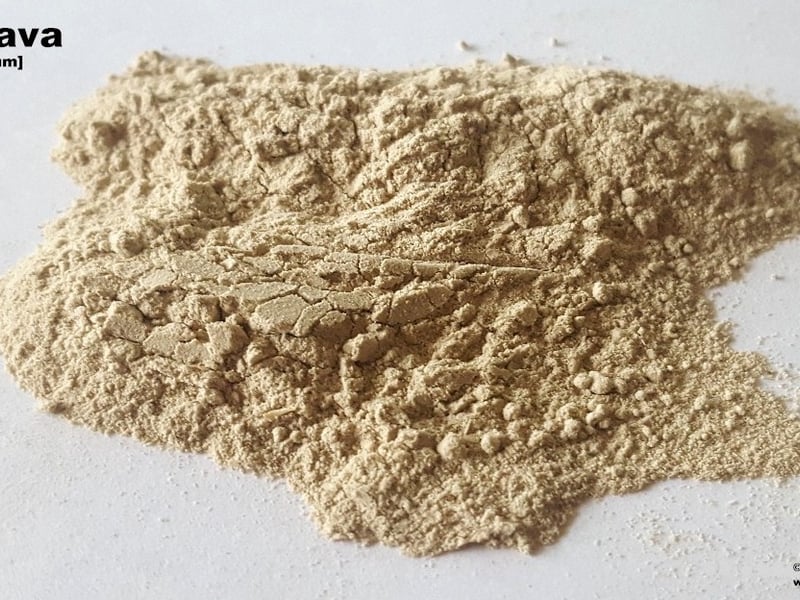
The drinking of kava — a root of a plant that is customarily mixed or brewed in water to produce a ceremonial libation that is popular in Hawaii and other Pacific Island cultures — was first introduced to places like New Caledonia, the Solomon Islands, Kiribati and New Zealand by migrants, before becoming popular in Western society as a recreational drink, a dietary supplement and for medicinal purposes as an anxiolytic drug for anxiety and insomnia.
Traditionally, kava extracts are prepared from macerated rhizome roots combined with cold water or coconut milk. Kavasutra sources its kava from a South Pacific island nation of Vanuatu.
Kava cafes, like the ones scrutinized in this case, have become popular among those who practice so-called “sober living,” many of whom seek alternatives to drinking alcohol and congregating in traditional bars.
But New York City’s Department of Health and Mental Hygiene embargoed Kavasutra’s kava products in 2022, barring the sale of its steeped kava tea and eventually shuttering the two East Village cafes the following year after they repeatedly violated the department’s orders and interfered with its inspectors.
Kava as a plant is not outright banned in New York City — it only prohibits the sale of kava beverages in food establishments like Kavasutra’s cafes.
Caproni noted that the plant is banned in Germany, Switzerland, France and Canada, based on findings that ingesting it can cause liver toxicity.
In 2002, the U.S. Centers for Disease Control and Prevention issued a report on hypertoxicity associated with products kava. That same year, the FDA issued a warning that kava may be linked to serious liver damage.
“We are pleased with the ruling which enables the NYC Department of Health to continue protecting public health in connection with the sale of kava served in restaurants,” the New York City Law Department, which represents the health department, said in a statement to Courthouse News.
Attorneys representing Kavasutra didn’t immediately respond to requests for comment.
Kavasutra previously asked Caproni for a preliminary injunction so they could continue serving kava and not lose their customers, but the judge rejected the effort. On appeal, the Second Circuit sided with Caproni, finding that the federal judge was well within her rights to deny the injunction bid.
 Follow @Uebey
 Follow @uebey.bsky.social
Subscribe to our free newsletters
Our weekly newsletter Closing Arguments offers the latest about ongoing trials, major litigation and rulings in courthouses around the U.S. and the world, while the monthly Under the Lights dishes the legal dirt from Hollywood, sports, Big Tech and the arts.