
 Search Articles


(CN) — San Francisco and dozens of other local governments from across the country can dispute two of the Trump administration’s executive orders targeting sanctuary cities, a federal judge in Northern California found Tuesday.
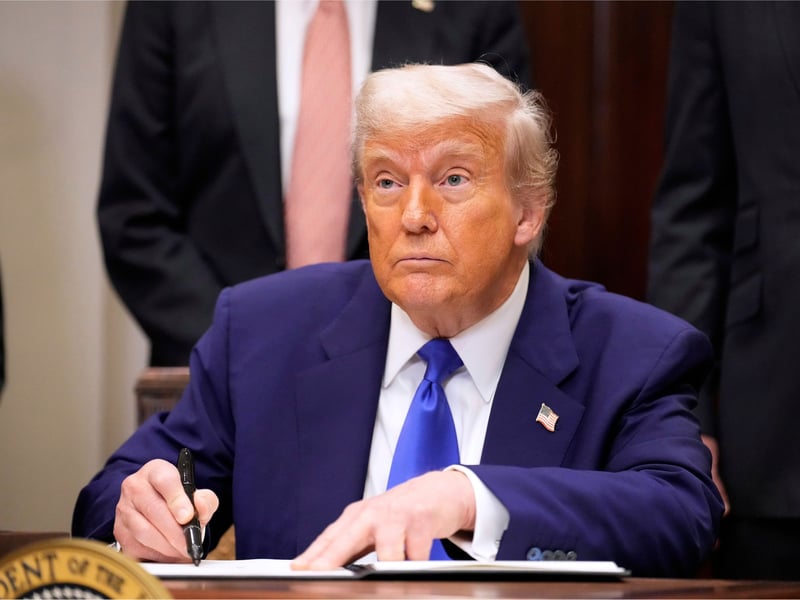
President Donald Trump signed the executive orders at the beginning of his second term as he sought to cut funding for local governments that aim to limit their cooperation with immigration enforcement within their jurisdiction. In February 2025, the local governments sued Trump over the orders, titled “Protecting the American People Against Invasion” and “Ending Taxpayer Subsidization of Open Borders.”
U.S. District Judge William Orrick denied the Trump administration’s motion to dismiss the plaintiffs’ case on Tuesday. The Barack Obama appointee rejected each of the administration’s arguments, in part relying on his previous rulings.
Orrick ruled that the local governments have standing to sue the federal government before any funds are cut. He also found that the president potentially overstepped his authority by creating new funding conditions without approval from Congress.
In a statement to Courthouse News, San Francisco City Attorney David Chiu said he was pleased with the judge’s order and looks forward to continuing the lawsuit.
“San Francisco is one of the safest cities in the nation, and our sanctuary policies strengthen public safety," Chiu wrote. “People feel comfortable reporting crimes, accessing needed health care, and going to school. Targeting immigrants who have built families, businesses and homes here doesn’t improve public safety. It does the opposite. San Francisco stands by our immigrant communities. Ensuring everyone feels safe in our city is our top priority.”
“The federal courts have held that our sanctuary policies are lawful, the federal government cannot categorically withhold funding from sanctuary jurisdictions, and the federal government cannot commandeer local governments to enforce federal immigration laws,” Chiu continued.
The Trump administration argued that the local governments haven’t suffered any real harm yet, and therefore could not sue. In April 2025, Orrick blocked the federal government from cutting funds via preliminary injunction.
“That is incorrect,” Orrick wrote in his order. “My prior order concluded that they did, in fact, establish an injury-in-fact in their first amended complaint — plaintiffs showed that a directive to halt federal funds to sanctuary jurisdictions would ‘irreparably harm their budgets and, by extension, their abilities to govern and provide services to the public.’ That is the same injury plaintiffs assert in their second amended complaint.”
The Trump administration also argued that the local governments lack standing because the president’s orders don’t prohibit any conduct, but instead examine what funding could be cut.
The Trump administration also argued that the local governments lack standing because the executive orders do not actually prohibit any conduct, but only direct agencies to determine if funding could be cut. The judge rejected this argument.
“My mind is unchanged,” Orrick wrote. “Defendants have not provided any new arguments showing that the second amended complaint is materially different from the original complaint regarding pre-enforcement standing: They merely assert that the second amended complaint ‘continues to premise their purported injury on budgetary uncertainty, as opposed to funding impact,’ an argument both I and the Ninth Circuit have rejected in previous cases.”
Trump’s fight against sanctuary cities dates back to his first term in 2017 when he attempted a similar cut to funds for sanctuary jurisdictions with an order titled “Enhancing Public Safety in the Interior of the United States.” Orrick found that order was unconstitutional, which was later affirmed by the Ninth Circuit Court of Appeals.
The Trump administration argued that these new executive orders are different from the 2017 order because the funding decisions are left to federal agency discretion and are not explicitly tied to immigration enforcement.
“From this, defendants conclude that plaintiffs lack the knowledge and fear of enforcement they had in 2017 to support standing,” Orrick wrote. “But given the administration’s conduct during the past year, this argument is particularly hard to credit.”
In December 2025, attorneys for the Trump administration made arguments to lift the injunction before a three-judge panel at the Ninth Circuit.
Attorneys for the Trump administration did not respond for comment.
Subscribe to our free newsletters
Our weekly newsletter Closing Arguments offers the latest about ongoing trials, major litigation and rulings in courthouses around the U.S. and the world, while the monthly Under the Lights dishes the legal dirt from Hollywood, sports, Big Tech and the arts.