
 Search Articles


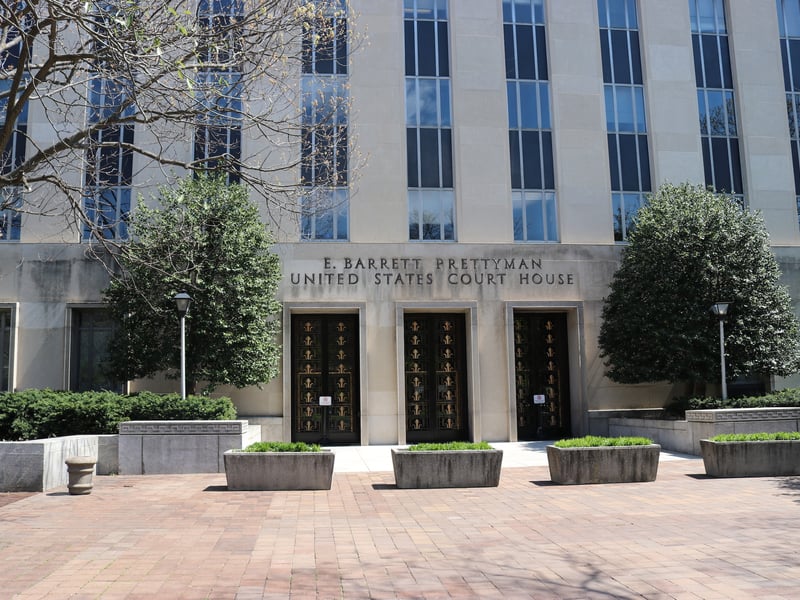
WASHINGTON (CN) — A federal judge ruled Wednesday that the Justice Department had wrongfully retaliated against the American Bar Association by terminating grants meant to fund domestic violence and sexual assault victim services.
U.S. District Judge Christopher Cooper, granting a preliminary injunction, found that the cancelations were a clear violation of the ABA’s First Amendment right to speak free of government interference and targeted the legal association for opposing the Trump administration in court.
On April 9, Deputy Attorney General Todd Blanche issued a memorandum decrying the ABA’s “support of activist causes” and prohibited Justice Department employees from participating in ABA-sponsored events, renewing personally paid-for ABA memberships and any engagement that would support ABA-sponsored publications.
The ABA had five active grants with the Justice Department’s Office on Violence Against Women, totaling $3.2 million.
“The reason, Blanche candidly explained, was that the ABA had recently joined a lawsuit against the Trump administration,” the Barack Obama appointee wrote. “The only explanation offered for the cancelation was a terse statement that the grants ‘no longer effectuate [DOJ] priorities.’ Connecting these two rather large dots, the ABA promptly filed suit.”
Cooper noted that, prior to the terminations, the ABA and DOJ had “enjoyed a collaborative relationship” and the ABA had never violated any conditions of the grant awards. Nor had the ABA had a grant suspended or terminated.
“But things changed after the start of President Trump’s second term,” Cooper said. “Between February and March 2025, the ABA publicly criticized the administration for actions it viewed as undermining the judiciary and legal profession.”
Specifically, the ABA condemned high-ranking officials’ statements questioning the “legitimacy of judicial review” in February.
On March 3, the ABA issued a statement decrying a “clear and disconcerting pattern” of the government targeting judges who ruled against the administration. Then, on March 26, the ABA joined 100 other bar organizations issued a statement slamming the administration’s efforts to throttle lawyers and law firms.
The ABA joined the lawsuit challenging the freezing of all foreign aid grants at the U.S. Agency for International Development and the Department of State in February.
“That lawsuit apparently prompted DOJ to reconsider its chummy relationship with the ABA,” Cooper noted.
In his memo, Blanche explained that the lawsuit meant the Justice Department would be litigating against an organization it was funding. Further, the ABA would continue benefiting from Justice Department staff’s participation in ABA events, which Blanche said legitimized positions “contrary to the federal government’s policies.”
Blanche specifically cited the ABA’s submission of amicus briefs in abortion, affirmative action and religious exercise cases as contrary to the Justice Department’s “core mission of administering justice in a fair, effective and even-handed manner.”
During a hearing on Monday, Christine Coogle, of Democracy Forward and representing the ABA, argued that the canceled funding would cause the dissolution of the ABA’s Commission on Domestic and Sexual Violence, which has received grants since 1995 under the Violence Against Women Act.
She said the Justice Department had seemingly taken issue with views the association expressed in amicus briefs during former President Joe Biden’s administration and chilled the organization from filing similar briefs.
Cooper noted that was clear First Amendment activity and the Justice Department’s actions was “sufficient to deter a person of ordinary firmness in plaintiff’s position from speaking again.”
On Monday, Justice Department attorney Douglas Dreier asserted that the ABA’s case was a contract issue and could only be addressed in the Court of Federal Claims. He argued that the funds were allocated to ABA as a whole, and with the organization’s size, it should be able to still maintain the commission without the federal grants.
Dreier also argued that the Trump administration had full discretion to decide the grant programs were not consistent with its policy priorities and had the right to terminate the grants at will. He asserted that the Justice Department conducted a review of the grants before terminating them.
Cooper rejected that argument and said the government failed to explain how the sudden shift in priorities was not retaliatory. Further, the fact that no other similar grants were canceled showed ABA was singled out.
“Finally, DOJ also purported to terminate two grants that, by their terms, had already ended, making it even less plausible that DOJ conducted an individualized analysis of whether each grant aligned with DOJ policy,” Cooper wrote.
The ruling does not require the Justice Department to reinstate grants that had already ended or are coming to an end, nor does it prevent the government from terminating the remaining grants so long as they are canceled for legal, “truly non-retaliatory reasons.”
 Follow @Ryan_Knappy
Subscribe to our free newsletters
Our weekly newsletter Closing Arguments offers the latest about ongoing trials, major litigation and rulings in courthouses around the U.S. and the world, while the monthly Under the Lights dishes the legal dirt from Hollywood, sports, Big Tech and the arts.