
 Search Articles


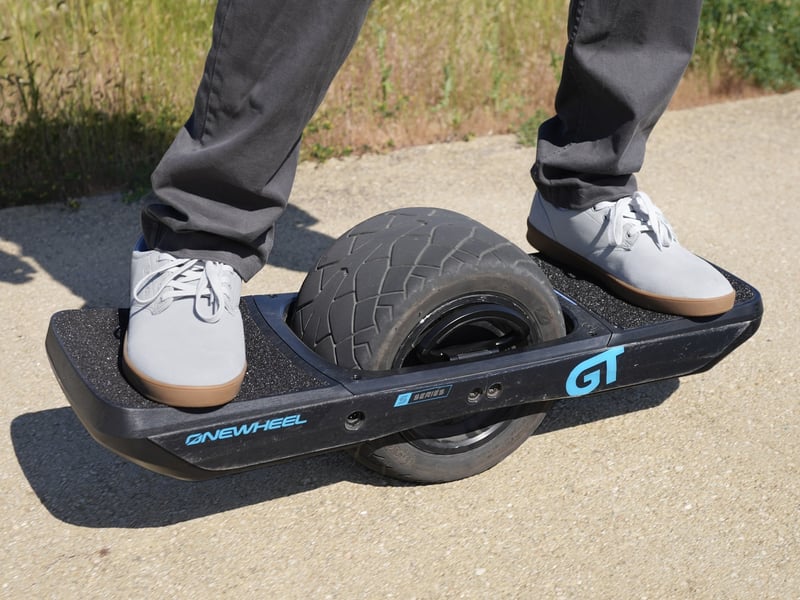
SAN DIEGO (CN) — Plaintiffs claiming the Onewheel has a design problem that can kill riders may advance their claim that the electronic skateboard’s manufacturers issued misleading statements about the product’s safety, but they failed to state what design flaw caused the board to be so dangerous, a federal judge said in a ruling dismissing most of the class action claims.
The plaintiffs in the case claim that the Onewheel — a self-balancing electric skateboard with a large single wheel in the center of the board — has a “Nosedive defect” where the front of the board unexpectedly slams into the ground while a rider is still on it, causing an abrupt stop, which can throw the rider off the board, causing serious injuries.
A warning from the U.S. Consumer Product Safety Commission about Onewheel urging people to stop using the board said it could even kill riders.
But, a federal judge said that the nosedive defect is a feature of the board, not a defect, dismissing a majority of the claims against Future Motion, the defendant.
“The court agrees with defendant that the propensity of the Onewheel to nosedive is not a defect, but an effect. This is significant because other courts have distinguished between the symptoms or consequences of a defect and the defect itself,” wrote U.S. District Judge Beth Labson Freeman, a Barack Obama appointee, in her order on Friday.
“While the symptoms or consequences of a defect make the existence of a defect possible, a plaintiff must allege more to make the existence of a defect plausible,” she added.
The judge determined the plaintiffs in the multi-district consolidated class action in the United States District Court for the Northern District of California pointed to too many possible parts of the Onewheel that could be responsible for the nosedive problem — including the motor, the battery, or any combination of different parts — but not a specific part on or in the board that caused it to nosedive.
That’s too scattershot, and it doesn’t allow Future Motion to adequately defend themselves, Freeman added, granting the company’s motion to dismiss most of the claims, though the plaintiffs were granted leave to amend some of those claims.
The company also tried to get Freeman to dismiss the plaintiff’s claim that they made misleading statements about Onewheel’s safety for people of all ages. Those claims, the company argued, are “puffery” — advertising language that no reasonable person would take seriously.
The Onewheel is safe when users ride it within their ability, and when it does crash, users are at fault, the defense claims. When it evaluated Onewheels that did suddenly stop, they found no technical issues, they add.
Freeman disagreed with the manufacturer, finding that although broad statements about a product’s safety and reliability is “puffery,” Future Motion’s advertisement that the Onewheel is so safe that anyone of any age or ability can ride it “is a statement that is quantifiable and may be shown to be provably false,” she wrote, denying the company’s motion to dismiss that claim.
However, Freeman also found that the plaintiffs failed to adequately claim that the company had exclusive knowledge that the Onewheel had safety problems.
Even though the plaintiffs provided consumer complaints, reports of injuries posted on the internets, posts on the company’s website, customer reviews on Amazon, litigation, and even the existence of people making third-party products to make Onehweels safer, that isn’t enough to claim that the company knew that their product had safety problems, Freeman wrote.
Freeman also denied the company’s motion to dismiss the plaintiff’s claim that Future Motion breached the product’s implied warranty claims.
“These allegations are adequate, on a motion to dismiss, to establish that Onewheels are not fit for ordinary use," Freeman wrote. “To the extent that defendant argues that plaintiffs have failed to allege that Onewheels do not meet a minimum level of quality because plaintiffs have not alleged that they were forced to stop using their Onewheels, this argument is not appropriate at the motion to dismiss stage.”
Freeman also denied the company’s motion to strike the entirety of the class claims. Though the company argued that the plaintiffs failed to claim a uniform defect, or any uniformity of misrepresentations or omissions made by the company , the judge called the motion premature at the class certification stage of the case.
Attorney for both the plaintiffs and the defense did not immediately respond to requests for comment.
Subscribe to our free newsletters
Our weekly newsletter Closing Arguments offers the latest about ongoing trials, major litigation and rulings in courthouses around the U.S. and the world, while the monthly Under the Lights dishes the legal dirt from Hollywood, sports, Big Tech and the arts.