
 Search Articles


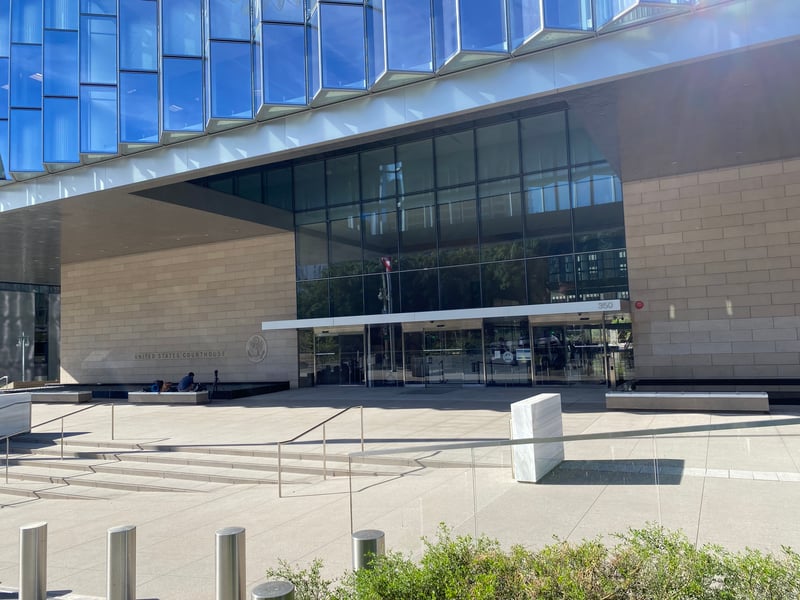
LOS ANGELES (CN) — A federal judge Monday threw out two claims the U.S. Chamber of Commerce brought last year over recent California laws that require large businesses to disclose their greenhouse gas emissions and report their climate-related financial risk.
U.S. District Judge Otis Wright II in Los Angeles granted to state’s motion to dismiss the Chamber’s claims that the California laws are preempted by federal law in violation of the supremacy clause of the U.S. Constitution, and that the laws violate the Constitution’s limits on extraterritorial regulation.
The judge observed that Senate Bill 253, also known as the Climate Corporate Data Accountability Act, requires the California Air Resources Board to develop regulations for businesses with more than $1 billion in annual revenue to disclose their greenhouse gas emissions to a reporting organization.
However, the California Air Resources Board hasn’t issued these regulations, which will apply to as many as 5,300 companies, yet. The deadline for the agency was extended to July 1, and the question of whether these regulations when they are published and enforced will run afoul of the Constitution isn’t yet ripe.
“It is not clear to the court that any possible regulations CARB issues would impermissibly burden interstate commerce or violate the Supremacy Clause,” Wright said.
With respect to the second law, Senate Bill 261, which requires that businesses with more than $500 million in annual revenue report their climate-related financial risk biannually, the judge concluded that the Chamber of Commerce failed to make a claim that it violates the Constitution.
This law, according to Wright, regulates only speech and not greenhouse gas emissions. As the chamber has acknowledged, he reasoned, the law doesn’t directly require companies to reduce their emissions but seeks through disclosure to “shame” them to curtail emissions.
“Plaintiffs fail to cite any relevant authority to support the proposition that a disclosure regime intended to regulate emissions through third-party actions is a de facto regulatory scheme subject to preemption,” Wright said.
An attorney with the chamber did not immediately respond to a request for comment on the ruling.
The Chamber of Commerce said in it’s complaint filed in January last year that both laws unconstitutionally compel speech in violation of the First Amendment and seek to regulate an area that is outside California’s jurisdiction and exclusively subject to federal control per the Clean Air Act.
The judge in November denied the chamber’s motion for summary judgment on its claim that the California laws amount to compelled speech and as such are unconstitutional.
The problem, the judge said, is that at this early stage of the litigation — before either side has provided him with any evidence or testimony —he doesn’t have enough information to determine what level of scrutiny the California laws require to evaluate whether they tread on the constitutional rights of the corporations affected by them.
The First Amendment claim remains pending.
 Follow @edpettersson
Subscribe to our free newsletters
Our weekly newsletter Closing Arguments offers the latest about ongoing trials, major litigation and rulings in courthouses around the U.S. and the world, while the monthly Under the Lights dishes the legal dirt from Hollywood, sports, Big Tech and the arts.