
 Search Articles


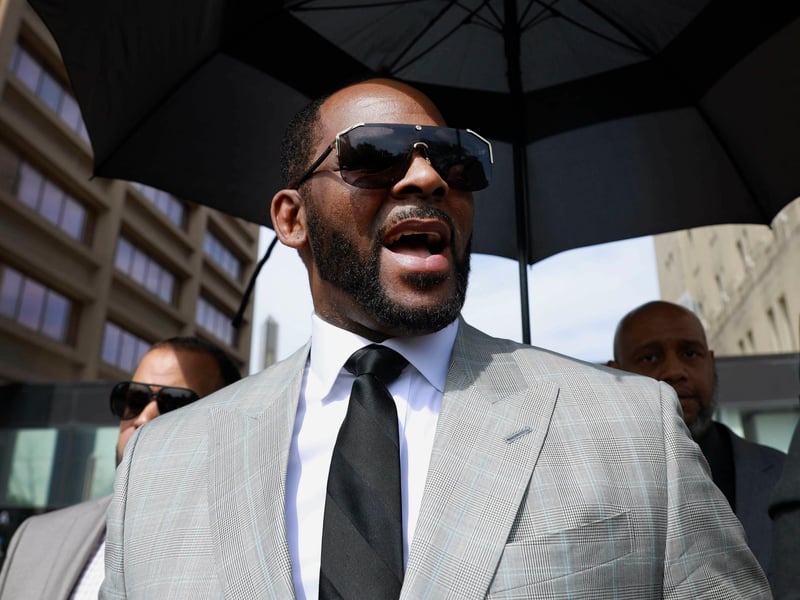
CHICAGO (CN) — A federal judge on Thursday denied former R&B singer R. Kelly’s bid for house arrest, citing a lack of appropriate jurisdiction in the matter.
Kelly, who was convicted on child sexual abuse charges in February 2023, said in a motion filed on June 10 that home detention is warranted due to an active murder plot against him in the prison where he resides.
U.S. District Judge Martha M. Pacold deemed Kelly’s request as out of her jurisdiction in an order issued on Thursday. The Chicago judge noted that in order for a prisoner to use a civil rights suit to challenge the condition of their confinement, they must also file a petition for writ of habeas corpus.
However, even if Kelly’s June 10 motion were to be construed as habeas petition, Pacold said she still would lack the authority to rule on it because “jurisdiction lies in only one district: the district of confinement. Kelly is currently housed at FCI Butner, which is located in Butner, North Carolina — outside this judicial district. Accordingly, this court cannot award him habeas relief," the President Donald Trump appointee wrote in Thursday’s order.
Pacold said Kelly’s argument describes the court’s jurisdiction far too vaguely.
“‘Federal courts do not possess a roving commission’ to oversee enforcement of federal law … Instead, they can determine constitutional issues only in the context of cases properly brought before them. Thus, Kelly’s inherent authority argument assumes the very thing it seeks to prove — that the court has jurisdiction over this matter,” Pacold wrote in the order.
Kelly claimed in the initial motion, and the supplemental ones that followed, that the guards at the Butner federal prison solicited the murder plot against him. Kelly said he heard this from a fellow inmate, a former Aryan Brotherhood leader whom prison guards recruited to kill him, and transferred to the North Carolina facility for that sole purpose.
After the initial filing Kelly was transferred to solitary confinement, which he claims is an obvious act of punishment for exposing the purported murder plot.
Once in solitary confinement, a call Kelly had planned with his attorney Beau Brindley was randomly cancelled without warning or explanation. He also said he hasn’t eaten since he’s been placed in solitary confinement due to fear of being poisoned.
“The prison officials refuse to let him have his own purchased and sealed food products from his locker (things like peanut butter and crackers) and, instead, insist he must eat food from the chow hall. He requested a bag lunch, which is what is given to prisoners going to court. He was refused that. That left Mr. Kelly with no way to eat without the justifiable fear that his food is being poisoned. So he has been without food for two days. He cannot take his medicine on an empty stomach. Consequently, he is also without his medication,” the “I Believe I Can Fly” singer said in an emergency release motion.
Kelly also detailed in a supplemental emergency motion how he was rushed to the hospital after a supposed overdose attempt orchestrated by prison guards while he was in solitary confinement.
“While in the ambulance, he heard one of the prison officers with him state: ’this is going to open a whole new can of worms,’” he said in the motion.
Federal prosecutors disagreed with Brindley’s characterization of the murder plot at the federal prison, and maintained that the court lacks the jurisdiction to address the underlying claims.
“Imagine a scenario where any and every incarcerated criminal could go back to the criminal court that imposed a sentence of imprisonment upon them, allege that they fear imminent harm, and demand to be released from custody while the matter was investigated,” the government said in response to Kelly’s emergency motion. “Every convicted murderer, rapist, and terrorist will have a newfound shot at freedom. This is an impractical, unworkable, and unlawful scenario.”
Kelly has maintained that continued incarceration while his life is in jeopardy constitutes a violation of his Eighth Amendment rights and, as such, extraordinary relief is warranted. Beyond an Eighth amendment violation, he also argued that his First Amendment rights were violated after he filed his complaint against prison officials.
“Any continued incarceration while Mr. Kelly is under threat would constitute cruel and unusual punishment,” he said in an emergency motion. “Ordinary channels for redressing grievances are inadequate because those in charge of the prison grievance process are the ones who have initiated the threat against Mr. Kelly. Petitioning the court for a temporary furlough to home detention while the matter is investigated is the only viable option to protect Mr. Kelly. Such an order is ’necessary [and] appropriate’ given the threat against Mr. Kelly’s life.
In court documents, Kelly has said that he reached out to President Donald Trump’s office in pursuit of a presidential pardon, but the president has not indicated whether he might grant one. However, Trump did say he was open to granting a pardon in the case of Sean “Diddy” Combs, who currently faces similar charges.
 Follow @RosenCaitlyn
Subscribe to our free newsletters
Our weekly newsletter Closing Arguments offers the latest about ongoing trials, major litigation and rulings in courthouses around the U.S. and the world, while the monthly Under the Lights dishes the legal dirt from Hollywood, sports, Big Tech and the arts.