Search Articles


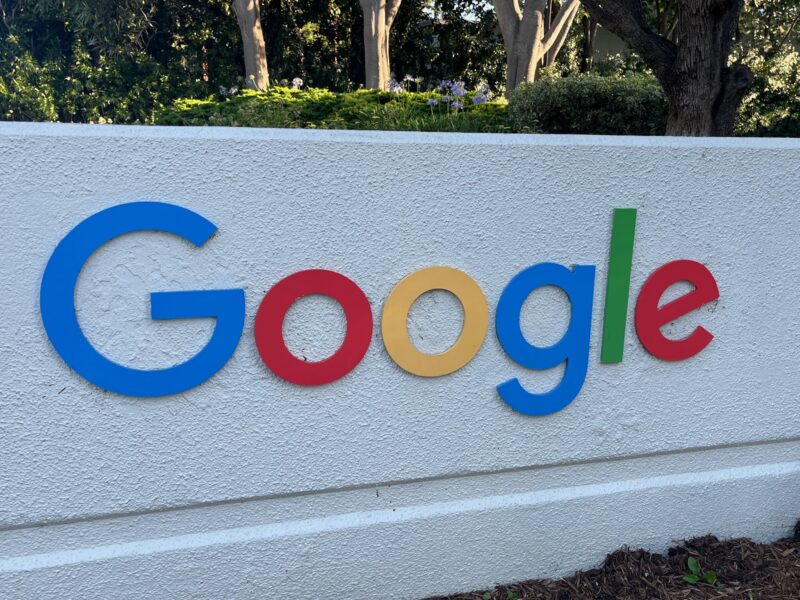
SAN FRANCISCO (CN) — A federal judge Monday denied a motion for judgment of acquittal or, in the alternative, a new trial, filed by Linwei Ding, a former Google software engineer convicted of stealing proprietary information on Google’s artificial intelligence technology for Chinese companies.
Ding was accused of stealing trade secrets from Google, which hired him in 2019 as a software engineer to help develop its supercomputing data centers. He was charged with seven counts of theft of trade secrets and seven counts of economic espionage, each corresponding to one of the seven categories of trade secrets.
A San Francisco jury found Ding guilty of all 14 counts of theft of trade secrets and economic espionage following a two-week trial in January.
Ding filed a motion for a new trial and mistrial, along with a motion for acquittal in February, contesting all trade secret and economic espionage charges.
In Monday’s ruling, U.S. District Judge Vince Chhabria concluded a rational juror could have found beyond a reasonable doubt that Ding intended to take the trade secret information, writing in a nine-page ruling that the government provided “overwhelming evidence” at trial Ding planned to benefit himself and the company he was forming in China when he uploaded Google trade secrets between spring 2022 and spring 2023.
“The fact that nobody ended up receiving a benefit is irrelevant; under the statute, all that matters is what Ding intended when he stole the documents,” he said.
Moreover, the Barack Obama appointee found a rational juror could conclude beyond a reasonable doubt that Google took reasonable measures to keep its trade secrets and that the documents the jury based their conviction on were, as a whole, non-public, and thus afforded trade secret protection.
“[The government] provided expert testimony, based on over a year of reviewing the trade secrets at issue, to support a conclusion that each alleged trade secret, taken as a whole, was not available in the public domain,” he said.
Chhabria additionally rejected the defense’s argument that every document in a combination trade secret must contribute to the value of the trade secret, concluding a combination of documents did not need to be maintained in a particular order, presented in their entirety, or contain a “unique compilation” of elements to constitute a trade secret.
“Just as adding a superfluous annotation on the secret formula for Coca-Cola wouldn’t render the formula unprotectable, adding one useless document to a collection of documents that would otherwise be protectable as a trade secret wouldn’t necessarily render the collection unprotectable,” he said. “Ultimately, what matters is whether the collection, as a whole, satisfies the definition of a trade secret.”
The judge also found China did not need to be a participant in the trade secret theft for it to be considered economic espionage, nor did the jury have to be told that Ding needed to know the documents he stole met the legal definition of trade secrets.
He went on to say Ding was not deprived of fair notice of the charges against him because the government did not specify which trade secrets it would focus on at trial. The government initially highlighted 105 documents it said contain Google trade secrets related to the company’s supercomputing data centers, but ultimately focused on only 18 of them.
“The reason this trial involved such a large volume of documents is that Ding took such a large volume of documents from Google,” he said.
Chhabria further tossed arguments against his rulings during trial regarding the defense’s experts, as well as the defense’s alternative motion for a new trial per their claim that the guilty verdicts returned by the jury go against the weight of the evidence.
Chhabria said he would be issuing a separate opinion addressing the question of acquittal on Ding’s economic espionage charges, but did not indicate when any additional ruling would be released.
Representatives for either party did not immediately respond to a request for comment.
Ding began transferring files in the spring of 2022, copying information from internal Google documents to the notes application on his company-issued laptop, converting the notes to PDFs and uploading them to a personal cloud account. In total, the government said Ding transferred 1,255 documents, comprising an estimated 14,000 pages, between the spring of 2022 and 2023. Ding additionally downloaded the documents from his personal cloud account to his personal laptop in December 2023, as the walls began to close in on him at Google.
At the two hearings over the defense’s post-trial motions, Chhabria was apprehensive about whether the December 2023 downloads were theft of trade secrets, a required element to prove economic espionage.
“I’m not sure it would have made sense looking at the statute to charge him with theft of trade secrets based on the downloading in December 2023 because he had already stolen the trade secrets,” the judge said at the May 12 hearing. “In other words, without authorization, he appropriated the trade secrets in May 2023; that’s before then, he already committed the crime. He already appropriated the trade secrets.”
Chhabria also raised concerns about the issue of whether the uploads of documents between the spring of 2022 and 2023 and the downloads in December 2023 were two separate crimes or one ongoing crime.
“He committed the crime in April of theft of trade secrets. The crime is completed. How is downloading in December 2023 the same crime?” he asked at the June 16 hearing.
Ding is scheduled to be sentenced Aug. 4. He faces a maximum of 10 years in prison and up to $250,000 in fines for each trade secret count, in addition to 15 years in prison and a $5 million fine for each economic espionage count.
Chhabria previously ruled Ding be released pending sentencing, finding he was not a danger to the public or a flight risk.
 Follow @mhattridge_
Subscribe to our free newsletters
Our weekly newsletter Closing Arguments offers the latest about ongoing trials, major litigation and rulings in courthouses around the U.S. and the world, while the monthly Under the Lights dishes the legal dirt from Hollywood, sports, Big Tech and the arts.