
 Search Articles


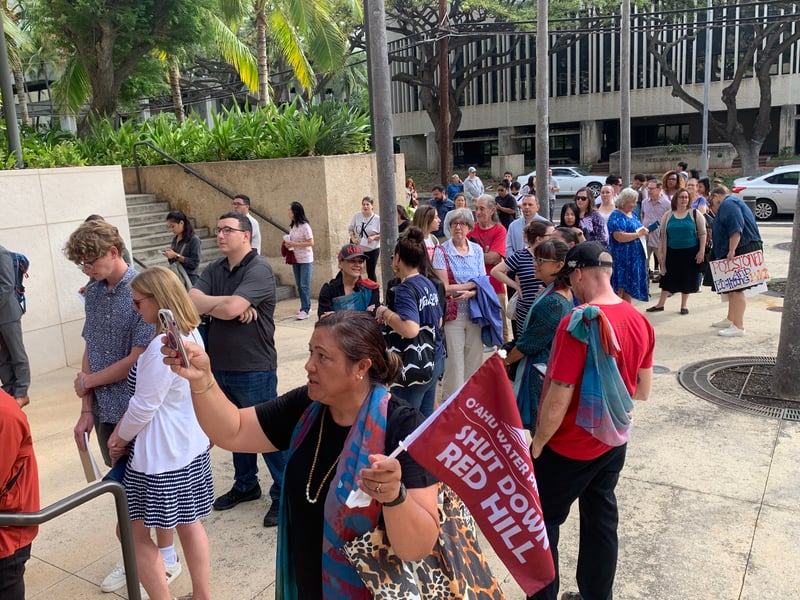
HONOLULU (CN) — A federal judge partially ruled in favor of environmental activists and Native Hawaiian leaders in their Clean Water Act lawsuit against the U.S. Navy but denied their request for summary judgment on 543 purported violations.
Senior U.S. District Judge Leslie Kobayashi ruled Thursday that the Wai Ola Alliance and four individual plaintiffs have standing to pursue their claims dealing with the Navy’s operations at the Red Hill Bulk Fuel Storage Facility in Honolulu, Hawaii. However, the judge denied the plaintiffs’ motion for summary judgment on liability for self-reported petroleum discharges from Hotel Pier and Kilo Pier between March 2020 and September 2021.
The mixed ruling allows the case to proceed to trial while establishing that key plaintiffs can pursue their claims about environmental damage to Pearl Harbor and Halawa Stream from the World War II-era fuel facility.
The four individual plaintiffs granted standing are Peter Doktor, Steven Hanaloa Helelā, Jade Frank and Kalamaoka’aina Niheu. The court found they had demonstrated sufficient injury through personal declarations describing how the Navy’s discharges affected their use and enjoyment of the contaminated waters.
“Plaintiffs have presented evidence of the Navy’s fuel discharges, and Plaintiffs have presented evidence from Doktor, Helelā, Frank, and Niheu of their reasonable concerns about the effects of the discharges, as well as evidence of how the discharges affect their recreational, aesthetic, spiritual and cultural interests,” Kobayashi wrote in her order.
Doktor, who lives near the facility and uses water from the affected aquifer, said that he had curtailed recreational activities due to pollution concerns. Helelā described cultural and spiritual harms, including his inability to engage in traditional Native Hawaiian practices in the contaminated area.
Six other individual plaintiffs were denied standing, though the court noted the denial was without prejudice.
The case is part of a broader effort to hold the Navy accountable for decades of environmental issues tied to the Red Hill Facility. The massive underground tanks, built during World War II and located just 100 feet above Oahu’s main aquifer, became the focus of national attention in late 2021 after fuel from the facility contaminated the Navy’s water system. Thousands of families fell ill, and many had to relocate.
The fallout led to multiple lawsuits and state orders demanding the facility’s shutdown. In March 2022, the Department of Defense agreed to permanently close Red Hill, citing both the contamination and a reduced need for the site.
While the Navy admitted to the fuel discharges at the piers, Kobayashi found factual disputes remained about whether future violations were likely to occur. She noted that the Navy had presented expert opinions suggesting the facility’s structural integrity and safety measures effectively mitigate risks.
“Plaintiffs must prove that there is a reasonable likelihood that the actions and omissions that led to the self-reported violations will occur in the future,” she said.
The court also addressed the issue of mootness, noting that defendants had not filed a motion to dismiss on those grounds.
“Had defendants moved to dismiss on mootness grounds the portion of the CWA claim based on the self-reported violations, the motion to dismiss would likely have been denied,” she wrote. “The heavy burden of persuading the court that the challenged conduct cannot reasonably be expected to start up again lies with the party asserting mootness.”
Representatives for the plaintiffs and the Navy could not immediately be reached for comment.
 Follow @JeremyYurow
Subscribe to our free newsletters
Our weekly newsletter Closing Arguments offers the latest about ongoing trials, major litigation and rulings in courthouses around the U.S. and the world, while the monthly Under the Lights dishes the legal dirt from Hollywood, sports, Big Tech and the arts.