
 Search Articles


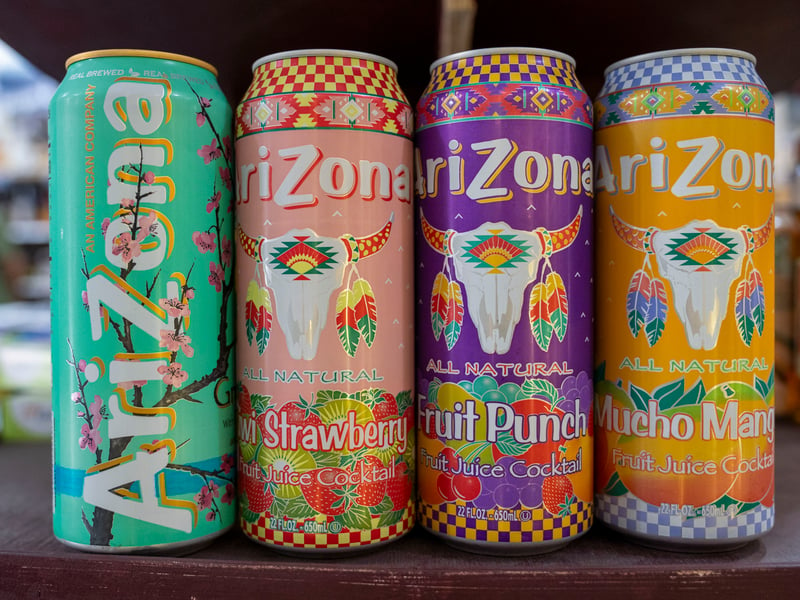
OAKLAND, Calif. (CN) — A federal judge on Thursday ruled in favor of Arizona Beverages in a false advertising class action over claims the popular drink company misled customers by advertising its flavored tea and juice drinks as “all natural” or “100% all natural.”
In his 13-page order, U.S. District Judge Jeffrey S. White granted summary judgment to the 99-cent iced tea creators after finding that the plaintiff, Thomas Iglesias, couldn’t prove the company violated state consumer laws, nor that he had an injury that granted him standing to sue.
White ruled that Iglesias’ decisions to continue purchasing Arizona beverages through 2022, even after learning that they didn’t contain completely “all natural” ingredients, “fatally undermine” his claims that he wouldn’t have bought the drinks otherwise.
“In other words, armed with the belief that Arizona Beverages contained synthetic ingredients or preservatives, Iglesias did not modify his behavior,” the George W. Bush appointee stated.
Because Iglesias did not rely on the drinks’ “all natural” labels to make his purchasing decisions, the judge said his claims under the California False Advertising Law, Unfair Competition Law and Consumer Legal Remedies Act all failed.
The judge ruled that Iglesias’ claims for breach of express warranty also failed for similar reasons.
Additionally, White also found that statements during Iglesias’ deposition ultimately cost him the opportunity for monetary damages. When asked about the relief he was seeking, Iglesias answered unambiguously that he didn’t care about monetary relief and only wanted Arizona to change its “all natural” label.
“Change the ‘natural’ thing on the — the ‘100% natural’ on the product. Just change it. Stop lying to consumers; that’s it,” Iglesias said.
Although Iglesias argued his deposition testimony contradicted his pleadings, previous court documents and the testimony of his experts as to money damages, the judge said it was enough to show he abandoned his claims.
“This is not a case where Iglesias misunderstood complex legal theories; he was asked directly if he sought a monetary recovery and answered in the negative, without objection from counsel,” White said.
The judge also ruled that an injunction was inappropriate because Iglesias previously stated he has no clear intentions to purchase Arizona Beverages in the future, even if the packaging were to be changed.
“Where a plaintiff would purchase a product again in the future but cannot do so because of false advertising, she suffers an injury-in-fact that can confer standing,” White explained.
Thus, without an injury to give him standing, White said Iglesias failed to show his future harm is “actual or imminent” or that there is a likelihood he will “again be wronged in a similar way.”
Iglesias, a San Francisco resident, filed the class action in 2022 after purchasing multiple Arizona beverages, including Mucho Mango, Kiwi Strawberry, Grapeade, Lemonade, Green Tea with Ginseng and Honey, and Fruit Punch, roughly between 2016 and 2022.
Iglesias claimed the beverages are not in fact “all natural” as advertised because they include “unnatural, artificial, and/or synthetic ingredients” for coloring, preservation and flavor.
Iglesias also claimed he relied on the company’s claim on its products that they are “100% natural” to purchase a beverage before discovering that they may contain added coloring, ascorbic acid, high fructose corn syrup and other additives.
The judge previously threw out Arizona’s attempt to dismiss the class action in 2023, saying he found it plausible that its advertising may have tricked consumers into thinking its drinks did not contain artificial ingredients.
Attorneys for both parties did not respond to requests for comment before press time.
The beverage company is known for its flavored tea and juice cocktail drinks and is owned by Hornell Brewing Co. Inc.
This case was filed in the Northern District of California.
Subscribe to our free newsletters
Our weekly newsletter Closing Arguments offers the latest about ongoing trials, major litigation and rulings in courthouses around the U.S. and the world, while the monthly Under the Lights dishes the legal dirt from Hollywood, sports, Big Tech and the arts.