
 Search Articles


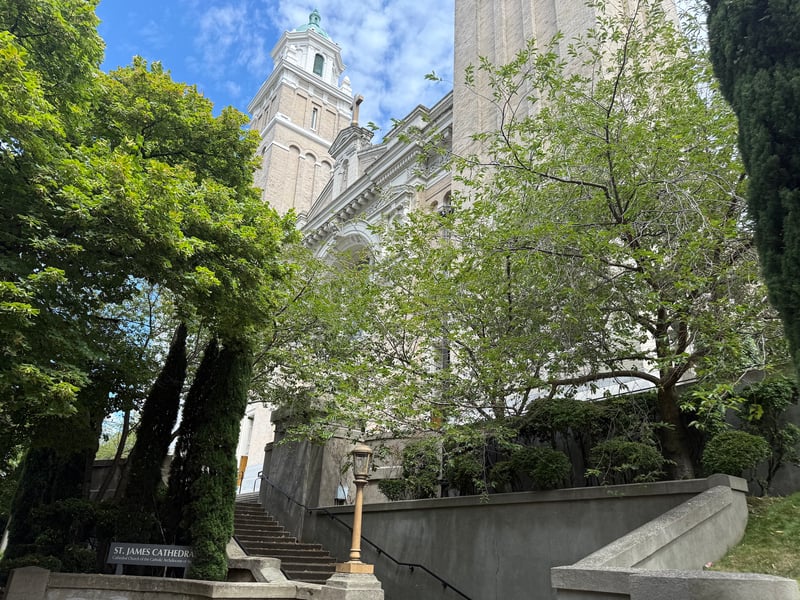
(CN) — A federal judge on Friday blocked a Washington state law requiring clergy to report child abuse disclosures made in sacramental confession, finding it infringes on church leaders’ free exercise of religion.
U.S. District Judge David G. Estudillo issued a permanent injunction against enforcement of Senate Bill 5375, writing that clergy members were likely to succeed on their claim that the law violates the First Amendment’s free exercise clause by forcing them to choose between their faith and the law.
SB 5375 — signed into law by Washington Governor Bob Ferguson in early May — made members of the clergy mandatory reporters of child neglect and abuse, requiring them to report suspected child abuse. Under the law, religious leaders would still be protected from being forced to testify about the disclosures in court proceedings. The law was set to take effect on July 27.
“There is no question that SB 5375 burdens plaintiffs’ free exercise of religion,” the Joe Biden appointee wrote. “In situations where plaintiffs hear confessions related to child abuse or neglect, SB 5375 places them in the position of either complying with the requirements of their faith or violating the law.”
The Catholic bishops sued the state in federal court at the end of May, accusing the state of unfairly targeting clergy and forcing them to choose “between eternal damnation or criminal prosecution.” The Trump administration intervened, pushing the federal court to block the state from enacting the law.
The state argued that the law is only asking for clergy members to report information that gives reasonable cause that a child is being abused, not to solicit otherwise confidential information. The state further argued that the law wouldn’t require clergy to become arms of the state.
A representative for the state attorney general couldn’t be reached for comment.
In his ruling, Estudillo found that the law “treats religious activity less favorably than comparable secular activity,” as it only removes pre-existing exceptions to reporting requirements for clergy members and not any other professionals.
“The targeted exception for clergy raises concerns, as the text of the bill and its legislative history arguably evince the intentional abrogation of a practice that the legislature understood to be religiously sacrosanct,” he wrote.
He added that the state did not present compelling evidence on how the exemptions for other professionals, such as law professors and those they supervise, are not comparable to the exemptions for clergy members’ mandatory reporting requirements.
“Ultimately, Washington’s failure to demonstrate why it has an interest of the highest order in denying an exemption to clergy while making such exemptions available to other professionals who work with underserved children … is likely fatal to SB 5375,” he wrote.
Opponents of the law celebrated the ruling as a win for religious freedom.
“This ruling confirms what has always been true: In America, government officials have no business prying into the confessional,” Mark Rienzi, president and CEO of the Becket Fund for Religious Liberty, one of the firms representing the clergy members, said in a statement.
“By protecting the seal of confession, the court has also safeguarded the basic principle that people of all faiths should be free to practice their beliefs without government interference.”
 Follow @mhattridge_
Subscribe to our free newsletters
Our weekly newsletter Closing Arguments offers the latest about ongoing trials, major litigation and rulings in courthouses around the U.S. and the world, while the monthly Under the Lights dishes the legal dirt from Hollywood, sports, Big Tech and the arts.