
 Search Articles


(CN) — A federal judge on Thursday ruled to block President Donald Trump’s executive order limiting birthright citizenship, certifying a class action covering all children who would be affected by Trump’s change to a centuries-old constitutional right.
U.S. District Judge Joseph Laplante issued a brief written ruling following an hourlong hearing in New Hampshire’s federal court, where the George W. Bush appointee agreed to grant a class-wide preliminary injunction that would protect any kids potentially affected by Trump’s order from losing citizenship.
In his order, Laplante found that the children were likely to succeed on the merits of their claims, were likely to suffer irreparable harm if Trump’s order were to take effect and that pausing it was in the public’s best interest.
The plaintiffs sought both the affected children and their parents to be members of the class, but Laplante limited class certification to the children.
The judge’s ruling is effectively a nationwide injunction — a practice that was stripped from federal judges’ toolkit last month when the Supreme Court found that they exceeded a district court’s power. However, the high court left the door open for class actions like this one that have the same broad effect.
This legal challenge was brought by a pregnant woman, two parents and their infants, and is one of numerous cases disputing Trump’s controversial January order that denies citizenship to children with parents in the U.S. unlawfully or temporarily.
Critics say Trump’s order violates the longstanding interpretation of the 14th Amendment, which mandates that people “born or naturalized in the United States, and subject to the jurisdiction thereof, are citizens of the United States and of the state wherein they reside.”
The Trump administration claims that undocumented or temporary U.S. residents are not “subject to the jurisdiction” of the country, allowing it to deny citizenship to those residents’ children.
“The 14th Amendment has never been interpreted to extend citizenship universally to everyone born within the United States,” Trump proclaimed in his order, suggesting that prior interpreters got it wrong. “The 14th Amendment has always excluded from birthright citizenship persons who were born in the United States but not ‘subject to the jurisdiction thereof.’”
But the plaintiffs argue that this interpretation disturbs a “constitutional bedrock” that has been in place for generations.
“The framers of the Fourteenth Amendment specifically enshrined this principle in our Constitution’s text to ensure that no one — not even the president — could deny children born in America their rightful place as citizens,” the plaintiffs, represented by the American Civil Liberties Union and other civil rights groups, wrote in their June lawsuit. “They did so with full knowledge and intent that this would protect the children of immigrants, including those facing discrimination and exclusion.”
Several other judges had previously issued blocks on Trump’s order through similar lawsuits challenging his interpretation of the amendment. But after those pauses were limited by the Supreme Court’s finding on nationwide injunctions, new class action cases like this one cropped up around the country.
Laplante had issued one of those narrower injunctions in a similar citizenship case earlier this year.
Cody Wofsy, an ACLU lawyer who argued for the plaintiffs, said Thursday’s ruling will help their fight to “ensure President Trump doesn’t trample on the citizenship rights of one single child.”
“This ruling is a huge victory and will help protect the citizenship of all children born in the United States, as the Constitution intended,” Wofsy said.
Carol Rose, executive director of the ACLU of Massachusetts, said that birthright citizenship “makes our country strong and vibrant, and denying citizenship to babies born in the U.S. is simply un-American.”
“This ruling is a crucial step in stopping this attack on newborn babies and on the very fabric of our nation,” Rose added.
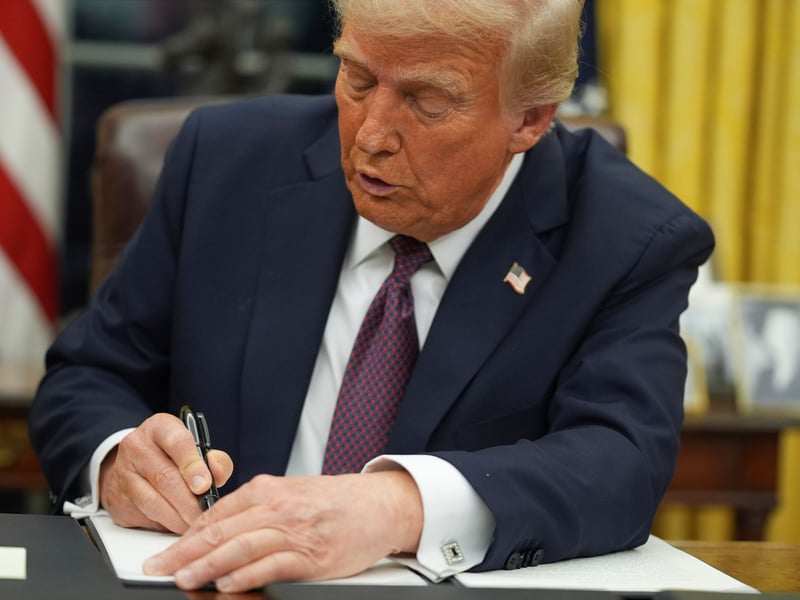
The scrutinized executive order was one of more than 40 that Trump signed on the first day of his second presidential term.
If the order is upheld by the courts, citizenship rights wouldn’t just be stripped from the children of undocumented immigrants — it could also threaten the status of those born to parents who are in the country legally on a temporary basis, like those on student or H-1B visas.
 Follow @Uebey
 Follow @uebey.bsky.social
Subscribe to our free newsletters
Our weekly newsletter Closing Arguments offers the latest about ongoing trials, major litigation and rulings in courthouses around the U.S. and the world, while the monthly Under the Lights dishes the legal dirt from Hollywood, sports, Big Tech and the arts.