Search Articles


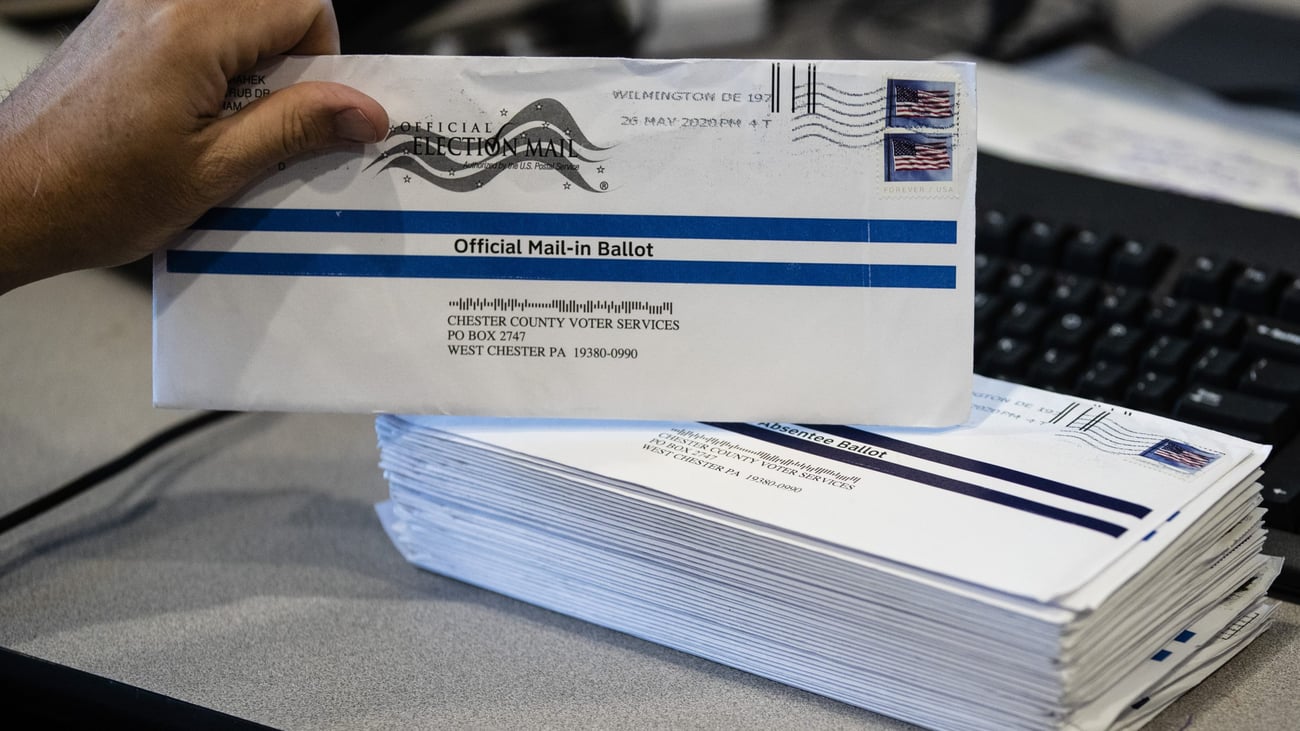
(CN) — A Massachusetts federal judge on Thursday blocked key aspects from President Donald Trump’s controversial executive order to restrict mail-in voting ahead of the midterm elections this November.
U.S. District Judge Indira Talwani sided with a coalition of 23 states in finding that Trump’s executive order — which called to compile lists of citizens state-by-state to determine voter eligibility — was an unlawful affront to the Constitution.
“The Constitution provides that only the states determine voter-eligibility requirements, subject, of course, to constitutional restraints,” Talwani wrote in a 37-page order. “Both Congress and the president lack any role regarding voter eligibility.”
The suing states claimed Trump’s executive order, signed in March, is a “completely unlawful” attempt to stifle voter turnout ahead of the midterms. In their complaint, they wrote that the president has “no authority to restrict voter eligibility or mail voting to a list of voters pre-authorized by the federal government.”
Talwani agreed, finding Thursday: “The Constitution does not grant the president any specific powers over elections.”
The Barack Obama appointee’s bombshell ruling comes just a day after Trump’s Postmaster General David Steiner said he would abide by the executive order by restricting the delivery of mail-in ballots to states that don’t turn in eligible voter lists. Steiner assured Senate lawmakers that this was to assure that “the right ballots are going to the right people.”
Talwani’s ruling now bars Steiner from doing so.
But it won’t apply to future elections — only those happening on or before Nov. 3. Last week, Talwani narrowly approved the states’ lawsuit as it applies to the midterms only, finding that Trump’s executive order “has create[d] a ‘direct and immediate’ dilemma” for the states since it requires them to change their election systems on the fly.
However, she also found it was too early for the states to challenge the executive order’s impact on elections in the more distant future.
“Withholding consideration of the EO as it relates to distant elections will post little hardship where there will be sufficient time for legal challenges to the EO after implementation,” the judge wrote on June 18.
Indeed, Talwani reiterated in her latest ruling that Trump’s new election rules “require immediate action” from the states. Nearly half of the suing states have already purchased mail ballot envelopes for this upcoming election cycle that will not be in compliance with Trump’s executive order, Talwani said.
“For example, Massachusetts has already spent $3 million on its mail ballot envelopes,” she wrote. “And Delaware has already purchased envelopes, received approval from USPS on the design and ‘does not have funds budgeted’ for purchasing new envelopes that would be compliant with the proposed rule.”
New York Attorney General Letitia James said in a statement Thursday that the president “does not have the power to take over state elections or invent new voting restrictions by executive order.”
“This right to vote is the foundation of our democracy, and today’s decision protects that foundation from another unlawful attack,” James said. “This executive order would have caused chaos for states, election officials, and voters across the country. It has no place in our nation.”
Meanwhile, White House spokesperson Abigail Jackson said Trump’s executive order “lawfully protects our elections, and we are confident that we will ultimately prevail in its implementation.”
The lawsuit is one of several to be filed against this particular executive order, and one of even more to be filed against Trump’s broader efforts to restrict mail voting from the White House.
Last year, a separate coalition of states challenged another executive order from Trump, which imposed citizenship documentation requirements and Election Day receipt rules for ballots. The states prevailed in that case, too, after a federal judge ruled on Wednesday that these changes would likely disenfranchise voters.
 Follow @Uebey
 Follow @uebey.bsky.social
Subscribe to our free newsletters
Our weekly newsletter Closing Arguments offers the latest about ongoing trials, major litigation and rulings in courthouses around the U.S. and the world, while the monthly Under the Lights dishes the legal dirt from Hollywood, sports, Big Tech and the arts.