
 Search Articles


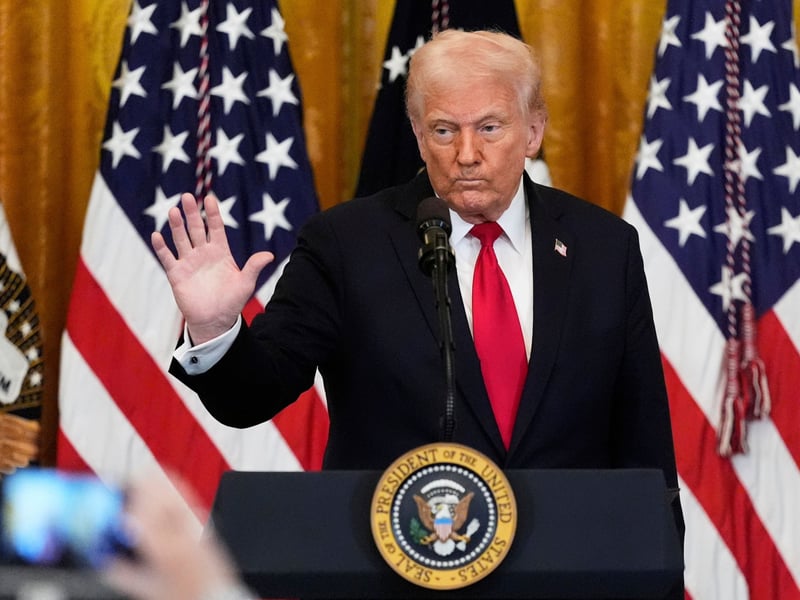
SAN FRANCISCO (CN) — A federal judge granted a temporary restraining order sought by San Francisco and more than two dozen other local governments, nonprofits and labor organizations that sued the Trump administration two weeks ago over its plans to fire thousands of federal workers.
In the complaint, San Francisco said any federal workforce reduction would cause adverse impacts to the city, citing three Department of Energy grants awarded to help the city develop green building standards and deploy EV charging infrastructure that are now frozen because the workers are no longer employed by the Department of Energy.
Senior U.S. District Judge Susan Illston, a Bill Clinton appointee, said at a hearing Friday that Trump can only order wholesale changes to the staffing of federal agencies with Congress’ approval.
“I think it is clear from Supreme Court precedent that the president has the authority to seek changes in the executive branch agencies, but he must do so in lawful ways, and in the case of large-scale reorganizations or critical transformations, he must do so with the cooperation of Congress,” she said. “The Constitution is structured that way — doesn’t require the cooperation of the courts. We’re not part of that, but it requires the approval and cooperation of the Congress because the agencies were created by statute by Congress. I’m, therefore, inclined to issue a temporary restraining order at this stage to protect the power of the legislative branch, which is what’s being affected by these activities.”
At issue was Trump’s Executive Order 14210, titled “Implementing the President’s ‘Department of Government Efficiency’ Cost Efficiency Initiative,” issued in February. The executive order calls for thousands of workers to be fired at federal agencies, the plaintiffs say.
“I think plaintiffs are likely to succeed on their claim that the directive to initiate large-scale reductions in force in Executive Order 14210 is ultra vires, as the president has neither constitutional nor — at this moment, anyway — statutory authority to reorganize the executive branch in this way,” Illston said. “The administrative agencies are creatures of statute. Many past presidents, including President Trump in his first term, have recognized that they need Congress to initiate major agency reorganizations. Nothing has changed since the first term to alter that law.”
Eric Hamilton, an attorney for the Department of Justice, said the executive order was not a mandatory order to cut workers but merely a planning process. He said the plaintiffs’ motion for a temporary restraining order should be denied because their claims were filed too late, noting that the executive order being challenged was issued in February, but the plaintiffs did not sue until late April.
“There’s case law in the Ninth Circuit as well as federal district courts in the state of California that have recognized that delays of much less are by itself enough for a court to deny a motion for a temporary restraining order,” he said.
Hamilton said Congress anticipated the problem of there being disputes over federal employment action, and that’s why it created a specific remedial scheme for litigation over that which goes to organizations such as the Merit System Protection Board.
“So it’s your argument that Congress anticipated that the president would issue an order effectively radically transforming all these federal agencies and that that should go to the administrative agencies for review?” Illston asked
“It is, Your Honor,” Hamilton replied.
“In 2019, the president didn’t even claim to be able to make the sweeping changes that he’s trying to order here,” Illston replied.
Hamilton also said that he believed the plaintiffs were likely to fail on the merits of the suit.
“If the organizational plaintiffs are concerned about disruption in the services that they feel they are entitled to from the federal government, the right way to litigate that isn’t to bring a lawsuit enjoining any sort of personnel changes in the agency with which they might work. Instead, they should bring a claim against the agency, seeking a court order compelling whatever it is they think they’ve been denied,” he said.
Hamilton noted that the challenged executive order just sought planning documents from agencies so that there can be discussion and coordination across the executive branch on workforce policy, which does not constitute final agency action.
“Then the action is premature?” Illston asked
Hamilton answered yes.
“But I thought you said it was three months too late?” Illston shot back.
“There are multiple problems with the way the lawsuit is structured,” Hamilton said.
Danielle Leonard, representing the plaintiffs, said the challenged executive order was not merely a planning process and that Trump was attempting to usurp the authority of Congress and the legislative branch.
“This is a mandatory order to begin reduction in force now and to do so in the manner that the president is directing and to do so in furtherance of the president’s transformation of the government. And they cannot do that consistent with the Constitution because there is no authority in the Constitution or statute that allows the president or the Office of Management and Budget or the Office of Personnel Management to do that,” Leonard said.
Leonard said that some of the reduction-in-force measures were set to go into effect next week, but more were coming in June.
“There will be no harm to the government of maintaining the status quo, Your Honor, of keeping in place the important functions, offices, programs and people who do the work in this government that we all rely on. Keeping them in place and maintaining the status quo for now is not going to harm our federal government. I want to make that very, very clear,” she said.
A separate case over mass government firings being heard in San Francisco federal court has also been heard in the past three months.
That suit was brought by nonprofit organizations and labor unions. A federal judge ordered the government to rehire thousands of workers it fired, but the Supreme Court said the nonprofits did not have legal standing to sue over the firings. The judge then ordered the agencies to provide fired workers with letters making clear they were not fired based on their performance.
Subscribe to our free newsletters
Our weekly newsletter Closing Arguments offers the latest about ongoing trials, major litigation and rulings in courthouses around the U.S. and the world, while the monthly Under the Lights dishes the legal dirt from Hollywood, sports, Big Tech and the arts.