
 Search Articles


SEATTLE (CN) — A coalition of cities and counties opposing grant conditions they say are President Donald Trump’s way of coercing them into adopting his policy agenda added another win on Tuesday as a federal judge placed an injunction against the federal government while the lawsuit plays out.
U.S. District Judge Barbara Rothstein, a Jimmy Carter appointee, previously granted a temporary injunction against the government in the case and later extended it, before ordering the injunction to remain in place.
In her opinion, issued Tuesday, Rothstein wrote that the coalition is likely to succeed on the merits of its claims and that the federal government violated its constitutional statutory authority when it stripped funding from the coalition.
The plaintiffs — which include King, Pierce and Snohomish counties in Washington state, as well as San Francisco and Santa Clara counties in California and the cities of Boston, Columbus and New York — all received grants to support housing assistance and transportation infrastructure, but objected to a series of new conditions.
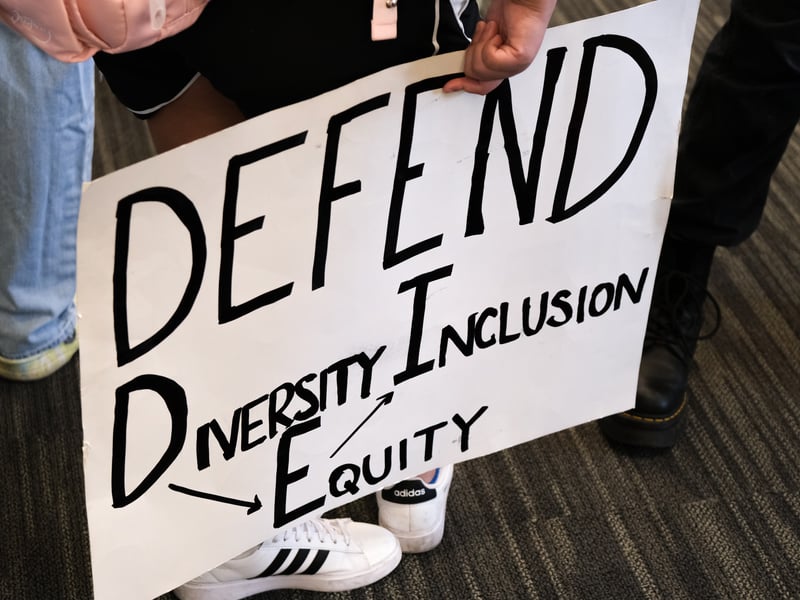
The counties and cities accuse the Department of Housing and Urban Development, the Department of Transportation and the Federal Transit Administration of “usurp[ing] Congress’ power of the purse” by adding conditions that don’t pertain to the purposes of the grant programs and require adherence to Trump’s anti-diversity, equity and inclusion policies.
Some of the conditions include agreeing not to use funds in a way that promotes illegal immigration, “gender ideology” — as defined in Trump’s much-challenged executive order — or elective abortion.
In her decision, Rothstein cited the separation of powers doctrine enshrined in the Constitution and Supreme Court precedent that found that if Congress awards funding to a group, the executive branch cannot thwart congressional will.
While the government argued that funding may be pulled due to policy changes, it failed to cite any statutory authority to withdraw the funding in the manner it did, she said.
“Whatever actions HUD chooses to take based on a change in its policy priorities must still be rooted in a congressional delegation of authority, a limitation that the cited regulation itself makes clear,” Rothstein wrote.
She also criticized the Trump administration, calling its decisions to remove funding to the coalition “arbitrary and capricious.”
“The court concludes that defendants have failed to demonstrate that the new funding conditions were the result of ‘reasoned decisionmaking,’ let alone have been ‘reasonably explained.’ In fact, they have not been explained at all,” she wrote.
Rothstein indicated in court that she planned to side with the coalition after hearing oral arguments in the case two weeks ago.
The coalition had asked Rothstein then to be explicit in the preliminary injunction, as the government would likely find loopholes.
“We can’t be in a situation here each time they come back with a slightly different interpretation or slightly different grant condition and have to come back before this court for enforcement of the injunction,” said Paul Lawrence, attorney with the Seattle-based Pacifica Law Group representing the cities and counties.
The government previously said they were following Rothstein’s previous temporary injunction.
“Nowhere in the [temporary restraining order] did the court order HUD to make grant funds available in the absence of an executed grant agreement,” Brian Kipnis with the U.S. Attorney’s Office told Rothstein in court two weeks ago. “And nowhere in the [temporary restraining order] did the court require HUD to accept grant agreements where plaintiffs had unilaterally stricken terms and conditions from proposed grant agreements as tendered to them.”
“I’m puzzled by what you just said,” Rothstein said then, questioning why the government didn’t accept the stricken agreement if the court had stricken the conditions within the order.
Kipnis explained that the government couldn’t accept an altered grant agreement because it would bind the government to those terms even if the government came out victorious in the case. The government isn’t enforcing the grant conditions even though they still appear in grant agreements, Kipnis said.
“Nobody is not getting a grant because of those conditions,” Kipnis said.
Subscribe to our free newsletters
Our weekly newsletter Closing Arguments offers the latest about ongoing trials, major litigation and rulings in courthouses around the U.S. and the world, while the monthly Under the Lights dishes the legal dirt from Hollywood, sports, Big Tech and the arts.