
 Search Articles


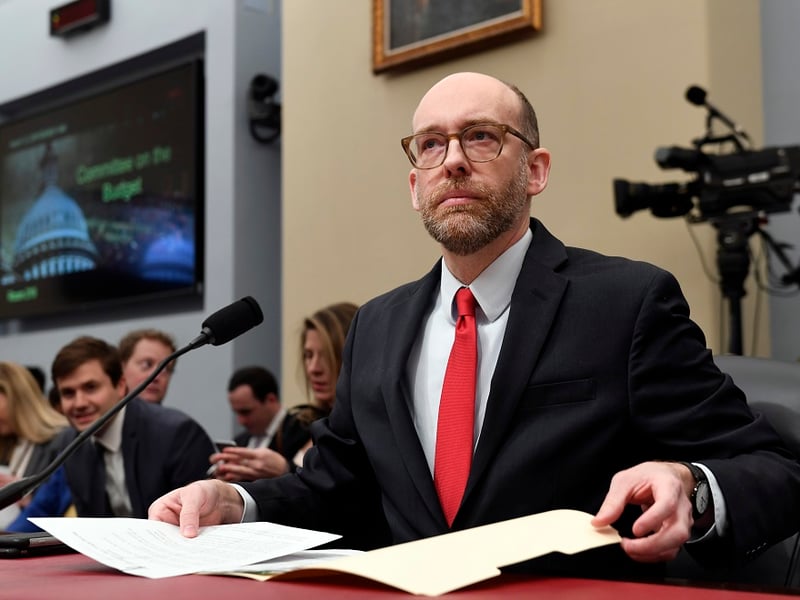
WASHINGTON (CN) — A federal judge granted a request Friday to maintain the Consumer Financial Protection Bureau’s existence while employees challenge efforts by President Donald Trump and billionaire Elon Musk to shut the agency down.
In a 112-page ruling, U.S. District Judge Amy Berman Jackson ordered for the agency’s contracts, work force and data to be reinstated while protecting and facilitating the employees’ ability to perform statutorily required activities.
The decision comes after the National Treasury Employees Union and other associations filed suit in the U.S. District Court for the District of Columbia, targeting the disclosure of sensitive information and Trump’s efforts to defund the bureau.
It argued Russell Vought, the acting director of the bureau, ordered all employees to stop work on Feb. 10 as part of an unconstitutional attempt to dismantle and shut down the agency. They claimed such efforts exceed the executive’s authority and usurp the legislature’s authority because the federal agency was established by congress.
“This claim is likely to succeed as there is no mystery about what is going on as the president and his delegees, Elon Musk and Russell Vought, have made their actions and intentions clear,” Jackson wrote in the order.
The judge blasted Vought for rendering “highly misleading, if not intentionally false” declarations at an evidentiary hearing she held on March 3 that the employees were hard at work even after they were ordered to stand down.
Jackson scheduled the hearing after receiving contradictory declarations from bureau officials and employees regarding whether certain statutorily mandated services — such as its consumer complaint response team, student loan ombudsman’s office, and natural disaster response unit — were still operating.
The day before the hearing, agency officials turned around and announced to the surprised staff that they were supposed to have been performing their statutorily mandated duties all along.
Jackson criticized this as an “eleventh-hour attempt” to persuade the court that the stop work email was nothing more than a typical pause in regulatory and enforcement activities that would mark the arrival of any new administration.
But it “was so disingenuous that the court is left with little confidence that the defense can be trusted to tell the truth about anything,” Jackson wrote.
She said that Vought was already fully engaged in a hurried effort to dismantle and disable the agency entirely — firing all probationary and term-limited employees without cause, cutting off funding, terminating contracts, closing all of the offices, and implementing a reduction in force that would cover everyone else.
“The testimony and the contemporaneous documents suggest that those last minute communications were nothing more than window dressing, and that nothing has changed. The defendants are still engaged in an effort to implement a Presidential plan to shut the agency down entirely and to do it fast,” Jackson wrote.
“Absent an injunction freezing the status quo — preserving the agency’s data, its operational capacity, and its workforce — there is a substantial risk that the defendants will complete the destruction of the agency completely in violation of law well before the court can rule on the merits, and it will be impossible to rebuild,” she added.
On the day Vought ordered all employees to stop work, Trump acknowledged that his goal was to have the agency “totally eliminated,” Jackson noted. During the White House press conference, Trump said “we did the right thing. The CFPB was a very important thing to get rid of, and it was also a waste. I mean, number one, it was a bad group of people running it, but it was also a waste.”
While the president is free to propose legislation to Congress to accomplish this goal, he is not free to eliminate an agency created by statute on his own, or before the court has had an opportunity to intervene, the judge wrote.
“Defendants do not even try to maintain that the Constitution or any statute accorded the president the authority to dismantle the agency,” Jackson wrote. “Instead, in their Feb. 24 opposition to the motion for preliminary injunction, they denied that it was happening at all, or that there was any imminent risk of its happening in the near future if the court declined to act.”
She found such actions were taken in complete disregard to Congress’ decision to establish the CFPB 15 years ago to serve as an independent financial regulator, which is now “the only federal agency authorized to supervise the nation’s largest banks for their compliance with consumer financial protection laws."
The creation of the bureau stemmed from the devastating financial crisis of 2008, and under the United States Code the agency must exist and must perform specific functions to protect the borrowing public, Jackson wrote.
To date, the CFPB has returned more than $21 billion improperly taken from at least 205 million consumers, in addition to at least $5 billion in civil penalties made available to compensate consumers in cases where the business that took their money is insolvent.
 Follow @Megwiththenews
Subscribe to our free newsletters
Our weekly newsletter Closing Arguments offers the latest about ongoing trials, major litigation and rulings in courthouses around the U.S. and the world, while the monthly Under the Lights dishes the legal dirt from Hollywood, sports, Big Tech and the arts.