
 Search Articles


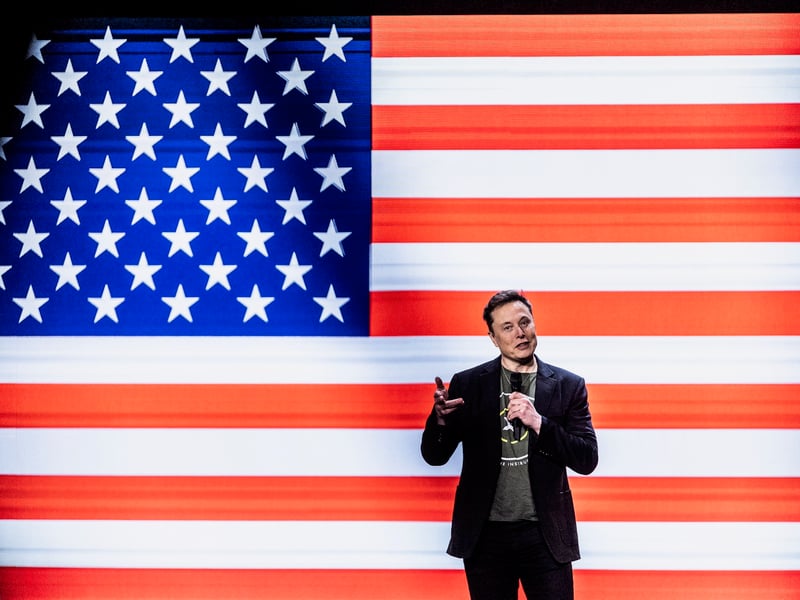
PHILADELPHIA (CN) — Tech billionaire Elon Musk and his pro-Trump super PAC’s $1 million giveaway for swing state voters who sign a petition survived legal challenges from Philadelphia District Attorney Larry Krasner Monday afternoon as a Pennsylvania judge denied Krasner’s injunction less than 24 hours before general election polls open across the country.
Common Pleas Court Judge Angelo Foglietta issued the ruling after a lengthy hearing on the matter, but did not immediately give a reason for the ruling.
With Musk again a no-show in the Philadelphia Court of Common Pleas Monday morning for the hearing, his counsel revealed that winners in his daily $1 million giveaway to “random” swing state voters were actually hand-chosen based on their potential as spokespeople for his super PAC, America PAC.
Krasner’s counsel, describing the announcement as a “bombshell” in their closing arguments, had asserted both that the giveaway — available to registered voters in swing states, including Pennsylvania — qualified as an illegal lottery and that it misled petitioners in violation of state consumer protection law.
“This was a profound, devastating and widespread deception,” Krasner’s attorney John Summers told Foglietta. “Eighteen thousand Philadelphians, according to (America PAC), signed up thinking they had a random shot, and they were cheated. If their story is true, it’s one of the greatest scams of the last 50 years. This is unbelievable.”
Musk’s attorney Chris Gober suggested that the definition of random — described as “without specific sequence of pattern” — applies to their giveaway program, in which winners are required to enter into a contract with America PAC to become a spokesperson.
While this activity qualifies as “random,” Gober argued, it does not qualify as “chance” — distancing the program from being a lottery.
In response, Krasner argued that the previously private details of how winners were selected greatly strengthens Krasner’s consumer protection claim.
“I’ve got 37 years in the court — this is one of the most disingenuous things I’ve ever heard,” Krasner said during testimony. “It’s obviously false.”
Continuing to assert that the new information bolstered their case, Krasner’s attorney John Summers asked Krasner whether he would consider America PAC’s use of the word “random” as deceptive.
“Let’s just say our case got better this morning,” Krasner replied.
Describing Musk and America PAC’s program as a “grift” done for political marketing purposes, Krasner noted the contract clause was never part of any written agreement made to Philadelphia residents who submitted personal details to enter and eventually win the giveaway.
“They were scammed for their information,” Krasner said.
During cross-examination, America PAC attorney Andy Taylor asked a combative Krasner if he would call for winners to be compelled to return their funds.
“I am not asking you to take money back from your victims,” Krasner replied.
In defense of America PAC’s collection of participants’ personal data, Taylor suggested the organization could reasonably ask for such information to compare it with state voter rolls and ensure that only registered voters were selected. Furthermore, Taylor argued doing so would also prevent individuals “from China, from Russia” or affiliated “with Hezbollah” from receiving the prizes.
“I don’t think I see anything responsible about this organization,” Krasner replied.
America PAC director and treasurer Chris Young also testified, providing additional information as to how petitioners were selected for the $1 million contract.
Young told Taylor that he had “used the petition like a job application,” checking the validity of petitioners’ identities and whether they were registered to vote using the personal data they had given. Next, he would scout them out on social media to determine whether they’d be a good spokesperson for the PAC.
Meanwhile, he said, America PAC’s legal counsel would draft a consulting agreement for the individual, including a nondisclosure agreement regarding the fact that their selection was not by chance.
“They couldn’t really reveal the truth about how they got the money, right?” Summers asked.
“Sounds right,” Young said.
The selected petitioners were informed ahead of time that they would be called onstage during an America PAC rally, Young said, but were not explicitly told that they had been selected for the $1 million prize.
While Young also declined to conflate the terms “random” and “chance,” he repeatedly avoided describing the giveaway using either word, instead calling it an “opportunity to earn.”
“I mean that you are going to have to do something to earn this compensation — I mean, these people are put through the ringer,” he said.
That sentiment was shared by Taylor as he described the giveaway as a “fee-for-service contract.”
Taylor also said they have no plan to extend the giveaway beyond Election Day, adding that the final preselected recipient would be from Michigan.
With no remaining “million-dollar earners” in Pennsylvania, Taylor said granting the injunction would only limit residents’ First Amendment right to sign a petition.
“(If) you grant that injunction they’re asking for, you’re going to smother in the crib the rights of millions of Pennsylvanians,” he said.
Philadelphia, the hearing’s venue, is anticipated to hold significant influence in the presidential election Tuesday. The largest Democratic stronghold in the most lucrative swing state, presidential nominees Kamala Harris and Donald Trump have repeatedly visited the City of Brotherly Love in recent months, with Harris planning an eleventh-hour concert including Lady Gaga and The Roots for Monday night.
 Follow @JacksonHeals
Subscribe to our free newsletters
Our weekly newsletter Closing Arguments offers the latest about ongoing trials, major litigation and rulings in courthouses around the U.S. and the world, while the monthly Under the Lights dishes the legal dirt from Hollywood, sports, Big Tech and the arts.