
 Search Articles


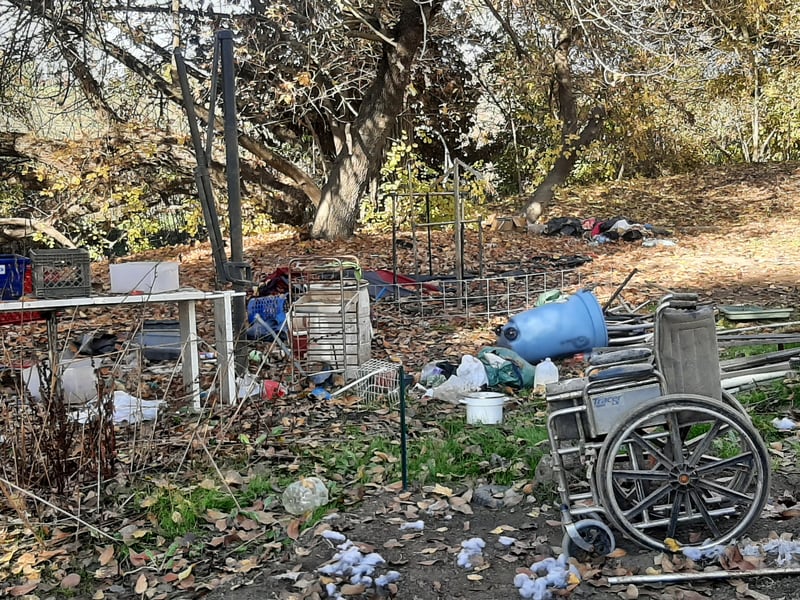
SAN FRANCISCO (CN) — An unhoused woman and a homeless advocacy group will remain in a lawsuit over the destruction of people’s property during homeless sweeps in Northern California after proving they have standing in the case.
U.S. District Judge Vince Chhabria ruled Thursday that Juanita Butterfly and Homeless Action have shown they’ve been injured by Sonoma County and others, though it was a near call for the advocacy agency. He denied a motion for summary judgment on the issue of standing.
Butterfly offered evidence that she’s homeless and had her property taken from her during sweeps. She also sought disability accommodations in April and was denied, the judge found. Taken together, the judge found enough evidence that Butterfly has a strong likelihood of suffering a future injury.
The defendants — Sonoma County, the county’s community development commission and the city of Santa Rosa — noted that at times Butterfly’s property was stored and not discarded. They also said she’s had the option to use non-congregate shelters, but had to leave because of rule violations.
“Even though her belongings have sometimes been stored, she has presented evidence that they were recently thrown away three times, in November 2024, April 2025, and May 2025,” the Barack Obama appointee wrote.
Homeless Action had a more difficult path to remain in the suit, though the judge decided it can remain.
The suit was filed in 2018 and sought to stop local officials from shuttering “Roseland Village,” an unhoused encampment in Santa Rosa. At the time, plaintiffs argued their Fourth and 14th Amendment rights had been violated by the seizure of their property.
At a hearing last month, a county attorney argued the case has changed significantly since its inception. Pointing to the U.S. Supreme Court decision of Grant’s Pass v. Johnson , county attorney Matthew Lilligren said no obligation to provide shelter exists.
Additionally, Lilligren argued that Homeless Action suffered no injury to its core activities because of the sweeps, meaning it can’t have standing in the case.
Chhabria called it a close question in his ruling.
The judge analyzed the advocacy group’s arguments before detailing the reason for his decision.
The group has argued that it has diverted resources, mainly volunteer time, from its core activities to respond to encampment sweeps. That has taken resources away from duties like educating the public and pushing for proactive approaches to the unhoused issue.
That argument failed with the judge.
“An organization ‘cannot spend its way into standing simply by expending money to gather information and advocate against the defendant’s action,’” Chhabria wrote, citing Food & Drug Administration v. Alliance for Hippocratic Medicine .
Its second argument — that the defendants have directly affected and interfered with the advocacy group’s core business activities — persuaded the judge. However, it was a close call.
The judge wrote that whether the group offered direct services as a core activity before the sweeps began in 2017 remained in doubt. Homeless Action has offered declarations by its members that it’s always provided outreach and direct assistance. However, the judge noted that the group also has pointed to shifting away from advocacy toward monitoring and stopping sweeps.
“This statement suggests that HA was primarily an advocacy organization, and only turned to direct support in response to the defendants’ actions,” Chhabria wrote.
The judge also closely scrutinized the group’s claim that regular sweeps and property seizures make it difficult for it to contact members and offer them support. Chhabria pointed to a statement from Butterfly, who said people are hesitant to leave their property and attend Homeless Action meetings for fear of losing their items.
“If those people had notice before a sweep and knew that the defendants’ would store their belongings instead of throwing them away, arguably they would feel more comfortable participating in HA activities,” the judge wrote.
However, while the advocacy group met its legal burden at this stage, Chhabria questioned whether the evidence at trial will show that the relief it seeks would address the injury it claims.
Attorney Jeff Hoffman, an attorney for the plaintiffs, said he was pleased with the ruling, adding that his team believes they can establish their legal claims as the case progresses.
“The case is obviously not over and there will be challenges ahead,” he added.
Attorneys for the defendants couldn’t be reached for comment as of publication time.
Subscribe to our free newsletters
Our weekly newsletter Closing Arguments offers the latest about ongoing trials, major litigation and rulings in courthouses around the U.S. and the world, while the monthly Under the Lights dishes the legal dirt from Hollywood, sports, Big Tech and the arts.