
 Search Articles


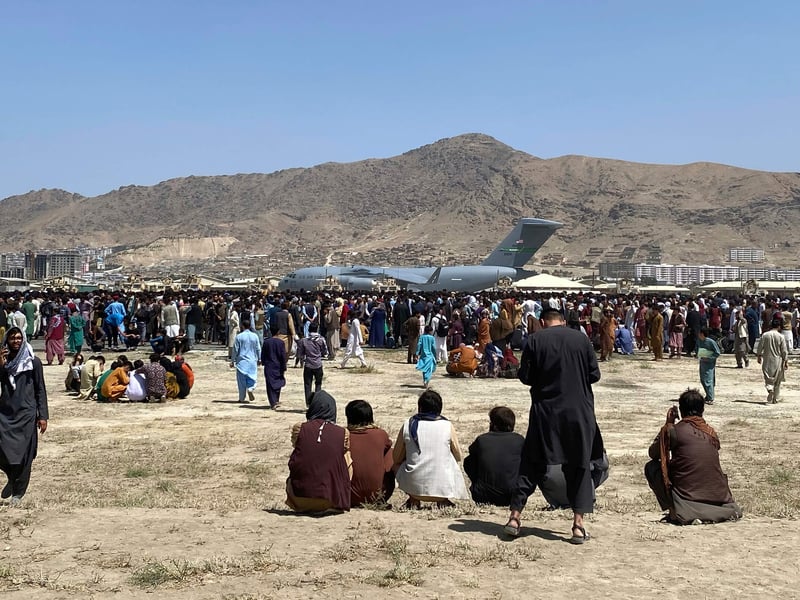
(CN) — A group of Afghan citizens and their U.S.-based family members can proceed with a lawsuit that challenges a late 2021 change in policy by U.S. Citizenship and Immigration Services that makes it impossible for petitioners still living in Afghanistan to be granted humanitarian parole, which would allow them to come to the U.S. and seek asylum.
U.S. Magistrate Judge Jeremy Peterson in Sacramento on Monday denied in part the federal government’s motion to dismiss the case.
Among other things, the judge wasn’t persuaded that the purported change in standards for approving humanitarian parole petitions — after the U.S. had withdrawn from Afghanistan and the Taliban was back in charge four years ago — fell under a so-called foreign affairs exception that exempts it from the public notice and comment requirements of the Administrative Procedures Act.
“Here, defendants’ argument is appealing at first blush,” Peterson said. “They argue that the suspension of operations and consular services at the U.S. embassy in Kabul falls within the exception, and that any policy change regarding parole ‘would have occurred in the context of a rapidly evolving security situation […] and under an impending deadline for withdrawal.’
“Concededly, it makes intuitive sense that the closure of the embassy in a country would affect parole applications from its citizens, but, without specific explanation as to the negative consequences, I am unwilling to find that the exception applies,” he concluded.
The judge emphasized that his ruling only applied to this early stage of the litigation, where he looks at the adequacy of the plaintiffs’ pleading to decide if they can proceed, and that a more developed evidentiary record may very well convince him that the foreign affairs exemption applies in this case.
Representatives of the U.S. Justice Department didn’t immediately respond to a request for comment.
In their complaint, the petitioners and their relatives claim that the 2021 change in policy made it virtually impossible for Afghans abroad to qualify for humanitarian parole.
“[U.S. Citizenship and Immigration Services]’ humanitarian parole process was a cruel deception,” they claim. “After enticing thousands of Afghans to apply and extort millions in fees, the agency abruptly changed the rules, effectively shutting the door on most applicants.”
While about 70,000 Afghans were paroled around the time of the U.S. withdrawal in August 2021, many Afghans who had worked with the U.S. military and agencies, or who were otherwise at risk from retribution by the Taliban, were left stranded in the country.
When tens of thousands of Afghans still in the country and their relatives in the U.S. started to petition for humanitarian parole after August 2021, they claim, the government shut down the application process for two months. And when it restarted, those in Afghanistan could no longer qualify for parole and those in other countries only in extreme cases where they faced imminent harm.
“On information and belief, USCIS has approved a little over 1,860 Afghan humanitarian parole applications out of the approximately 52,870 that it has received since July 2021,” the plaintiffs claim. “This is an abysmal approval rate of less than 3%.”
The Justice Department declined to comment on the ruling.
 Follow @edpettersson
Subscribe to our free newsletters
Our weekly newsletter Closing Arguments offers the latest about ongoing trials, major litigation and rulings in courthouses around the U.S. and the world, while the monthly Under the Lights dishes the legal dirt from Hollywood, sports, Big Tech and the arts.