
 Search Articles


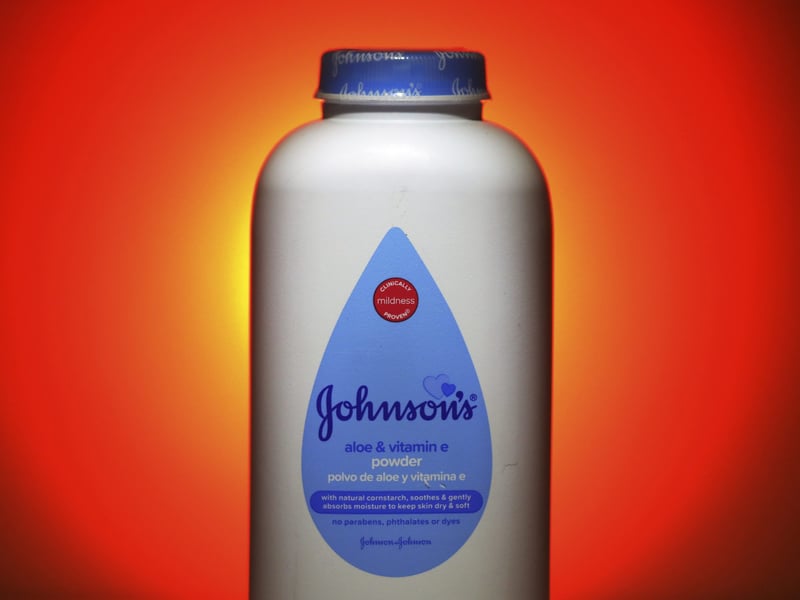
PHILADELPHIA (CN) — A securities fraud class action against pharmaceutical magnate Johnson & Johnson can proceed to trial after a Third Circuit panel found on Wednesday that the company’s purported concealment of asbestos contamination in talc products likely inflated its products’ value.
A majority of the three-judge panel said that U.S. District Judge Zahid Quraishi properly certified the investor class, ruling in December 2023 that the class period ended following a Dec. 13, 2018 news exposé of internal J&J documents showing the company knowingly hid instances of asbestos contamination in its talc products, including its baby powder.
Quraishi ruled that the exposé — along with five prior partial corrective disclosures of the purported contamination — directly correlated with subsequent declines in J&J stock valuation. Because J&J’s purported falsehoods created a price impact on the investors’ assets, the Joe Biden appointee wrote, the class action could proceed.
J&J, which denies asbestos contamination in its talc products, told the appeals panel that because the investors’ six identified disclosures relied on already public information, the disclosures could not create price impacts to justify a securities class action.
U.S. Circuit Judge Patty Shwartz — a Barack Obama appointee — wrote in the panel’s 2-1 opinion that J&J’s argument “ignores the fact that disclosures based on public information may nevertheless communicate a new signal to the market in certain situations.”
“For instance,” Shwartz said, “re-publication of information by a more credible source to a broader audience may convey to the market that the information is particularly significant or worthy of monitoring. Similarly, a disclosure that compiles and expertly analyzes stray bits of publicly available information can also communicate new, value-relevant information.”
In reviewing Quraishi’s analysis of each six disclosures, Shwartz said, the lower court correctly rejected J&J’s argument refuting any price impact.
“Each disclosure could have communicated new, value-relevant information to investors and was followed by a stock price decline for which there was no other explanation but the disclosure itself,” Shwartz wrote.
As such, Shwartz added, J&J failed to disprove the investors’ presumption of reliance, necessitating certification of the investors’ class.
In a statement sent to Courthouse News, J&J worldwide vice president of litigation Erik Haas expressed disapproval of the panel’s decision and announced that the company is seeking an en banc review, citing dissent from U.S. Circuit Judge Cindy K. Chung, a Joe Biden appointee.
In her dissent, Chung asserted that the lower court conducted insufficient analysis when determining whether J&J proved a lack of impact. Specifically, Chung criticized the lower court for failing to assess evidence introduced by J&J showing that the disclosures lacked newly public information.
Because such an analysis is required, Chung wrote, the Third Circuit panel should have vacated and remanded for the lower court to conduct a more thorough price impact analysis.
“As the dissent correctly notes,” Hass said, “the district court’s certification was premature and not supported by the requisite analysis, and therefore, the case should be remanded to the district court for a proper factual analysis.”
In an interview, the investors’ counsel Bobby Henssler said they were eager to present the case to a jury. A trial date has not yet been set.
The Third Circuit panel’s ruling marks J&J’s second major court loss this year. Earlier in April, a U.S. bankruptcy court judge rejected the pharmaceutical company’s third attempt at settling lawsuits filed by over 62,000 plaintiffs who say asbestos contamination of J&J baby powder and other talc products caused them to develop ovarian cancer.
J&J declined to appeal the bankruptcy court’s decision, instead announcing it would take on each individual tort case in court.
 Follow @JacksonHeals
Subscribe to our free newsletters
Our weekly newsletter Closing Arguments offers the latest about ongoing trials, major litigation and rulings in courthouses around the U.S. and the world, while the monthly Under the Lights dishes the legal dirt from Hollywood, sports, Big Tech and the arts.