
 Search Articles


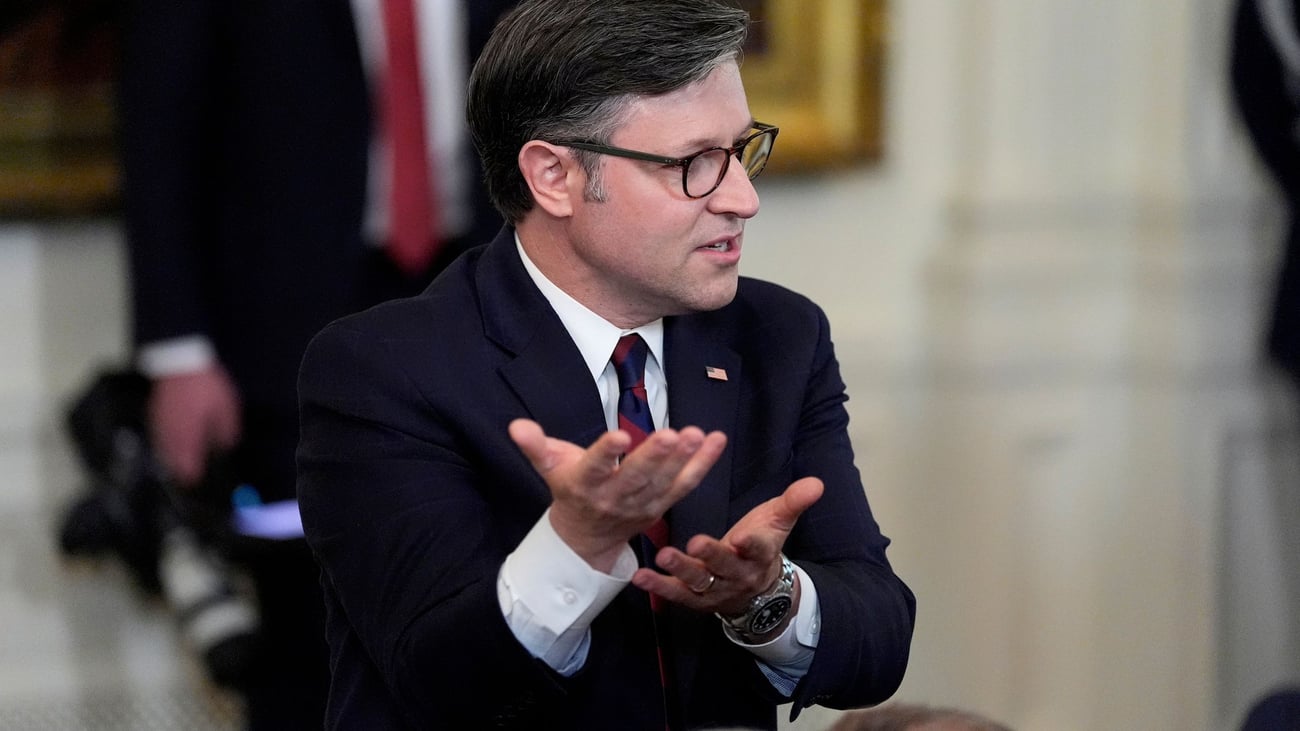
WASHINGTON (CN) — House Speaker Mike Johnson on Wednesday invoked centuries-old Christian theological teachings as he responded to Pope Leo XIV’s criticism of the Iran war, framing the Trump administration’s strikes against Tehran under the moral framework of a “just war.”
President Donald Trump has for days feuded with the first American pontiff, accusing him of being “weak on crime” and supporting a nuclear-armed Iran. Leo drew Trump’s ire with veiled criticism of the U.S.-led strikes on Iran, saying during a Palm Sunday homily that Jesus “does not listen to the prayers of those who wage war.”
But in public remarks Tuesday, Vice President JD Vance pushed back on the pope’s comments, telling a crowd during an event held by conservative advocacy group Turning Point USA that there was a “more than 1,000-year tradition of just war theory” that raised “disagreements” about whether some wars are morally justifiable.
“If you’re going to opine on matters of theology, you’ve got to be careful,” said Vance, a Catholic. “You’ve got to make sure it’s anchored in the truth.”
Just war theory is a longstanding moral tradition used in international relations and theology which has some of its roots in Christian teaching. Saint Augustine, a Roman-era theologian who influenced modern philosophy, argued war could be justified for the long-term preservation of peace — but that such a war should not be preemptive.
Speaking to reporters Wednesday morning, Johnson, a devout Southern Baptist, alluded to just war theory as he responded to questions about Trump’s feud with the pope.
The top House Republican said he was “taken a little bit aback” by Leo’s comments about whether Jesus heard the prayers of people who engage in war. “It’s a very well-settled matter of Christian theology,” he argued. “There’s something called the just war doctrine.”
Johnson said Trump and Vance’s remarks reflect “their deep understanding” of the stakes in the Iran conflict.
“The fact that you had the nation that was the largest sponsor of terrorism now having had that ability taken away from them, that means potentially millions of innocent people will be able to keep their lives and not get killed by terrorists — that’s a good thing," Johnson said.
He told reporters he didn’t want to criticize the pope and that he believed a pontiff or religious leader could say anything they wanted, but he suggested Leo should have expected a retort from the president.
“If you wade into political waters, I think you should expect some political response,” he said. “I would just say that these are matters that people of good faith and good sense can debate and think through, and I think that’s what that reflected.”
Though Augustine is considered one of the first theologians to discuss just war theory, the modern foundations of the tradition were expanded on by 13th century theologian Thomas Aquinas in his seminal work “Summa Theologica.” Aquinas argued war is morally justified if it is started by a sovereign and if there is a “just cause.”
He also wrote the belligerents in war should have “rightful intention, so that they intend the advancement of good, or the avoidance of evil.”
The Trump administration has framed its war in Iran as an effort to hobble the world’s largest state sponsor of terrorism and to ensure Tehran is not able to develop nuclear weapons they say would threaten the region. At the president’s order, the U.S. Navy this week has blockaded Iranian ports on the crucial Strait of Hormuz as the White House looks to pressure Tehran into a diplomatic resolution to the conflict.
Trump, meanwhile, has stepped up his attacks on the pope, posting another tirade on his social media platform Truth Social.
“Will someone please tell Pope Leo that Iran has killed at least 42,000 innocent, completely unarmed protesters in the last two months, and that for Iran to have a Nuclear Bomb is absolutely unacceptable,” he wrote.
Leo, for his part, has said he has “no fear” of the Trump administration and will continue to comment on world events.
 Follow @BenjaminSWeiss
Subscribe to our free newsletters
Our weekly newsletter Closing Arguments offers the latest about ongoing trials, major litigation and rulings in courthouses around the U.S. and the world, while the monthly Under the Lights dishes the legal dirt from Hollywood, sports, Big Tech and the arts.
Additional Reads
 California amps up effort to unmask ICE agents April 14, 2026