Search Articles


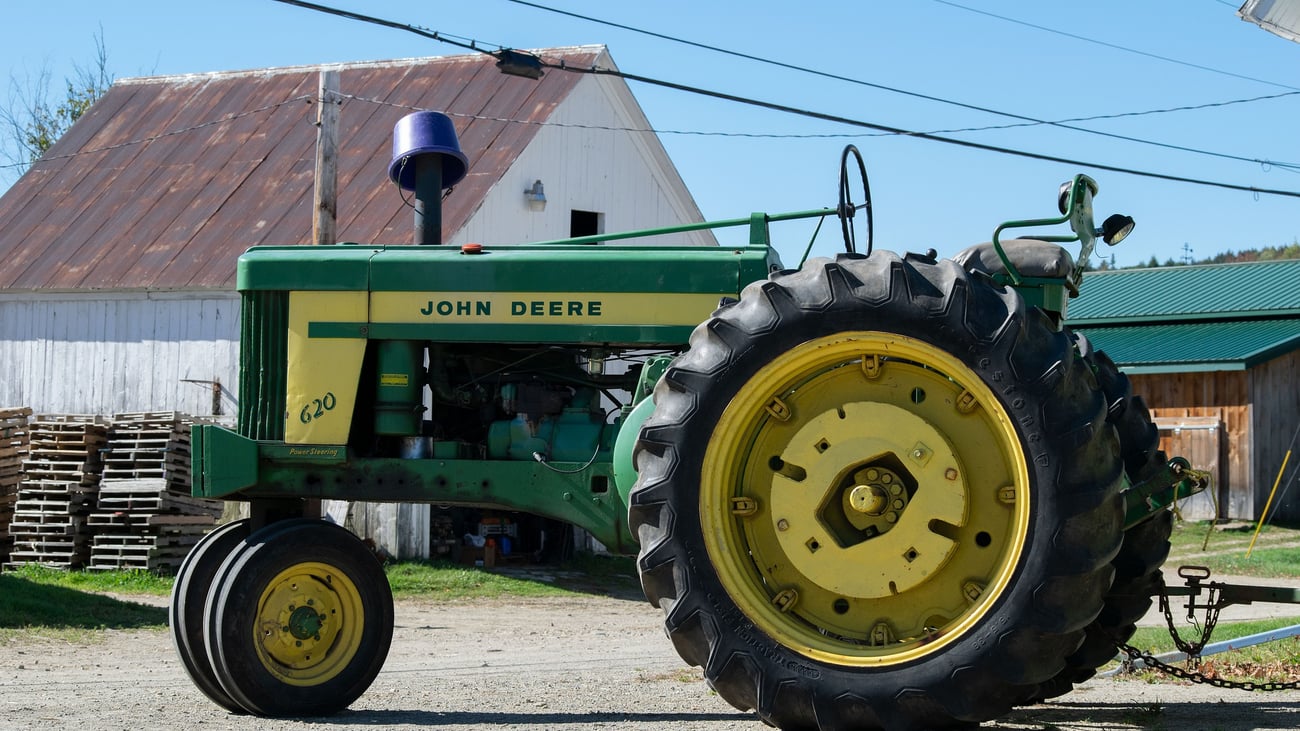
CHICAGO (CN) — Affirming the rights of farmers to repair their own equipment, John Deere has agreed to settle an antitrust case brought over its tractor repair requirements.
In a 37-page complaint filed in 2025, the Federal Trade Commission, joined by the attorneys general for Arizona, Illinois, Michigan, Minnesota and Wisconsin, accused John Deere of monopolizing the tractor repair industry. Specifically, they said John Deere purposefully withheld software tools necessary to fix its products.
Historically, farmers and independent repair shops have been able to repair tractors. But as agricultural technology has advanced, tractors stopped being purely mechanical and have instead come to rely on computers known as “electronic control units” or ECUs.
In its lawsuit, the FTC and the suing states said John Deere’s integration of ECUs had left otherwise knowledgeable mechanics unable to service the company’s products.
“[John] Deere’s restrictions deprive farmers of the use of their own repair labor, deny them access to their preferred repair service provider, prevent them from more reliably planting, spraying, or harvesting crops on a schedule that would allow them to maximize yield and force them to spend more on repair and parts,” the plaintiffs said in their complaint.
John Deere has long pitched its technological upgrades as a boon for farmers. But because the company dominates the agricultural machinery business, the increasing sophistication of its products gave it “monopoly power in the market for fully functional repair tools,” the plaintiffs said in their complaint. As a result, the company also had the power to charge a premium for repairs.
“Only [John] Deere has the requisite information and knowledge to develop a fully functional repair tool for Deere equipment” the plaintiffs said. “The effects of Deere’s conduct extend beyond the market for restricted repairs.” They noted that because farmers and mechanics might not always know right away what was wrong with a tractor or other equipment, the company’s “repair restrictions steer[ed] additional (non-restricted) repair business away from self-repair and [independent repair providers] and into [John] Deere’s dealer network.”
The settlement requires John Deere to provide farmers and other independent repair providers with the same repair services, including applicable software capabilities, that it currently provides authorized dealers.
Per the agreement, the company will not have to admit to violating any antitrust laws.
“The agreement reinforces commitments [John] Deere has been continually innovating for years to expand customer access, transparency and repair flexibility,” a company spokesperson said in an emailed statement. “Importantly, the agreement includes ongoing oversight that allows FTC and five participating states to verify [John] Deere’s compliance over time. We believe this outcome benefits customers, supports independent repair providers and dealers, and allows [John] Deere to continue focusing on innovation, equipment safety and agricultural productivity.”
The settlement order also requires John Deere to instruct authorized dealers to provide public notice about newly available repair resources. The order will last for 10 years but is subject to extension if John Deere violates its terms.
“Today’s settlement enables farmers to do what they’ve done for generations — fix their own tractors and other farm equipment — without having to pay an authorized John Deere dealer to do it for them,” FTC Bureau of Competition Director Daniel Guarnera said in a news release. “The settlement with [John] Deere will help lower costs for American farmers. The FTC will continue fighting against anticompetitive restrictions on American consumers’ right to repair.”
 Follow @RosenCaitlyn
Subscribe to our free newsletters
Our weekly newsletter Closing Arguments offers the latest about ongoing trials, major litigation and rulings in courthouses around the U.S. and the world, while the monthly Under the Lights dishes the legal dirt from Hollywood, sports, Big Tech and the arts.