
 Search Articles


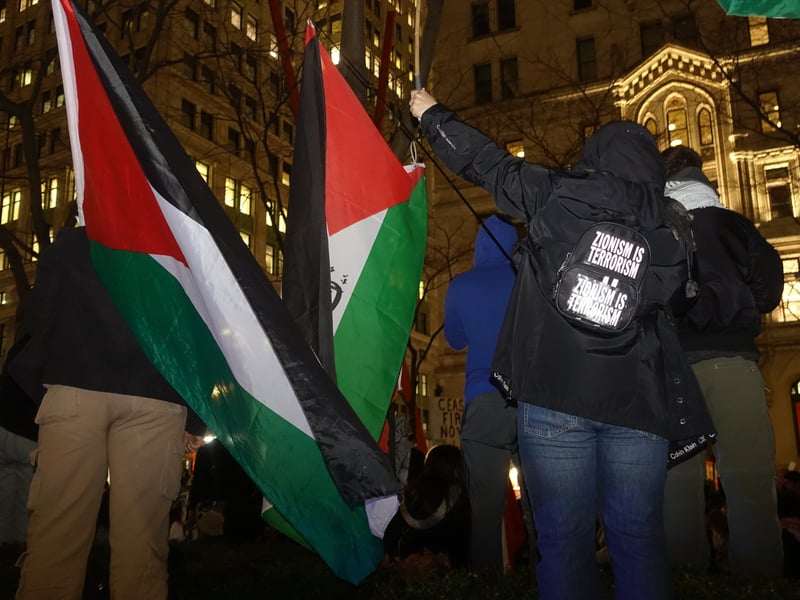
MANHATTAN (CN) — A New York federal judge on Wednesday advanced Jewish students’ civil rights claims against the Cooper Union private college in New York City, noting he was “dismayed” with the school’s deliberate indifference toward intimidation and harassment of Jewish students in the wake of the Oct. 7, 2023, attacks in Israel and ensuing war in Gaza.
The group of Jewish students, led by software engineer Rebecca Gartenberg, brought a civil complaintagainst the Cooper Union for the Advancement of Science and Art in April 2024, claiming they suffered a hostile educational environment on the basis of their national origin after an impassioned pro-Palestinian march on the campus of the East Village school following the Oct. 7 attacks.
“The court is dismayed by Cooper Union’s suggestion that the Jewish students should have hidden upstairs or left the building, or that locking the library doors was enough to discharge its obligations under Title VI,” U.S. District Judge John Cronan wrote in his opinion, allowing federal civil rights claims Title VI of the Civil Rights Act of 1964 to proceed, as well as statutory claims under New York state laws.
“These events took place in 2023 — not 1943 — and Title VI places responsibility on colleges and universities to protect their Jewish students from harassment, not on those students to hide themselves away in a proverbial attic or attempt to escape from a place they have a right to be," he wrote.
While Cronan, a Donald Trump appointee and adjunct law professor at NYU, advanced the suit’s top civil rights counts, he also granted Cooper Union’s motion to dismiss several of the students’ claims including breach of contract, common law negligence, premises liability and negligent infliction of emotional distress.
Cronan rejected the college’s assertion that the hostile environment claims are based largely on protected political speech by pro-Palestinian members of its community, and are therefore foreclosed by the First Amendment.
“While Cooper Union is correct that the First Amendment imposes significant limits on the ways in which the court can rely on many of the alleged acts of harassment detailed in Gartenberg’s complaint, Gartenberg nevertheless alleges sufficient facts to establish an actionably hostile educational environment based on instances of harassment that are not constitutionally protected in this context,” the judge wrote.
“So just as federal antidiscrimination law must provide some breathing space for contentious political expression if First Amendment rights are to survive, the Constitution must tolerate the regulation of at least some offensive speech if the Civil Rights Act is to achieve its promise of unlocking the benefits of employment and education for all Americans,” he added.
Cronan also denied Cooper Union’s motion to strike the students’ requests for punitive damages and injunctive relief.
The students say Cooper Union failed to take measures so that its Jewish students who identify with Israel would not be targeted, threatened, or harassed a pro-Palestine demonstration that left Jewish students — some clad in traditional Jewish garb — sheltering in a campus library for 20 minutes until the protesters vacated the building on their own accord.
The Lawfare Project, which represented the students’ discrimination suit, called the ruling “a critical step in holding the school accountable for antisemitism on campus.”
“We are pleased that the court has allowed our lawsuit against Cooper Union to move forward,” said The Lawfare Project director of litigation Ziporah Reich, Director of Litigation, wrote in a statement on Thursday. “We are proud to stand up for our clients and send a clear message to schools that turning a blind eye to antisemitism will not be ignored.”
The students’ claims include discrimination under Title VI of the Civil Rights Act of 1964, which prohibits discrimination on the basis of race, color, or national origin in any program or activity that receives federal funding or other federal financial assistance.
Jewish students at nearby New York University brought similar Title VI claims against the school in November 2023, in the month after the Hamas attack on Israeli.
Hamas triggered a devastating 15-month war in the Gaza Strip with its Oct. 7, 2023, cross-border attack, which killed some 1,200 Israelis and saw 250 others taken hostage. Israel responded with a fierce offensive that has killed over 46,000 Palestinians, according to local health officials, displaced an estimated 90% of Gaza’s population and sparked a humanitarian crisis.
 Follow @jruss_jruss
Subscribe to our free newsletters
Our weekly newsletter Closing Arguments offers the latest about ongoing trials, major litigation and rulings in courthouses around the U.S. and the world, while the monthly Under the Lights dishes the legal dirt from Hollywood, sports, Big Tech and the arts.