Search Articles


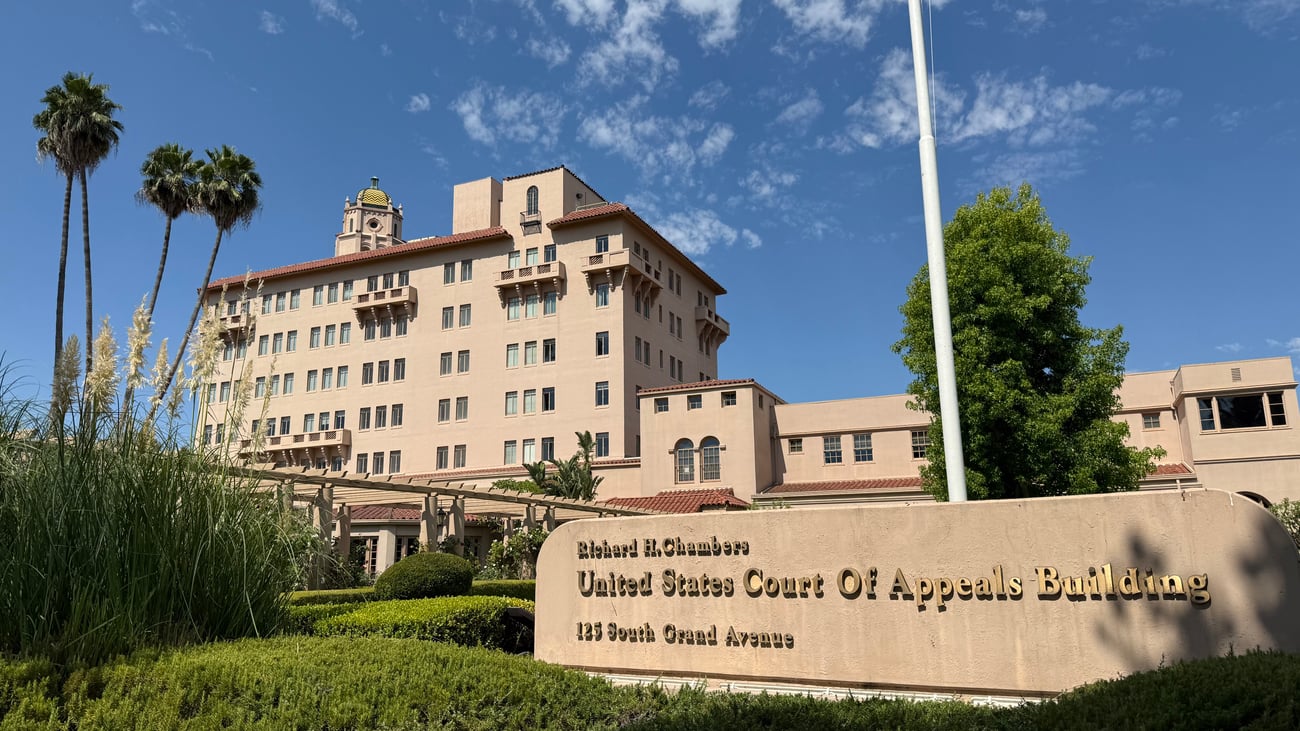
PASADENA, Calif. (CN) — An organization of Jewish parents and teachers on Wednesday asked a Ninth Circuit panel to reinstate their lawsuit claiming the Los Angeles Unified School District is allowing the surreptitious introduction of antisemitic ethnic studies curriculum into classrooms.
At a hearing in Pasadena, California, Jeremy Rosen — an attorney for Concerned Jewish Parents and Teachers of Los Angeles — argued the organization should be allowed to amend its complaint, which was thrown out by a district court judge who found the group lacked standing to bring the lawsuit because it had failed to show how they had been harmed by the challenged curriculum.
While the three judges didn’t indicate how they would decide the appeal, they seemed open to allowing the plaintiffs an opportunity to amend their complaint.
“Usually we only deny leave to amend if it would be futile,” U.S. Circuit Judge Patrick Bumatay, a Donald Trump appointee, observed. “Here they are saying there’s been bullying of at least some members of their organization. So, it doesn’t seem futile anymore.”
U.S. Circuit Judge Kenneth Kiyul Lee, also a Trump appointee, suggested the plaintiffs should get another chance to fix the shortcomings in their complaint since the lower court only weighed in once on the substance of their claims.
The judges were also skeptical that United Teachers of Los Angeles and the Liberated Ethnic Studies Model Curriculum Consortium — the two lead defendants — were entitled to the $600,000 in attorney fees the trial judge had awarded them under California’s anti-SLAPP statute.
Lee was concerned about applying the attorney fees provision of California’s anti-SLAPP statute — short for Strategic Lawsuit Against Public Participation — in a federal court context because other provisions of that law haven’t been curtailed in federal lawsuits.
In a state court lawsuit, where the anti-SLAPP statute prohibits amending a complaint or seeking discovery before a motion to strike under that law has been decided, a defendant won’t rack up much in legal fees, the judge said. If in a federal case only the fee provision is applied, that would distort the purpose of this remedy, he said.
“I think it was intended as a slap on the wrist, now it’s a punch in the face in terms of the impact,” Lee said.
The third judge on the panel, U.S. Circuit Judge Jennifer Sung also showed some misgivings about the attorney fees. The Joe Biden appointee said if the federal judge lacked jurisdiction over the lawsuit because he found the plaintiffs had no standing, he may not have been in a position at all to award the fees at a later stage.
The organization of Jewish parents and teachers claim that the Liberated Ethnic Studies Model Curriculum Consortium, a nonprofit government contractor, conspires with the teachers union and the school district to prepare antisemitic teaching materials.
This curriculum, they claim, describes Zionism as a “settler colonial ideology that justifies ethnic cleansing” and Israel as a “fascist dictatorship.”
The purported “surreptitious” teaching of this material, the plaintiffs, argue is creating a hostile environment for Jewish children and teachers at LA’s public schools.
U.S. District Judge Fernando Olguin dismissed their second amended complaint in 2024, noting the controversial curriculum hasn’t actually been adopted by LAUSD, though two teachers purportedly have used it.
“The essence of plaintiffs’ alleged injuries appears to be that they are aware of the challenged curriculum, disagree with it, and fear it will be adopted or used in LAUSD classrooms,” the Barack Obama appointee said. “But it is far from clear that learning about Israel and Palestine or encountering teaching materials with which one disagrees constitutes an injury.”
At Wednesday’s Ninth Circuit hearing, the plaintiffs’ attorney argued that, if they were allowed to amend their complaint, they could add more tangible injuries.
“There’s been an increase in bullying at LAUSD since the last amended complaint,” Rosen told the panel.
In addition, the lawyer said, a teacher was barred from a meeting where the purported antisemitic teaching materials were discussed because she was Jewish.
Jacob Loup, an attorney representing the Liberated Ethnic Studies Model Curriculum Consortium, pointed the panel to Bumatay’s dissent in a Ninth Circuit decision where he said rigorous enforcement of the Article III standing requirement is indispensable and, without it, federal courts would become a forum for any party to air generalized grievances.
Article III standing refers to the constitutional requirement that a plaintiff must explain with some detail how they have been harmed or injured by a defendant, and how the court can address their grievance under the law, to proceed with a federal lawsuit.
“This lawsuit presents that very kind of generalized grievance,” Loup argued. “The plaintiffs complain about alleged curricular materials, but they don’t allege that those materials are being taught in their classrooms or in their schools. They, therefore, have not pleaded the type of concrete and particularized injury that Article III standing requires.”
 Follow @edpettersson
Subscribe to our free newsletters
Our weekly newsletter Closing Arguments offers the latest about ongoing trials, major litigation and rulings in courthouses around the U.S. and the world, while the monthly Under the Lights dishes the legal dirt from Hollywood, sports, Big Tech and the arts.