
 Search Articles


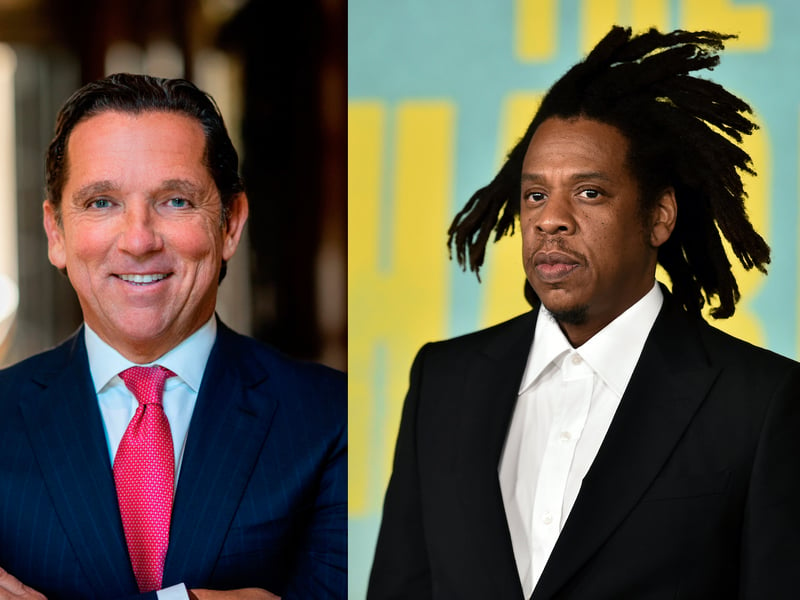
LOS ANGELES (CN) — A Superior Court judge on Wednesday indicated that he was now leaning toward allowing Jay-Z’s extortion claim against Houston-based attorney Tony Buzbee to go forward, a reversal of what he previously said he was inclined to do, thanks to startling new evidence presented to the court.
The new evidence: a transcript of a conversation between an unnamed woman who was suing Jay-Z and a pair of private investigators, in which she appeared to admit that the star rapper was not involved in her sexual assault but that it was Buzbee who “pushed” her to add Jay-Z, whose real name is Shawn Carter, as a defendant.
“If the evidence can be considered — and the court believes it can be considered for this motion — it supports not only the defamation cause of action but also the extortion cause of action,” Judge Mark Epstein wrote in his 49-page tentative ruling. “For if one accepts Doe’s statements to the investigators at face value, then she at least inferentially did not authorize the settlement letter to be sent or even conclude that she was going to sue Carter at the time the Letters were mailed.”
He added: “Without a client’s authority to send the demand letter, the court is far from confident that the Letters do not start to look more like extortion than an attempt to settle a civil suit.”
The ruling was not made final, and the hearing will continue next month.
The lawsuit is a sort of aftershock from the criminal charges filed against hip-hop producer Sean Combs, better known as P. Diddy or just Diddy. He has been accused of holding drug-fueled sex orgies, known as “freak-offs,” in which both male and female sex workers were recruited and, in some cases, coerced into what prosecutors called “elaborate and produced sex performances.” Combs is currently being held in federal prison without bail, awaiting trial on charges of racketeering, sex trafficking and transportation to engage in prostitution.
In September, Tony Buzbee, who is known for successfully defending Texas Attorney General Ken Paxton in his impeachment trial and unsuccessfully running for mayor of Houston, announced that he was representing more than 50 men and women claiming to be sexual assault victims of Diddy and others close to him who attended the “freak-offs.” He later gave interviews saying that some of these alleged perpetrators were just as famous as Combs. In November, Buzbee sent two demand letters to Carter’s lawyers, accusing the “99 Problems” rapper of raping two minors decades ago. The letters gave Carter a choice: enter into confidential mediation where “something of substance” would be given to the survivors or face lawsuits.
Carter declined the mediation offer. One of the accusers, a man, never filed a lawsuit. But the other, a woman, amended a lawsuit already filed in federal court in New York to include Carter as a defendant, whereas he had been previously unnamed, claiming that both Combs and Carter raped her when she was a minor, in 2000, following the MTV Video Music Awards.
“Another celebrity stood by and watched as Combs and Carter took turns assaulting the minor,” she wrote in the complaint. “Many others were present at the afterparty, but did nothing to stop the assault.”
But two months later, the woman dropped the lawsuit, asking for it to be dismissed with prejudice. In an interview with NBC News, the woman admitted, “I may have made a mistake in identifying," insisting that the assault happened, but in her memory, “not all of the faces there are as clear."
Carter then sued Buzbee, accusing the lawyer of “naked extortion.”
“Buzbee knows or should know that the allegations he has been peddling in the media are utterly false,” Carter wrote in the complaint. “Buzbee’s conduct crossed the line that the California Supreme Court has drawn between allowable pre-litigation advocacy and extortion.”
Since then, Buzbee has dropped out of more than a dozen cases against Combs after a federal judge in New York admonished him for not informing the court that he was not admitted to practice law in the Southern District of New York.
The increasingly embattled Buzbee filed an anti-SLAPP motion to dismiss Carter’s lawsuit, claiming that the letter was a “standard pre-litigation demand letter that made no improper threat and is privileged.” The defamation claims, he said, were based on statements made to the media that either didn’t even mention Carter and were either opinions, substantially true or made without malice. Carter’s suit, Buzbee wrote in the motion, was “filed purely to harass and intimidate those who dared to sue him, to frighten off other potential accusers, and to change the media narrative.”
A month ago, during the first hearing over the anti-SLAPP motion, Judge Epstein said he was inclined to dismiss three out of six of the defamation claims as well as the extortion claim, writing in his tentative ruling that “selling silence for money in the civil context is not extortion; it is a settlement with a non-disclosure element.”
But toward the end of that first hearing, a bizarre twist: Carter’s lawyers had just then received explosive new evidence that could upend the case, or at least the motion. That new evidence, filed later, turned out to be a declaration by a private investigator who’d spoken with Carter’s still-unnamed accuser. According to the declaration, the woman had admitted that it had been Combs who had raped her, that Carter was simply there at the party, and that Buzbee had “kind of pushed me toward going forward with him, with Jay-Z.”
“Jay-Z had nothing to do with this, correct?” the investigator asked, according to the transcript of the conversation, attached to the declaration.
“Right,” the woman answered.
“Other than he was at the party that you were at. So I mean, he did not assault you?”
“No,” she responded.
But in her own declaration, filed later, the unnamed woman reiterated her claim that she was raped by Carter, writing: “At the party, I accepted a drink and began to feel lightheaded. I went into an empty bedroom to lie down by myself. Soon after that, Diddy, Jay-Z, and another individual entered the bedroom. Jay-Z removed my clothes, and both Jay-Z and Diddy engaged in sexual intercourse with me. I did not consent to this, and, given that I was only thirteen at the time, I could not have given valid consent.”
As to the conversation with the private investigators, she wrote: “I felt intimidated and terrified at being confronted by these two individuals on my doorstep, and that they knew my name and home address despite me being anonymous in the New York Action.”
On Wednesday, Buzbee’s lawyer, Samuel Munoz, a partner at Sheppard Mullin, said the new evidence was “obtained under circumstances that are grossly improper.” The conversation had been recorded, he said, without the woman’s knowledge — a crime in California, though not in Alabama, where it took place. What’s more, he said, “Jane Doe was ambushed at her home outside the presence of counsel by investigators who threatened her” — that is, they seem to suggest she would only stay anonymous if she cooperated.
The judge appeared to be swayed by the argument, up to a point.
“I take your point on this, and I’ll give it some additional thought,” said Judge Epstein. “I don’t think there’s a question that she had a serious intent to file the lawsuit.”
Carter’s lawyer, Robert Schwartz, a partner at Quinn Emanuel, said it was an exaggeration to say that the woman was intimidated and that she could have walked back inside her house at any time. He said the tape showed that Buzbee had “planted” the “seed” in her head that Jay-Z had assaulted her.
When asked by the judge who had sent the private investigators to the woman’s house, Schwartz said it was “someone who works for Mr. Carter.”
“I’m told he did not know about this,” Schwartz said. “Someone who is one of the assistants decided to do this.”
“I have to tell you his fingerprints are all over this, whether he knew about it or not,” Epstein said. “From my perspective, the only reason Carter doesn’t know is because people wanted to give him plausible deniability.”
The judge had to cut the hearing off short because he had a trial to proceed over — a trial between an unnamed woman and another rapper, Soulja Boy. The anti-SLAPP hearing is set to continue on April 7.
 Follow @hillelaron
Subscribe to our free newsletters
Our weekly newsletter Closing Arguments offers the latest about ongoing trials, major litigation and rulings in courthouses around the U.S. and the world, while the monthly Under the Lights dishes the legal dirt from Hollywood, sports, Big Tech and the arts.