
 Search Articles


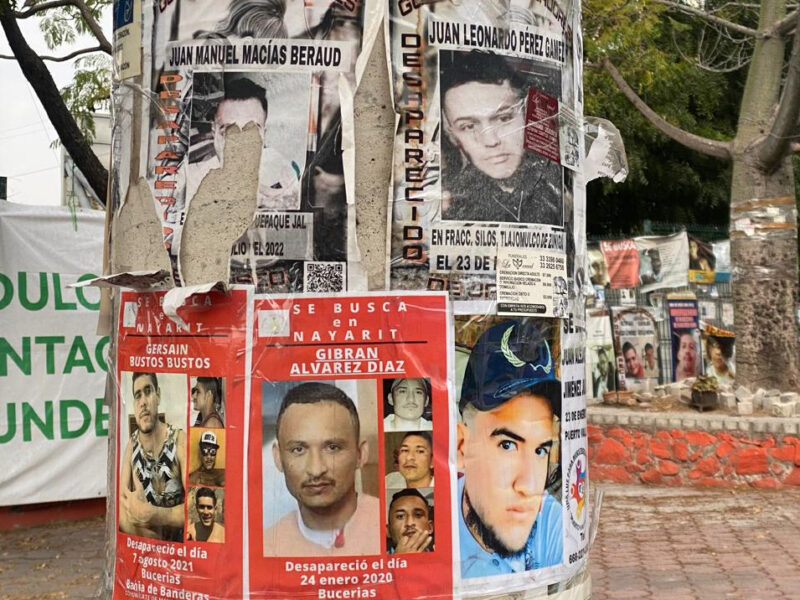
MEXICO CITY (CN) — On Thursday, a group dedicated to searching for missing people in Jalisco denounced ambiguous language in a congressional initiative that intends to protect the dissemination of flyers for missing people.
The initiative, approved Wednesday by the Security and Justice Commission from the Congress of Jalisco, aims to protect the placement of flyers for missing people. It states “these materials remain visible in permitted public spaces and in digital media, avoiding their alteration or undue removal and strengthening immediate search actions.”
The search collective, called the Light of Hope Collective, takes issue with the term “permitted public spaces,” which it claims is a modification from the original congressional initiative presented by independent congressman Alejandro Puerto.
“They are manipulating the power of language by introducing the term ‘prohibited public spaces,’ without clarity or certainty about what they consider prohibited or permitted,” the group said.
The collective states that they denounced the modification before the initiative was approved and express their dissatisfaction with new language presented. It accuses the government of prioritizing a sanitized version of public space over the disappearance crisis in Jalisco, in the process violating the rights of the disappeared.
“It’s not that we don’t understand: We understand perfectly,” the collective continued. “We know that public spaces must be claimed by citizens, and we take care of them, even when choosing where to post our missing persons flyers. Classifying them as ‘permitted’ and ‘prohibited’ confirms the discourse of privatization and whitewashing of public spaces, prioritizing the urban image over the human right to search and be searched for. The authorities of the three branches of government (executive, legislative, and judicial) must respect this right and fulfill their institutional obligations in the face of the crisis of forced disappearances.”
A United Nations convention adopted in 2006 obligates countries to assist in locating and searching for victims of enforced disappearance and protects those searching for a disappeared person from any ill treatment, intimidation or sanction in retaliation.
The state of Jalisco is under intense scrutiny following the death of Jalisco New Generation Cartel leader Nemesio Rubén Oseguera Cervantes, also known as El Mencho, in a Mexican Army operation Sunday in cooperation with the U.S. government.
The aftermath of the operation, including blockades on federal highways and armed confrontations in multiple states, left at least 73 dead, including 25 National Guard troops.
Guadalajara, the capital of Jalisco and Mexico’s second-biggest city by population, is hosting the FIFA World Cup in June.
Search groups in the state have been instrumental for uncovering atrocities both in Jalisco and other states.
In March 2025, a search group called Guerreros Buscadores de Jalisco, or the Jalisco Warrior Searchers were tipped off to Izaguirre Ranch in Teuchitlán, Jalisco, just 35 miles outside of Guadalajara. Authorities confirmed that the Teuchitlán ranch operated as a Jalisco New Generation Cartel training camp.
The searchers found hundreds of pairs of shoes, men’s and women’s clothing, letters to family members, lockets, photos and identification cards. They also found cremation-style ovens and charred human bones.
According to Jalisco government data, 16,000 people are missing in the state.
Subscribe to our free newsletters
Our weekly newsletter Closing Arguments offers the latest about ongoing trials, major litigation and rulings in courthouses around the U.S. and the world, while the monthly Under the Lights dishes the legal dirt from Hollywood, sports, Big Tech and the arts.