Search Articles


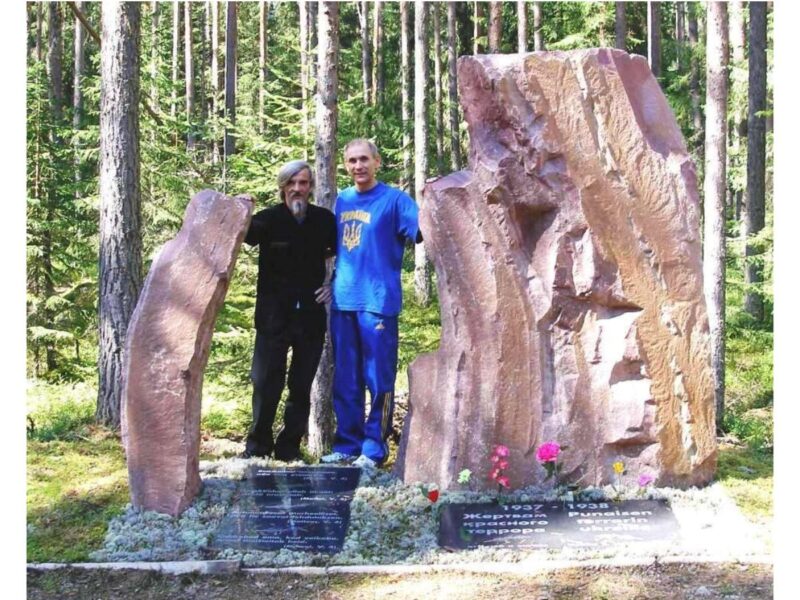
(CN) — A historian who spent decades uncovering Stalin-era mass graves scored a narrow win on Tuesday, as Europe’s human rights court found serious flaws in his prosecution but stopped short of calling it politically driven.
The European Court of Human Rights said Russia crossed the line on both detention and trial rights, finding courts are keeping Yuri Dmitriyev imprisoned without solid, case-specific reasons and undercut his defense by replacing his lawyer at a critical moment.
He contended his pretrial detention and prosecution were politically motivated.
Dmitriyev is not just another defendant. For decades, the historian and human rights activist dug up the buried history of Stalin’s Great Terror, helping identify execution sites and thousands of victims, including at Sandarmokh in Karelia, where roughly 6,000 people were shot and buried in the late 1930s. That work earned him international recognition and placed him at the center of growing tensions over how Russia confronts its Soviet past.
His case began in late 2016, when police received an anonymous tip accusing him of taking nude photographs of his adopted daughter. A search uncovered hundreds of images. Dmitriyev admitted taking them but said they were meant to document her health for custody officials.
He was arrested and held in pretrial detention, with charges later expanding to include sexual assault based largely on statements gathered during the investigation.
The case quickly turned into a legal roller coaster. In 2018, a trial court cleared him of the most serious pornography-related charges, accepting a medical explanation for the images. That ruling did not hold. On appeal in 2020, a higher court overturned key parts of the decision, convicted him and sharply increased his sentence from three and a half years to 13. He ultimately received 15 years in prison.
Before the European Court of Human Rights, Dmitriyev argued his detention and trial violated his basic rights and were tied to his work exposing Soviet-era repression. Judges agreed in part.
A big part of the problem was how long he was kept in detention before trial. Russian courts extended his custody using stock phrases about the seriousness of the charges and possible risks, without pointing to concrete facts from his case. The Strasbourg court called that out directly, finding “the domestic courts failed to provide ‘relevant and sufficient’ reasons to justify the applicant’s continued detention.”
The case broke down further on appeal. Just before a decisive hearing, Dmitriyev’s longtime lawyer was pushed aside, leaving a replacement with only days to prepare. The appeal court then increased his sentence, relying in part on new expert evidence introduced just days before the hearing, with little time for the defense to respond.
They weren’t just procedural errors. The rights court said “these shortcomings … adversely affected the applicant’s defense rights to such an extent as to undermine the overall fairness of the criminal proceedings.”
Outside the courtroom, criticism has been persistent. United Nations experts warned the case appeared aimed at silencing his work. The Council of Europe’s human rights commissioner questioned the fairness of the proceedings. The European Union went further, calling the conviction “unsubstantiated and unjust” and urging his release.
Still, the European Court of Human Rights stopped short of labeling the case political. Even with mounting international concern, judges said the evidence did not meet the high bar required to prove the prosecution was driven by ulterior motives.
The judges wrote, “While the expressions of concern and criticism relied on by the applicant attest to the sensitivity of the context and to the perceptions held by certain observers, they do not, in the absence of concrete and converging factual elements, suffice to establish that a political or retaliatory purpose was pursued by the authorities with regard to the applicant’s detention or prosecution.”
Philip Leach, a professor of human rights law at Middlesex University, said the ruling captures a clear tension.
“Serious concern was expressed about Yuriy Dmitriyev’s criminal prosecution by the U.N., EU and Council of Europe on the basis that the proceedings were politically motivated and aimed at silencing him and discrediting his work on uncovering Stalin-era mass executions,” he said.
He noted a split within the court, with a separate opinion seeing signs the case was meant to punish Dmitriyev for his work, while the majority said the evidence fell short, even as it found the trial unfair.
Olga Sadovskaya, director of international programs at the Committee Against Torture, said the ruling will not surprise those who followed the case closely. “What matters is that they are now on the record — formally, by an international court, in binding terms,” she said.
She pointed to what happened on appeal, where Dmitriyev’s lawyer was replaced at a critical moment. “This was an extremely grave violation – especially in Russia where the difference between the attorney appointed by the state and the attorney you trust … is huge,” she said, adding that “formal legal representation is not the same thing as effective legal representation.”
Still, she said the court stopped short of recognizing a political motive, a difficult threshold to meet. Dmitriyev, now 69, remains in a strict-regime penal colony in Mordovia serving a 15-year sentence. She said he spent his life identifying victims of Soviet executions, and while the judgment does not free him, it names what was done to him.
That broader context is hard to ignore. Dmitriyev worked closely with Memorial, a prominent rights group later dissolved under Russia’s “foreign agent” laws, and was represented in part by lawyers affiliated with the organization. His prosecution unfolded alongside a wider crackdown on civil society and historical research.
Nataliya Sekretareva, head of legal at Memorial, called the ruling “a bittersweet victory,” noting the court confirmed violations of his fair trial rights while Russia “continues to ignore ECHR judgments with complete impunity.”
She added that the judgment underscores how difficult it remains to prove political motives behind prosecutions, especially as pressure on civil society intensifies. “Just last week, the Ministry of Justice petitioned the Supreme Court to designate the ‘Memorial movement’ as an extremist organization,” she said, adding the case has been classified as “top secret,” leaving the group without access to the charges against it.
Russian authorities did not respond to requests for comment.
Legally, the ruling has limits. Russia left the Council of Europe in September 2022, but the court retains jurisdiction over acts before that date, including this case. The judgment does not overturn his conviction or secure his release. It orders 2,000 euros (about $2,303) in damages and will become final within three months if no appeal is filed.
Courthouse News reporter Eunseo Hong is based in the Netherlands.
Subscribe to our free newsletters
Our weekly newsletter Closing Arguments offers the latest about ongoing trials, major litigation and rulings in courthouses around the U.S. and the world, while the monthly Under the Lights dishes the legal dirt from Hollywood, sports, Big Tech and the arts.