
 Search Articles


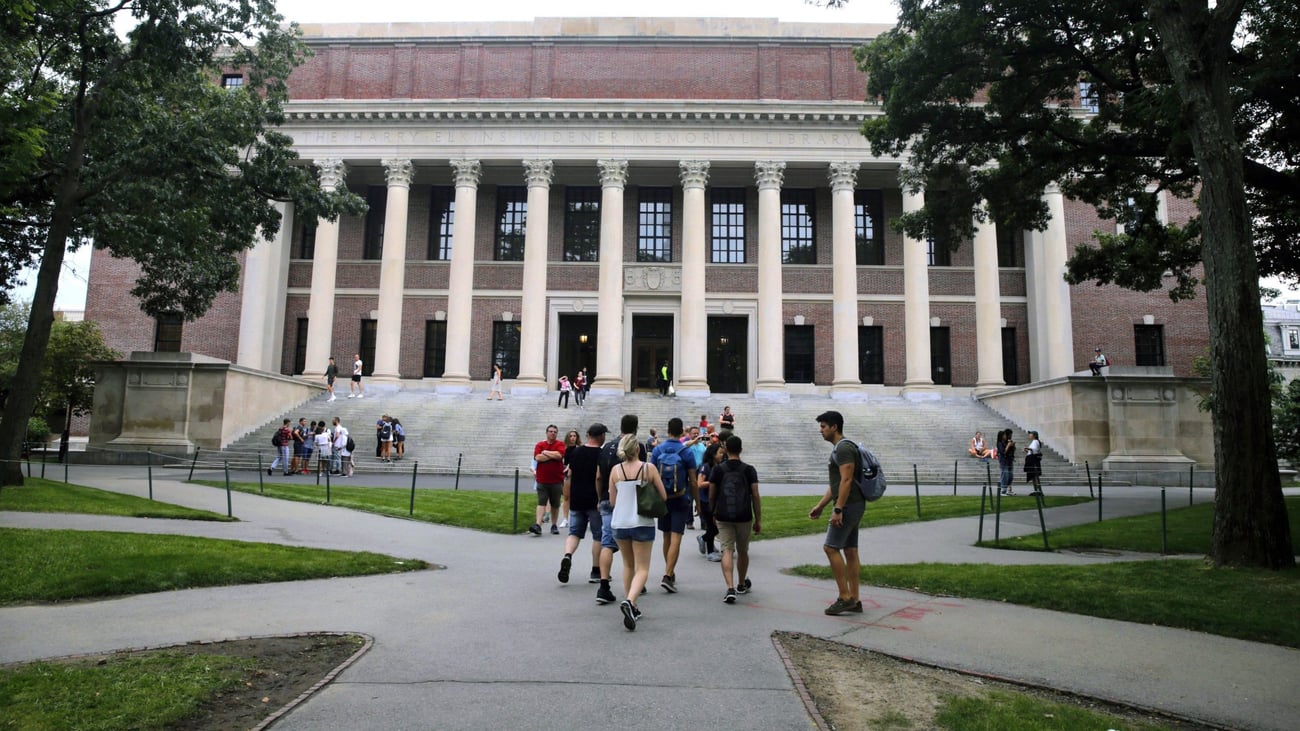
MANHATTAN (CN) — Two Brown University student athletes asked a New York federal appeals court on Tuesday to revive their civil antitrust class action accusing elite Ivy League universities of an unlawful price fixing conspiracy over the schools’ collective refusal to offer athletic scholarships and compensation to student athletes.
Collegiate athletes Tamenang Choh and Grace Kirk initially filed suit in Connecticut federal district court in March 2023, naming as co-defendants Brown University, Columbia University, Cornell University, Dartmouth College, Harvard University, Princeton University, University of Pennsylvania and Yale University, in addition to The Council of Ivy Presidents, the inter-collegiate governing body that oversees athletic policies at the eight universities.
The class action focused on a pact among the elite schools from 1954 when the Ivy League athletic conference was founded — the so-called “Ivy League Agreement” — that prohibited athletic scholarships and affirmed athletes shall be admitted as students and financial aid will only be awarded on the basis of economic need.
Both plaintiffs received need-based financial aid from Brown that did not cover the total of their tuition, fees, room and board and incidental expenses but claim the ongoing Ivy League Agreement was price fixing that suppressed their overall financial aid, in violation of the Sherman Antitrust Act of 1890, because without athletic scholarships, they were forced to pay more in tuition than they would otherwise.
The lower court dismissed the case the following year, finding that the plaintiffs had not properly defined the relevant market for their claims of anticompetitive effects.
On appeal before the Second Circuit Court of Appeals, Choh and Kirk asked the three-judge panel to resuscitate the thrown-out case to undergo additional litigation, asserting that they had sufficiently and plausibly pleaded a horizontal price fixing conspiracy.
The panel signaled Tuesday that the plaintiffs were facing an uphill battle to overturn the dismissal and advance the case into discovery.
“The thing that makes this difficult to understand is that students go to different schools, not just because of the cost, the availability of an athletic or non-athletic scholarship. They may go for other reasons,” U.S. Circuit Judge Richard Wesley, a George W. Bush appointee, said, appearing remotely at oral arguments. “They might be interested in both, but they go for other reasons, don’t they? And so don’t you have a problem about the interchangeability here, the availability of alternatives?”
Seth P. Waxman, from Wilmer Cutler Pickering Hale, defended the universities, reiterating the dismissal ruling that the plaintiffs had not identified the relevant market for their antitrust claims.
“This circuit, repeatedly in at least a half a dozen cases, has made clear that that pleading requirement applies even where the plaintiff seeks to proceed by showing direct effects of an agreement, a horizontal agreement among competitors,” he said. “The court below was entirely correct that the plaintiffs failed in this threshold obligation.”
The schools argued on appeal that the plaintiffs had determined an “implausibly narrow” market of schools considered by student-athletes with elite academic and athletic credentials, consisting exclusively of the eight Ivy League schools, excluding the many other academically selective schools that also offer the chance to compete in Division I athletics.
“There are the following other schools — Duke, University of Virginia, Stanford, Northwestern — that offer top quality Division I athletics and wonderful academics,” Waxman said during oral arguments.
U.S. Circuit Judge Dennis Jacobs, a George H.W. Bush appointee, proposed a hypothetical, querying if half of the competitors agree to pay nothing, whether or not the remaining half of the competitors were then “under much less pressure to offer fair and competitive rates” for elite student-athletes.
“In the 72 years since this alleged horizontal price fixing conspiracy was cooked up, there isn’t any evidence whatsoever that schools in the other 51 conferences in Division I are not offering athletic scholarships because the Ivy League gets away with it,” Waxman said.
U.S. Circuit Judge Beth Robinson, a Joe Biden appointee from Vermont, joined Jacobs and Wesley on the panel, which did not immediately rule from the bench.
 Follow @jruss_jruss
Subscribe to our free newsletters
Our weekly newsletter Closing Arguments offers the latest about ongoing trials, major litigation and rulings in courthouses around the U.S. and the world, while the monthly Under the Lights dishes the legal dirt from Hollywood, sports, Big Tech and the arts.


