
 Search Articles



AVIGNON, France (CN) — On Wednesday, Gisèle Pelicot addressed a courtroom packed with judges, lawyers, journalists and some of the 51 men on trial charged with raping her at her ex-husband’s bidding.
“It’s true that I hear lots of women, and men, who say ‘you’re very brave,’” she said. “I say it’s not bravery, it’s will and determination to change society.”
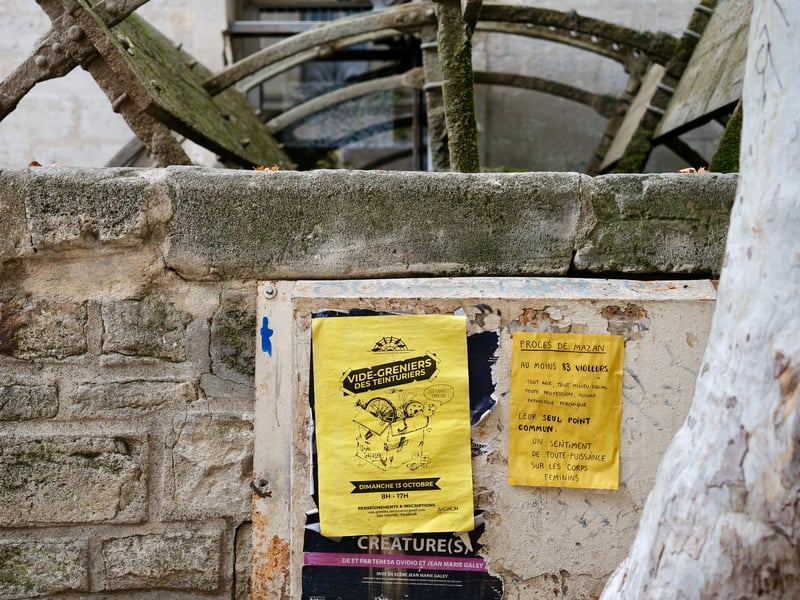
Pelicot, 71, has been lauded for waiving her right to anonymity and making the trial public, and her insistence on shifting the blame from the victim to the perpetrators. Every day, dozens of people applaud her arrival in the lobby of the Avignon Judicial Courthouse. On the narrow streets nearby, Gisèle Pelicot is everywhere — on posters, banners and scribbled on walls. The case has attracted worldwide attention.
During a roughly 10-year period from 2010 to 2020, Dominique Pelicot — Gisèle Pelicot’s ex-husband — invited dozens of strangers to their house to rape her while she was unconscious. He meticulously documented the assaults in thousands of photos and videos, which were found on his computer when he was filming under women’s skirts at a supermarket.
The majority of the assaults happened in the Pelicot’s home in Mazan, a town near Avignon with a population of about 6,000.
The images encouraged Gisèle Pelicot to publicize the trial. Most people who experience sexual abuse don’t have proof; rape trials often pit one person’s word against another’s.
Dominique Pelicot crushed up lorazepam, a tranquilizing anti-anxiety pharmaceutical, and slipped it into his then-wife’s wineglass. Despite suffering memory lapses and gynecological issues, Gisèle Pelicot never suspected she was being raped by strangers in her bedroom.
She recounted a time when Dominique Pelicot, who has admitted drugging and raping her, brought an unfinished wineglass to her bedside.
“I said, ‘oh, the luck I have, to be with a love who thinks of me,’” Pelicot told the courtroom, now aware that the wine likely was drugged. “How could you have betrayed me to this point?”
Gisèle Pelicot said that her ex-husband had her full trust.
“I am a woman who is totally destroyed, and don’t know how I can pick myself up from this,” she said.
Dominique Pelicot, who was a few feet away from her in a glass box flanked by two policemen, rubbed his temples and hung his head. He rarely looked at her during her address, which lasted for roughly an hour. The guard on his left stared at Gisèle Pelicot, cradled his chin in his hands and looked like he might burst into tears.
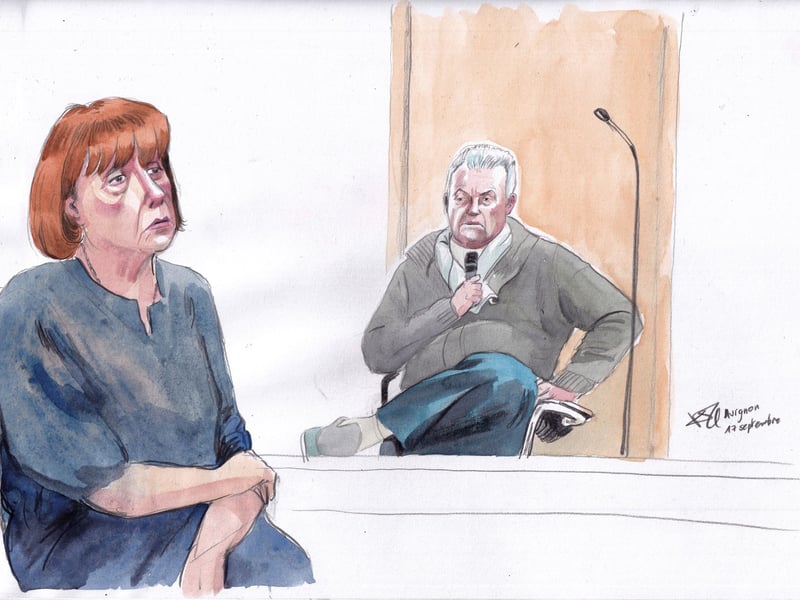
“When you’re raped there is shame, and it’s not for us to have shame — it’s for them,” she said, referring to the men who assaulted her.
Nearly every week, a different group of the men — usually about six per rotation — give testimony. Though 51 men are on trial, only 18 are detained. The rest enter and exit the courtroom as members of the public; they usually wear baseball caps, and walk undetected through the crowd that gathers daily in solidarity with Gisèle Pelicot.
The court hears personality analyses from psychiatrists and arguments from defense lawyers. Gisèle Pelicot has attended the trial almost every day since it began in early September. She rarely breaks eye contact when they take the stand, and they rarely look at her.
Multiple women — partners, a sister, a mother — testified on Wednesday to support the men in their lives accused of rape.
Wednesday morning, one woman showed up for her husband. She wore a surgical mask and spoke quietly through a translator; she was convinced of being partly to blame for what he did.
“It’s because I always refused him, I thought that because he’s a man, he had to go looking elsewhere,” she said. “It’s not because I refused him one time, but it was for a long time.”
Gisèle Pelicot responded through Stéphane Babonneau, her lawyer.
“You’re not obliged to have sex with your husband,” she said.
A 26-year-old woman came to support her long-term boyfriend, with whom she has a child. She said he is not a rapist, because that’s simply not who he is — and she said everyone in his entourage would agree. This was a common argument from the women who spoke in court.
Throughout the day, amidst the nearly dozen witnesses defending the characters of the accused, there was only one man.
Multiple women have said that the men they know might have done a “bêtise” but didn’t commit rape. In French, a “bêtise” roughly translates to “something stupid.” It’s a word that parents use to scold children for doing silly things, or that a couple might invoke while bickering.
Gisèle Pelicot’s voice broke as she addressed some of the witnesses who stayed in the room.
“I wanted to remind these women — wives, sisters, mothers — who say their husbands are good men who wouldn’t do this,” she said. “I had the same.”
 Follow @lilyradz
Subscribe to our free newsletters
Our weekly newsletter Closing Arguments offers the latest about ongoing trials, major litigation and rulings in courthouses around the U.S. and the world, while the monthly Under the Lights dishes the legal dirt from Hollywood, sports, Big Tech and the arts.