
 Search Articles


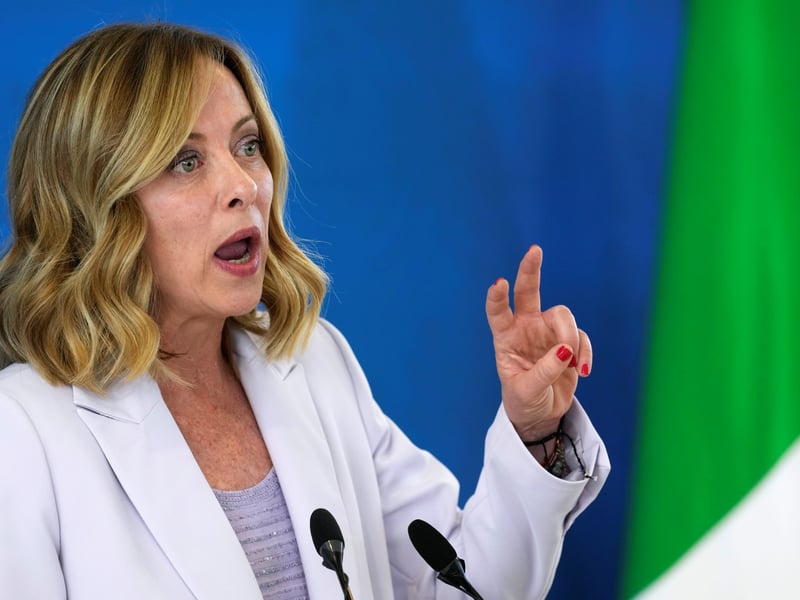
PALERMO, Sicily (CN) — For a second day this week, Italy on Friday was swept by strikes and demonstrations as Italian Prime Minister Giorgia Meloni faced furious backlash over her refusal to recognize a Palestinian state and her unbending alignment with Israel.
The unrest crippled trains, airports and roadways, shut down schools and brought hundreds of thousands of people onto city boulevards and into squares from Palermo to Turin with the same refrain: “Stop the war in Gaza,” “Free Palestine,” and “Hold Meloni to account.”
On Thursday, Meloni dismissed the walkout as a cynical attempt by workers to enjoy “a long weekend,” but the scale of the mobilization suggested otherwise.
Trade unions reported that more than 2 million people protested in over 100 Italian cities, making Friday’s demonstrations even larger than the national strike on Monday.
The protests, dubbed “Blocchiamo tutto” (“Let’s block everything”), are planned to continue until Italy shifts course on Israel.
In recent months, Meloni has refused to join France, the United Kingdom and other Western nations in recognizing a Palestinian state at the United Nations General Assembly. She said she could reconsider if Hamas accepts U.S. President Donald Trump’s latest ultimatum to end the war by releasing hostages, disarming and having no part in the reconstruction of the Gaza Strip.
Meloni’s coalition partner, hard-right League leader and Transportation Minister Matteo Salvini, denounced Friday’s general strike as “illegal chaos,” saying trade unions only gave two days’ notice. He warned strikers faced fines and urged tougher penalties for unauthorized work stoppages. Unions countered that notice was a mere formality.
The protests have been largely peaceful, though clashes erupted in Milan, Bologna, Alessandria and elsewhere.
At the center of Friday’s protests was anger over Israel’s forced interception of about 40 vessels carrying more than 400 activists — including Swedish activist Greta Thunberg and Nelson Mandela’s grandson — who tried to break the Gaza blockade.
Among them were 47 Italians, including four parliamentarians, who were detained, taken to Israel and later deported after Israeli special forces boarded the flotilla in international waters. Activists with the Global Sumud Flotilla vowed to send more ships in the coming days.
European governments, including Italy’s, condemned Israel’s assault on the flotilla, yet they have mostly stopped short of taking strong actions against Tel Aviv, such as freezing arms shipments, imposing sanctions and cutting off economic, cultural and sporting ties.
After the humanitarian flotilla was attacked by drones last week, Italy and Spain sent warships to accompany the vessels, but those warships withdrew when the Israeli assault began.
The interception and arrests electrified public opinion and supercharged a movement already simmering on campuses, in trade unions and left-leaning grassroots networks.
Across Italy, actions in solidarity have spread nationwide: Palestinian flags now hang from city halls, small-town mayors are staging symbolic hunger strikes, and schools are framing Israel’s assault on Gaza as genocide.
In Bologna, a university city known for its left-wing sentiments, protests escalated on Friday with the shutdown of the A14 motorway and the diversion of flights from the city’s airport. Clashes between students and police stretched from Thursday night into Friday, leaving one demonstrator injured by a tear gas canister and risking the loss of her eye.
In Pisa, demonstrators stormed the runway at the Galileo Galilei Airport, forcing flights to be suspended for hours.
Police sealed off Rome’s Termini central train station as protesters chanted and tried to push inside. In Milan, commuters faced hours-long delays while students seized lecture halls at the city’s Statale University.
In Trieste, Naples, Salerno and Livorno, dockworkers and activists blocked access to ports, halting truck traffic and ferry links to the islands. Train services across Italy suffered widespread delays and cancellations.
In Palermo, organizers claimed 30,000 people — including a group of clowns dressed as soldiers juggling plastic rifles — marched through the city center. Smaller but determined crowds rallied in other Sicilian cities, including Messina, Catania, Ragusa and Trapani.
“This barbarity must end,” said Alfio Mannino, the head of Sicily’s left-wing CGIL union, as reported by Il Giornale di Sicilia, a regional newspaper.
He called the assault on the humanitarian flotilla “an act of unprecedented gravity” that stopped aid from reaching “people tormented and victimized by a genocide systematically carried out by the Israeli government.”
“The government in Rome cannot pretend it is not complicit,” he said.
The opposition seized on the protests. Elly Schlein, leader of the center-left Democratic Party, accused Meloni of trying to muzzle dissent and pressed her in parliamentary debates for being “on the wrong side of history.”
Former Prime Minister Giuseppe Conte, leader of the 5-Star Movement, joined student demonstrators in Rome, praising “the best of Italy breaking the silence together.”
Meloni’s stance highlights the far right’s alignment in Europe and the United States with the Israeli Prime Minister Benjamin Netanyahu’s government, as well as her efforts to maintain close ties with the Trump administration in Washington.
She has framed the more radical demands of protesters and unions as “dangerous, irresponsible and gratuitous,” arguing they risk destabilizing diplomatic efforts.
But her position risks alienating her at home with pro-Palestinian attitudes no longer only a cause supported by the radical left but bleeding into the mainstream.
Support for Israel has hit historic lows in Europe, and Italians are among those with the most negative views. A recent YouGov survey conducted in six European countries found fewer than 21% of respondents with favorable views of Israel. Only 6% of Italians said Israel was right to send troops into Gaza.
For Meloni, the pathway is fraught. On one hand, recognition too early or unconditionally might antagonize her strategic alliance with Israel and risk backlash from her staunchest supporters. On the other hand, continued refusal — in defiance of widespread public sentiment and sustained protests — could erode her political base, embolden internal dissent, and weaken her moral standing internationally.
Courthouse News reporter Cain Burdeau is based in the European Union.
 Follow @cainburdeau
Subscribe to our free newsletters
Our weekly newsletter Closing Arguments offers the latest about ongoing trials, major litigation and rulings in courthouses around the U.S. and the world, while the monthly Under the Lights dishes the legal dirt from Hollywood, sports, Big Tech and the arts.