
 Search Articles


(CN) — The Middle East spiraled into deeper chaos on Tuesday as Israeli troops reportedly advanced onto the outskirts of Damascus and dropped hundreds of missile strikes against Syria, targeting military bases, a fleet of warships and other sites.
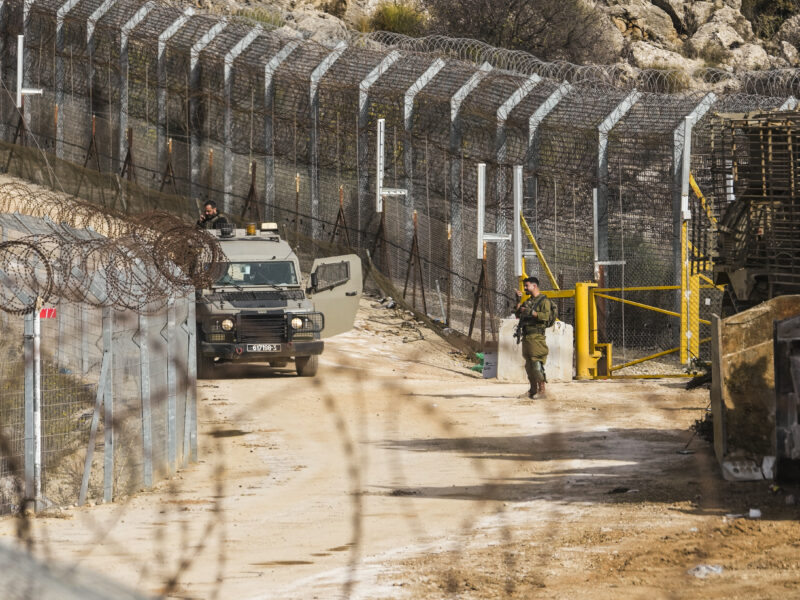
In the wake of Syria’s collapse over the weekend, Israel seized a demilitarized zone next to the Golan Heights, which it has illegally occupied since the 1967 Six-Day War, and reportedly sent tanks and troops deeper into Syria.
Israeli forces were within 12 miles of the outskirts of Damascus, the Syrian capital that fell over the weekend under the control of Turkish-backed Islamist groups, Reuters reported. Israel denied its troops had moved beyond a buffer zone near the Golan Heights.
Regardless, its movement into the buffer zone violated a 1974 disengagement agreement between Syria and Israel. The incursion suggested Israel might seek to expand its footprint further into Syria. Speaking about creating a “Greater Israel,” far-right leaders around Israeli Prime Minister Benjamin Netanyahu have openly stated that Israel’s borders should extend all the way to Damascus, citing religious texts.
Arab nations condemned Israel for its attack on Syria, calling it an illegal invasion that threatened the country’s sovereignty. They urged world leaders to take a stand against Israel’s incursion.
Israel said it was safeguarding its security by seizing the 95-square-mile demilitarized zone next to the Golan Heights. The Syrian capital lies only about 35 miles northeast of the Golan Heights.
Meanwhile, fighting reportedly was intensifying between Turkish-backed militias in northern Syria against U.S.-backed Kurdish fighters who occupy territories in that part of the country. Kurdish forces said intense fighting was taking place near Kobani, a city on the border with Turkey. On Monday, Turkish-backed forces seized the city of Manbij, less than 40 miles away from Kobani.
The crisis in Syria is escalating since its long-time ruler, President Bashar Assad, fled to Russia following the collapse of his military in the face of an offensive by Hayat Tahrir al-Sham, a jihadist group still designated as a terrorist organization by the United States, the European Union and other countries.
The U.K.-based Syrian Observatory for Human Rights said it documented more than 310 strikes by Israel since Sunday. Israel said the strikes were to prevent weapons falling “into the hands of extremists” in Syria.
The observatory said the strikes hit weapons factories and warehouses, air bases, radar systems, signal stations and scientific research centers across Syria. It appeared many of the strikes focused on Aleppo, Syria’s second-largest city that was at the center of the Syrian civil war that erupted in 2011. Reports also said a Syrian fleet of warships in the port city of Latakia was destroyed. Israeli Defense Minister Israel Katz said airstrikes “destroyed Syria’s navy overnight, and with great success.”
“Tel Aviv seeks to destroy all weapons and materiel of the army of future Syria,” the observatory said.
On Monday, Qatar called Israel’s incursion beyond the Golan Heights “a dangerous development and a blatant attack on Syria’s sovereignty and unity as well as a flagrant violation of international law.”
It warned that “attempts to occupy Syrian territories will lead the region to further violence and tension.”
Saudi Arabia slammed Israel for the “continued violation of the rules of international law and its determination to sabotage Syria’s chances of restoring its security, stability and territorial integrity.”
Iran, Turkey and Iraq also condemned Israel.
Washington, though, signaled support for Israel’s actions.
“These are exigent operations to eliminate what they believe are imminent threats to their national security,” White House national security spokesman John Kirby said Tuesday. The U.S. leaves it up to the Israelis to discuss their operations, he added.
“They have as always the right to defend themselves,” Kirby said. He declined to detail U.S. intelligence cooperation with the Israelis that went into the strikes.
Kirby did not criticize the Israeli seizure of the demilitarized zone.
European Union officials did not immediately reply to a query from Courthouse News Service about their position on Israel’s actions.
Meanwhile, reports emerged of revenge killings in Syria against Assad loyalists. The Syrian Observatory of Human Rights said 54 people were killed by Islamic State forces in the Homs region in central Syria who had been part of the Syrian government’s military. Islamic State fighters are among various militant groups inside Syria.
Ahmed al-Shara, the HTS leader behind the ouster of Assad, has vowed to spare the rank and file of Assad’s government, though he said in a statement that “criminals, murderers, and security and military officers involved in torturing the Syrian people” would be held accountable. Al-Shara, better known by his nom de guerre Mohammed al-Golani, was formerly an Al Qaeda leader and he previously had links to the Islamic State.
For now, U.S. President Joe Biden and European and Middle Eastern leaders say they are ready to work with al-Shara’s forces to establish a stable government in Syria, but there is far from any certainty about how that will come about in a country being carved apart by so many competing interests.
On Tuesday, U.S. Secretary of State Antony Blinken said the U.S. would recognize the new Syrian government if it renounces terrorism, destroys chemical weapons and protects minorities and women.
Blinken said Syrians should decide their future and that other countries should “support an inclusive and transparent process” and not interfere.”
“The United States will recognize and fully support a future Syria government that results from this process,” he said. “We stand prepared to lend all appropriate support to all of Syria’s diverse communities and constituencies.”
Courthouse News reporter Cain Burdeau is based in the European Union.
 Follow @cainburdeau
Subscribe to our free newsletters
Our weekly newsletter Closing Arguments offers the latest about ongoing trials, major litigation and rulings in courthouses around the U.S. and the world, while the monthly Under the Lights dishes the legal dirt from Hollywood, sports, Big Tech and the arts.