
 Search Articles


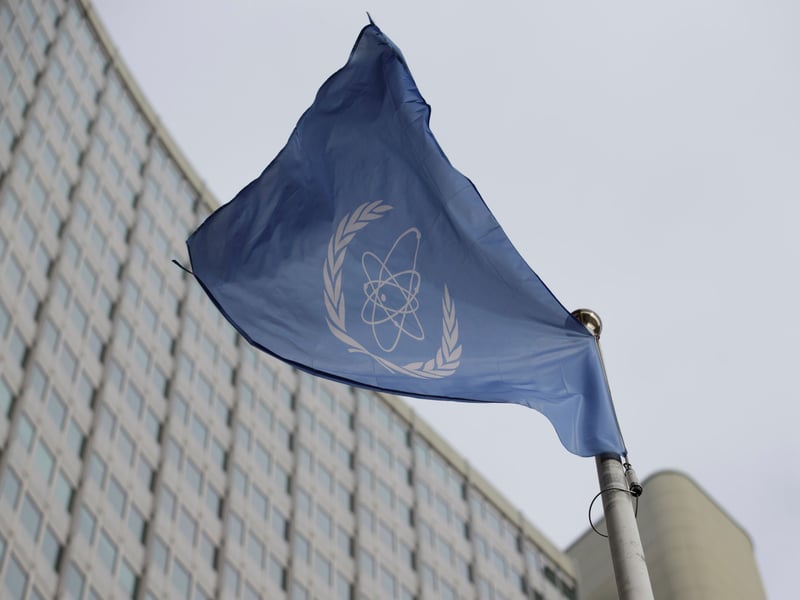
TEHRAN, Iran (AFP) — Iran vowed Thursday to significantly increase its enriched uranium output in defiance of U.S. demands, ahead of a round of nuclear talks overshadowed by fears of an imminent Israeli attack.
The announcement came after the U.N.’s International Atomic Energy Agency accused Iran of non-compliance with its obligations. Israel said the world must respond “decisively.”
The United States and other Western countries, along with Israel, have repeatedly accused Iran of seeking a nuclear weapon, which it has repeatedly denied.
Ahead of Sunday’s sixth round of U.S.-Iran talks in Oman, the Islamic republic threatened to strike American bases in the region if the negotiations break down and conflict erupts.
“If the talks fail, the risk of military escalation becomes much more immediate,” said Hamidreza Azizi, a visiting fellow at the German Institute for International and Security Affairs.
Uranium enrichment is a central dispute, with Iran defending it as a “non-negotiable” right in its pursuit of a civilian nuclear program, while the United States has called it a “red line.”
Iran’s foreign minister and chief negotiator, Abbas Araghchi, said the IAEA’s resolution “adds to the complexity of the discussions.”
“We will be in Muscat to defend the rights of the Iranian people,” he said.
‘Extremist’
The IAEA’s board of governors adopted a resolution condemning Iran’s “non-compliance” with its nuclear obligations under the Non-Proliferation Treaty, carried by 19 votes in favor, out of 35 in total, diplomats said.
The resolution could lay the groundwork for European countries to invoke a “snapback” mechanism by reinstating U.N. sanctions under the 2015 Iran nuclear deal — an option that expires in October.
Iran’s nuclear chief, Mohammad Eslami, slammed the resolution as “extremist,” blaming Israeli influence.
Iran, he said, had upheld its commitments under the treaty but rolled back adherence to the 2015 deal after Donald Trump withdrew the United States from the accord during his first term as U.S. president.
“They can’t expect us to fulfil them without them (Western countries) honoring any of their commitments,” said Eslami.
In response to the resolution, Iran outlined its next steps.
“The necessary orders have been issued by the head of the Atomic Energy Organization (of Iran) to launch a new enrichment center in a secure location,” the organization and foreign ministry said.
Iran would also replace “all of these first-generation machines with sixth-generation advanced machines” at the Fordo uranium enrichment plant, spokesman Behrouz Kamalvandi said.
This means “our production of enriched material will increase significantly,” he added.
Eslami said enrichment would begin at the new “invulnerable” site when machines were installed.
Iran currently enriches uranium to 60%, far above the 3.67% limit set in the 2015 deal and close, though still short, of the 90% needed for a nuclear warhead.
Threats to U.S. bases
Omani Foreign Minister Badr Albusaidi confirmed the “6th round of Iran U.S. talks will be held in Muscat this Sunday,” in a post on X.
Trump appeared to shift his previously optimistic tone on the talks this week, saying he was “less confident” a deal could be reached.
On Wednesday, following Iran’s threat to hit U.S. bases in case of war, Trump said U.S. personnel were being moved from the potentially “dangerous” Middle East.
On Thursday, the U.S. embassy in Jerusalem restricted staff movements over security concerns, citing “increased regional tensions.”
A U.S. official had earlier said staff levels at the embassy in Iraq were being reduced over security concerns.
‘Strategic mistake’
Israel has repeatedly warned it could attack Iranian nuclear sites, vowing to stop it acquiring an atomic bomb.
It said Iran’s “actions undermine the global non-proliferation regime and pose an imminent threat to regional and international security and stability.”
Reports in U.S. media, including NBC and The New York Times, this week said Israel was considering taking military action against Iran, likely without U.S. support.
“While it’s possible the show of force from the U.S. and Israel is meant to create pressure that leads to a diplomatic breakthrough, the stakes are very high and both sides appear deeply entrenched,” political expert Azizi said. “Without progress on core demands, diplomacy may only delay, not prevent, confrontation.”
Iran has vowed to respond to any attack.
“All its (U.S.) bases are within our reach, we have access to them, and without hesitation we will target all of them in the host countries,” Defense Minister Aziz Nasirzadeh said. “God willing, things won’t reach that point, and the talks will succeed.”
Following Iran’s vow to increase enrichment, the European Union called on it “to show restraint.”
Iran’s permanent U.N. representative Amir Saeid Iravani has said Tehran will consider “proportionate responses” if the snapback mechanism is triggered — including “starting the process of withdrawal” from the treaty.
—
By MENNA ZAKI and PAYAM DOOST MOHAMMADI, Agence France-Presse
Subscribe to our free newsletters
Our weekly newsletter Closing Arguments offers the latest about ongoing trials, major litigation and rulings in courthouses around the U.S. and the world, while the monthly Under the Lights dishes the legal dirt from Hollywood, sports, Big Tech and the arts.