
 Search Articles


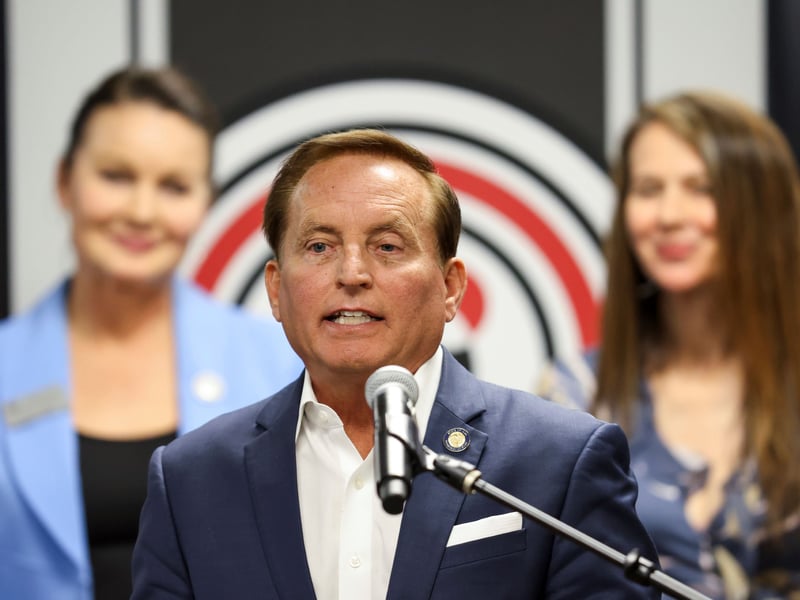
DES MOINES, Iowa (CN) — Iowa’s state and local election officials have a duty to assure the rights of every eligible voter, but if there is evidence a voter is not a U.S. citizen, they must challenge the ballot, Iowa Secretary of State Paul Pate said after a judge ruled the state can question people who appeared on a list of possible noncitizens registered to vote.
The state’s top election official made his comments after a federal judge on Sunday denied a bid by the League of United Latin American Citizens and four naturalized citizens to block enforcement of Pate’s Oct. 22 directive that the ballots of more than 2,000 possible noncitizens be challenged at the polls.
The citizens group and voters in the suit will not appeal the decision.
U.S. District Judge Stephen Locher denied the plaintiffs’ motion for a temporary restraining order and injunction. Locher cited, among other things, the U.S. Supreme Court’s Oct. 30 order staying a lower court’s decision blocking Virginia election officials from removing 1,600 voters from the rolls.
But Pate’s advice to county election officials on the front lines on Election Day changed late last week. Based on testimony at a hearing on the matter Friday, Locher wrote, Pate “is no longer challenging the eligibility of the named plaintiffs who submitted statements, under oath, in this proceeding confirming they are United States citizens. Similarly, Secretary Pate is not challenging the ballots of the voters whose citizenship was confirmed by county commissioners through interactions with law enforcement agencies or otherwise.”
Still, Pate said in a Sunday statement applauding the ruling that “it is undisputed that there are a number of noncitizens who are registered to vote.” Locher wrote that by issuing an injunction, he would force local election officials to allow those individuals to vote.
At the same time, Locher, a Joe Biden appointee, said that local election officials “are not per se required to challenge the votes of any person on the list of 2,176 voters Pate sent them and instead they may exercise their own independent judgment based on information available to them.”
That is how Linn County Auditor Joel Miller will proceed. Miller told Courthouse News that after he received Pate’s directive two weeks ago, he investigated the citizenship status of the 150 people named on the secretary of state’s list and found that 134 are U.S. citizens.
“At most, we will challenge 16 persons on the list, and only if they early voted via absentee or show up to vote on Election Day,” he said.
Similarly, Miller sent a letter to registered voters on Pate’s list telling them to bring proof of citizenship with them to the county election office, Locher wrote.
“To the extent the voters did so, the court is unaware of any valid interpretation of Iowa law that would allow a local official to challenge the voter’s eligibility on the basis of citizenship anyway and make them vote a provisional ballot, as Secretary Pate’s letter directs,” Locher said.
With provisional ballots, local officials would conduct further review to determine whether they will be counted, with voters having seven days to provide proof of their U.S. citizenship.
Joe Enriquez Henry, state political director of the League of United Latin American Citizens of Iowa, urged naturalized citizens not to be intimidated when they go to vote.
“Our message is: Make sure your vote counts on Election Day,” Enriquez Henry said. “For now, be prepared to show your papers documenting your citizenship, whether that is a U.S. passport or certificate of naturalization" from U.S. Citizenship and Immigration Services.
 Follow @roxalaird16
Subscribe to our free newsletters
Our weekly newsletter Closing Arguments offers the latest about ongoing trials, major litigation and rulings in courthouses around the U.S. and the world, while the monthly Under the Lights dishes the legal dirt from Hollywood, sports, Big Tech and the arts.