
 Search Articles


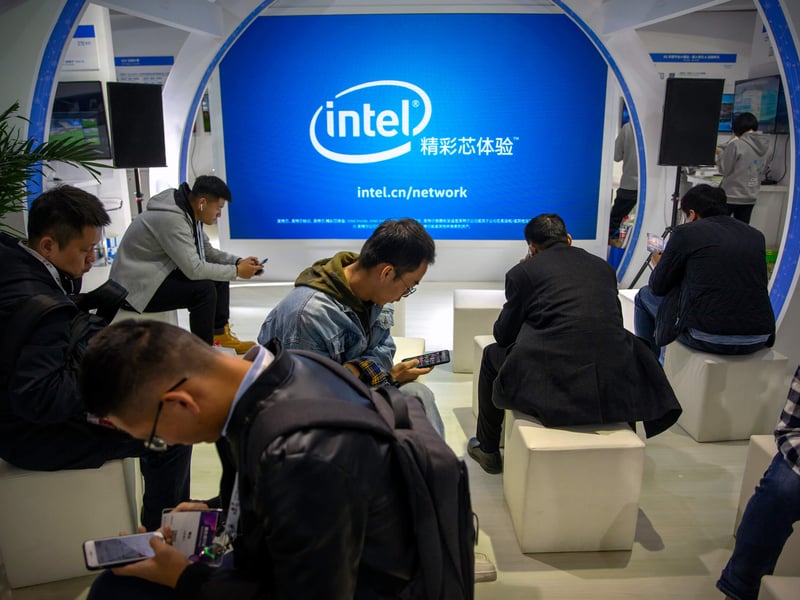
(CN) — Intel scored a small but symbolic victory in its two-decade antitrust saga on Wednesday, as European judges trimmed the fine the European Commission reimposed for the chipmaker’s illegal “naked restrictions” on computer makers.
The General Court of the European Union in Luxembourg agreed that Brussels was right to penalize Intel for paying computer makers to sideline rival AMD, but said the punishment didn’t fit the scale of the wrongdoing.
They shaved the fine from 376 million euros (about $435 million) down to 237 million euros (about $276 million), saying the commission had not weighed the limited duration and reach of the conduct precisely enough.
As the judges put it, “It is important, in order to assess the gravity of the infringement, that its limited material scope be measured more accurately, beyond its intrinsic harmfulness.”
The court emphasized that only a sliver of Intel’s business was at stake. The disputed deals with HP, Acer and Lenovo involved a modest number of products and were applied only during limited periods. With that narrower picture in view, the judges decided the penalty had to come down.
The fight goes back to one of Brussels’ biggest antitrust battles. In 2009, the European Commission hit Intel with a record 1.06 billion-euro fine, accusing the chip giant of using its market muscle to box out rival AMD in the race for computer processors.
Officials said Intel kept PC makers like Dell, HP, Acer and Lenovo in line with a mix of hidden rebates and payoffs — perks that only flowed if they stayed loyal and kept AMD chips off their shelves.
Intel fought back, kicking off years of courtroom back-and-forth. The General Court first upheld the fine in 2014, but Europe’s top judges sent the case back three years later, saying the lower court hadn’t properly checked whether Intel’s discounts really shut competitors out.
When the General Court revisited the case in 2022, it threw out most of the commission’s findings, saying the evidence didn’t prove that Intel’s rebates — discounts tied to buying mainly Intel chips — had harmed competition.
What remained were three so-called “naked restrictions,” direct payments to HP, Acer and Lenovo to scrap or delay computers using AMD processors, which sharply narrowed the scope of the case.
Despite the setback, Brussels pressed on. In 2023, the Commission issued a fresh decision, reimposing a 376 million-euro fine based only on the three remaining restrictions. Intel challenged it again, arguing the new penalty was excessive, that regulators hadn’t explained how they reached the figure, and that some of the conduct fell beyond the EU’s reach.
The General Court dismissed most of Intel’s claims Wednesday but agreed the fine was too high. It said the commission didn’t have to start from scratch or bring new charges, since its earlier findings on the naked restrictions were already final.
The company’s attempts to reargue jurisdiction over the Acer and Lenovo deals also failed; Intel claimed those arrangements took place largely outside the EU. The court rejected that argument, saying the commission had already established its authority in earlier proceedings and didn’t need to prove it again.
When it came to the size of the fine, though, the judges took a closer look. They said the commission had followed its own rulebook but glossed over key details — including a yearlong gap between the HP and Lenovo deals and the limited number of computers actually affected. Pointing to Intel’s own data, the court said the scope of the conduct was far smaller than Brussels claimed, and on that basis, it cut the fine by 37%.
The ruling makes clear that even in big competition cases, the EU has to stick to its own rules. For Intel, it closes nearly 20 years of legal battles. For the commission, it’s a reminder that even a major victory can end with a smaller bill.
Magali Eben, a senior lecturer in competition law at the University of Glasgow, said the ruling doesn’t change much about how EU antitrust law treats this kind of conduct. “This is by no means a breakthrough judgment,” she said, noting that the commission largely prevailed on substance while the fine was merely reduced.
She added that the court’s focus on the limited impact of Intel’s conduct “does not really alter anything significant about the law on what is a problematic practice.” Instead, it simply reflects “the actual harm caused by the practice is more limited than the imposed fine suggested.”
After nearly two decades of litigation, she said, the case still leaves room for debate, and “academia will continue to discuss the actual meaning of ‘naked restrictions.’”
A European Commission spokesperson said Brussels “takes note of today’s judgment by the General Court,” pointing out that the court backed the commission’s 2023 decision and confirmed its power to reimpose the fine, even if it reduced the amount. The spokesperson said the commission “will carefully study the judgment and reflect on possible next steps.”
Intel struck a more positive tone. A company spokesperson said it was “pleased that the General Court acknowledged several of Intel’s key arguments in this latest stage of the proceedings, resulting in a substantial reduction of the fine.”
Under the judgment, the commission must pay half of Intel’s legal costs. The rest of the original ruling stands, confirming that Intel’s “naked restrictions” broke EU competition law. Both sides now have two months to decide whether to take the fight to the EU’s top court. The spokesperson said the company is considering whether to appeal.
Courthouse News reporter Eunseo Hong is based in the Netherlands.
Subscribe to our free newsletters
Our weekly newsletter Closing Arguments offers the latest about ongoing trials, major litigation and rulings in courthouses around the U.S. and the world, while the monthly Under the Lights dishes the legal dirt from Hollywood, sports, Big Tech and the arts.