
 Search Articles


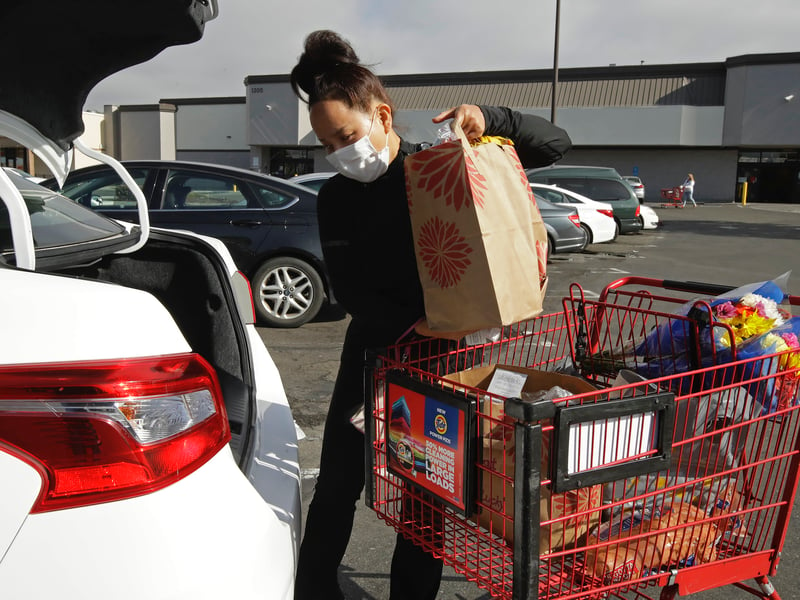
(CN) — Instacart sued New York City on Tuesday in a mad dash to invalidate new minimum wage and transparency laws before they take effect next month.
Instacart is a grocery delivery and pickup service that employs personal shoppers to pick, pack and deliver grocery orders placed by customers in an app. The personal shoppers are independent contractors who make their own schedules and control their workflow.
Shoppers are made up primarily of women, caregivers and people who work part time, according to the platform, and are paid a base “batch” rate based on estimated time and effort for a particular order.
New York City passed several local laws in 2021 that established a minimum wage and working conditions standards for third-party food delivery platforms in the wake of the Covid-19 delivery boom.
Instacart and other grocery delivery services were left out of those considerations at the time, but their time in the hot seat came in July when the city council created a category that groups Instacart in with apps like DoorDash and Uber Eats — and applies the newly increased minimum hourly wage of $21.44.
On Tuesday, Instacart sued the city, its Department of Consumer and Worker Protection and Commissioner Vilda Vera Mayuga to get the package of bills tossed, which it says were not written with a platform like Instacart in mind.
“The local laws are unlawful several times over, all for the same basic reason: The city failed to stay within the bounds of its authority — under federal law, New York State Law, the City Charter and the Constitution,” said Instacart attorney Eamon Joyce of New York-based firm Sidley Austin LLP.
The grocery delivery platform is seeking an injunction barring the city from enforcing the five laws within the July package against it, and from applying any kind of minimum wage standard for its shoppers.
Instacart argues in the 26-page complaint that the laws are preempted by the Federal Aviation Administration Authorization Act (FAAAA) and by state minimum wage laws. The FAAAA restricts states from regulating the activities or pay of “motor carriers,” whether that be for food delivery apps or large-scale shipping so to avoid a patchwork of unequal state-level regulation for what is often an interstate job, according to Instacart.
Some of the new laws that govern minimum pay and tipping options also encroaches on the authority of the Legislature, which has already passed The Freelance Isn’t Free Act and the Minimum Wage Act — both of which overlap with the local laws and preempt their enforcement.
The five laws at issue here are Local Laws 124, 107, 108, 113 and 123. They create the “third-party grocery delivery services” category and apply the same minimum wage imposed on restaurant delivery services, require tip screens to appear at certain times, dictate a seven-day pay timeline and impose sweeping recording and disclosure rules for operational data.
The platform claims that the five laws were specifically written to target Instacart in response to pressure from lawsuits filed by restaurant-delivery services after Covid-19 era delivery regulations were enacted to protect restaurants and delivery drivers.
After those regulations took effect, and lawsuits began, the platforms involved included settlement terms that would require the city to enact legislation “folding Instacart into the same regulatory regime,” according to Joyce.
Mayor Eric Adams vetoed some of the local laws challenged in Tuesday’s lawsuit, but his veto was overridden by the council.
“As the delivery sector continues to grow, it remains critical for our city to expand protections for delivery workers that protect them from exploitation in order to have a sustainable industry,” Speaker Adrienne Adams said in a statement after the package was passed.
The new pay requirement gives platforms the option between two pay methods: the standard method that requires paying workers based on “trip time” and “on-call” time, or the alternative method of a per-trip flat rate and a minimum “utilization rate” to account for on-call time.
Local Law 124, which created the category that looped Instacart in, also gives the worker protection commission broad discretion and authority to eventually create a whole new pay scheme that better suits grocery delivery services.
If these local laws take effect, Instacart warns it will be forced to “overhaul its platform and business model in the city” as on-call time becomes compensable.
To account for the great financial strain it says it will incur, the grocery delivery service will limit the windows during which shoppers can go online to take orders, cap the number of shoppers who can be online at a time and manage how shoppers use their time while online by requiring them to accept most or all requests.
“Instacart’s business depends on the flexibility, independence and convenience that its platform offers,” Joyce said in the complaint. “But the local laws will degrade that business and harm precisely what has made Instacart successful.”
 Follow @desdev5
Subscribe to our free newsletters
Our weekly newsletter Closing Arguments offers the latest about ongoing trials, major litigation and rulings in courthouses around the U.S. and the world, while the monthly Under the Lights dishes the legal dirt from Hollywood, sports, Big Tech and the arts.