
 Search Articles


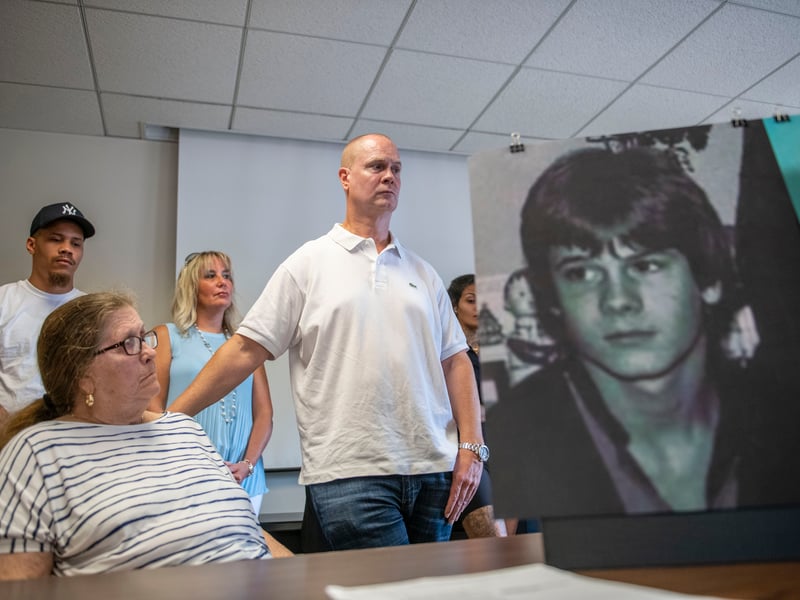
(CN) — A former FBI informant asked a Sixth Circuit Court of Appeals panel Thursday to reinstate his claims that law enforcement violated his civil rights by recruiting him at age 14, leading to his participation in the drug trade, and then abandoning him.
Richard Wershe Jr., known in the media as “White Boy Rick,” sued the City of Detroit in 2021 and the federal government in 2022. Wershe claims he was groomed and indoctrinated by Detroit Police and the FBI into becoming a drug dealer and confidential informant, and that he felt he had no choice but to comply with their orders.
Despite his work with law enforcement, Wershe was convicted of possession of 17.45 pounds of cocaine in 1987 and sentenced to life in prison. He spent 32 years in jail before he was released, after a former FBI agent admitted to the agency’s bait-and-switch treatment and the case received media attention.
Wershe appealed after U.S. District Court Judge Kay Behm dismissed the two cases as time barred.
“The court finds that plaintiff has not met his burden to show that he acted as diligently as reasonably could be expected, where he did not take any action to file a claim or seek protection from the alleged threats of retaliation during his lengthy prison sentence,” Behm wrote.
Detroit-based attorney Nabih Ayad represented Wershe during oral arguments before a three-judge panel of the Sixth Circuit and argued that the lower court improperly dismissed the case.
“She didn’t hold an evidentiary hearing,” Ayad said of Behm.
Ayad also told the judges that Wershe couldn’t sue within the statute of limitations because he feared retaliation from law enforcement while in prison.
“Who does he say would retaliate against him?” U.S. Circuit Judge David McKeague, who was appointed to the court by George W. Bush, asked.
“As we alleged in the complaint, it would be the defendants by their influence, as they’ve done in the past,” Ayad said.
“You can’t just name a whole group and say, well, the defendants,” said McKeague. “So you’re saying every single one of these defendants?”
Ayad affirmed and said that a documentary film submitted to the court details plots against Wershe by police.
The story of the Detroit-area man’s work with police and subsequent decades spent in prison spawned a Netflix documentary called “White Boy” and feature film titled “White Boy Rick.”
Attorney John Adams of Royal Oak, Michigan, was one of three lawyers who spoke on behalf of the various government and police defendants. He called Wershe’s arguments about being threatened “frivolous.”
“There is not a specific allegation as to each of the individual defendants as to what they said or did,” Adams said.
Adams said that Wershe took no action and did not alert federal officials about any such fears during his long prison term, so the statute of limitations bars his claims.
U.S. Circuit Judge Chad Readler, a Donald Trump appointee, asked about competing sanction requests filed by both sides.
Ayad said that he did not want to bring up the sanctions but felt that he was under attack.
“They continue to threaten us since day one, that’s what they do,” Ayad said. “Imagine what they would do to Wershe.”
McKeague was not pleased with either side’s response.
“I can speak just for myself, I don’t appreciate either of you on all of this sanctions quibbling,” McKeague said.
U.S. Circuit Judge Eric Clay, who was appointed to the court by Bill Clinton, joined the panel.
The court did not issue a timeframe for its ruling.
Subscribe to our free newsletters
Our weekly newsletter Closing Arguments offers the latest about ongoing trials, major litigation and rulings in courthouses around the U.S. and the world, while the monthly Under the Lights dishes the legal dirt from Hollywood, sports, Big Tech and the arts.