
 Search Articles


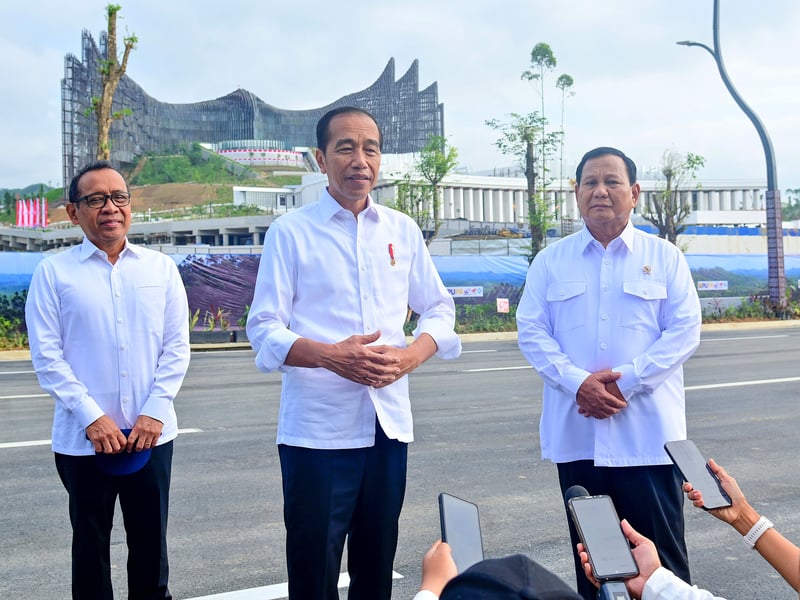
(CN) — This Saturday, Aug. 17, Indonesia will inaugurate a new capital. In honor of its 79th anniversary of independence from Dutch rule, top Indonesian officials will hold celebrations not just in the current capital of Jakarta but also in Nusantara, the new one.
It’s all part of the government’s efforts to build up hype around Nusantara, a brand-new city around 1200 miles east of Jakarta. But amid concerns over funding, environmental issues and Indigenous rights, some observers remain skeptical of the megaproject. And after the resignations this year of two top planning officials, Nusantara’s future looks increasingly rocky.
At the beginning of his second and final term in 2019, current Indonesian President Joko Widodo, nickname Jokowi, announced that Indonesia would be getting a new capital.
The news came as Jakarta — the second-biggest metropolitan area in Asia, with more than 29 million residents — faces a range of issues, including subsidence. Parts of the city are sinking by almost seven inches a year, a particular problem given that Jakarta is a low-lying coastal city.
Located on the island of Borneo — known in Indonesian as Kalimantan — Nusantara aims to be completely carbon-neutral by 2045. Indonesian officials have touted the project as futuristic and environmentally friendly: Surrounded by the fourth-largest rainforest on Earth, they say the new capital will thrive alongside the environment.
When the project was first announced, many Indonesians welcomed the developments.
Boosters said Nusantara would create job opportunities and a new, futuristic source of national pride — all while moving Indonesia’s capital closer to the center of the archipelago country. Despite a hefty price tag of $33 billion, officials also promised that 80% of funding would come from foreign investors.
Nusantara is currently in the first stage of a five-phase construction plan — and yet just five years after the project was announced, cracks have already emerged. While Jokowi and others continue to assure Indonesians that global investors are interested, there’s few actual contracts so far that could back up those claims.
To lure in foreign investors, President Jokowi in July signed a controversial decree allowing foreign entities to lease land in the capital for up to 190 years. That by itself isn’t so unusual: Indonesia typically doesn’t allow foreigners to own land outright, and foreign companies instead often sign long-term leases allowing for resource extraction like mining.
In this case, though, critics fear the decree could force Indigenous communities to move and have anegative impact on surrounding wildlife and biodiversity. And with the land situated in a soon-to-be-urban area rather than on natural resources, skeptics question the value proposition.
“There is not going to be any mining or something similar here,” said Christian Lund, professor of Development, Resource Management, and Governance at the University of Copenhagen. “It’s difficult to identify what the business model is for future investors, other than getting close to the power and lobbying for other contracts.”
“I can’t stop thinking, what is attractive about leasing this land?” Lund said.
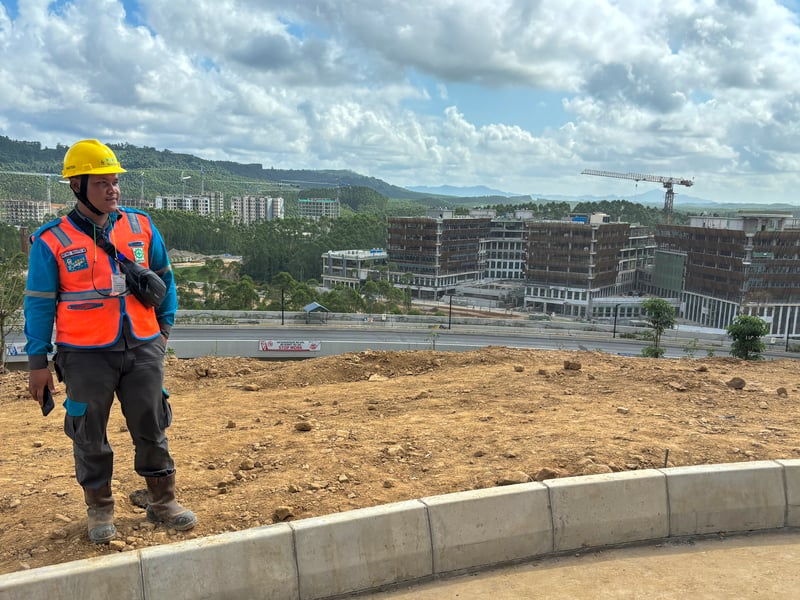
To many foreign businesses, the short answer is nothing. Many view renting land with no clear profit plan to be a bad deal, and few if any seem to have taken up Indonesia on its offer. Though officials insist otherwise, specifics about interested foreign investors have been notably absent.
While long-term renting has precedent in Indonesia, “these rental contracts of 190 years are very long,” Lund said. “Think 190 years back in time to get a feeling of it. The world’s first stamp was yet to be produced, and steam engines and electricity were about to revolutionize the world.”
To date, Nusantara is only around 15% complete. For now, only construction workers are living there: Jokowi himself was forced to postpone moving in full-time due to lack of sufficient water and electricity.
The bumpy progress has led to defections: In June, two high-ranking officials overseeing Nusantara’s development abruptly resigned. But Jokowi, who has just two months left in his term, has nonetheless remained sunny about the project, insisting that Nusantara’s Saturday inauguration will go forward as planned.
In late July, after spending his first night in the city, a tired Jokowi held a press conference in Nusantara. He hadn’t slept well, he admitted.
Delays had cast doubts about whether the city was ready — but Jokowi insisted that it was.
“Lots of people think we are rushing,” he said at the conference, according to Singaporean news company Channel News Asia. “No, we’re not rushing the job. It’s in accordance with procedures.”
But as doubts continue to grow over the project, longtime skeptics are feeling less lonely.
Among them are Rita Padawangi, a professor of urban development and civil society at Singapore University of Social Science. In an interview with Courthouse News, she said she was seeing fewer and fewer Indonesians voicing support for the project.
Officials have presented Nusantara as a modern haven that would exist in harmony with the surrounding rainforest. In statements and architectural mock-ups, officials have guaranteed the use of sustainable energy sources.
Padawangi was always skeptical of these claims. Pointing to a lack of hard evidence, she questioned how a city could be built from scratch in the rainforest and yet still remain carbon-neutral.
“There has never been any proper analysis of the environmental impacts of this project, which means that whatever they say about how sustainable this city is, to me it is just marketing,” she told Courthouse News “It is not research-based.”
With Nusantara’s inauguration now just hours away, the future of the planned capital looks increasingly uncertain. When a new president takes office and as Nusantara puts increasing pressure on state coffers, some observers speculate that the project will ultimately get canceled.
Padawangi shares these concerns. “The first question would be about the funding,” she said. “ Until now they still haven’t managed to leverage anything.” Even still, Padawangi doesn’t dismiss the possibility that political leaders in Indonesia will push ahead with the project despite any obstacles. “If you have observed Indonesia for quite some time,” she said, “you will know that anything is possible there.”
 Follow @LasseSrensen13
Subscribe to our free newsletters
Our weekly newsletter Closing Arguments offers the latest about ongoing trials, major litigation and rulings in courthouses around the U.S. and the world, while the monthly Under the Lights dishes the legal dirt from Hollywood, sports, Big Tech and the arts.