
 Search Articles


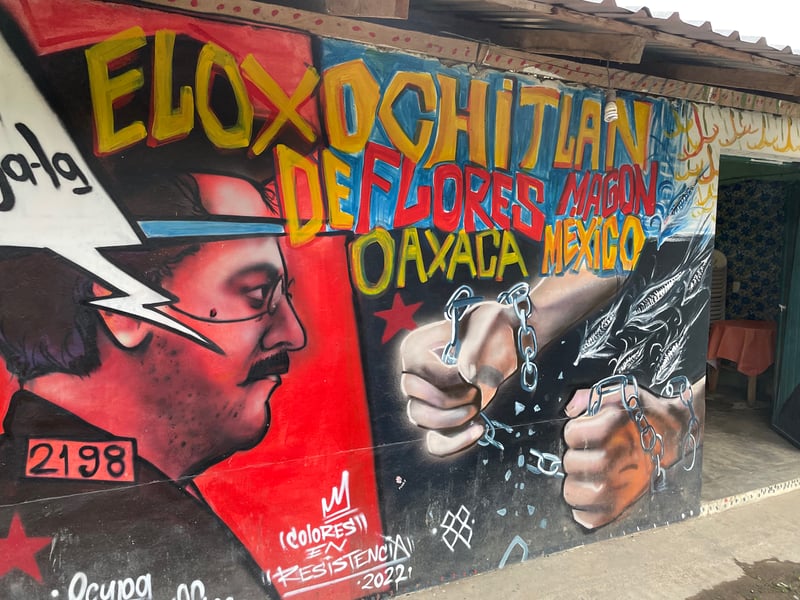
ELOXOCHITLÁN DE FLORES MAGÓN, Mexico (CN) — In a lush valley deep in the mountains of northern Oaxaca, a struggle is playing out between Mexico’s modern political system and a communal form of local governance.
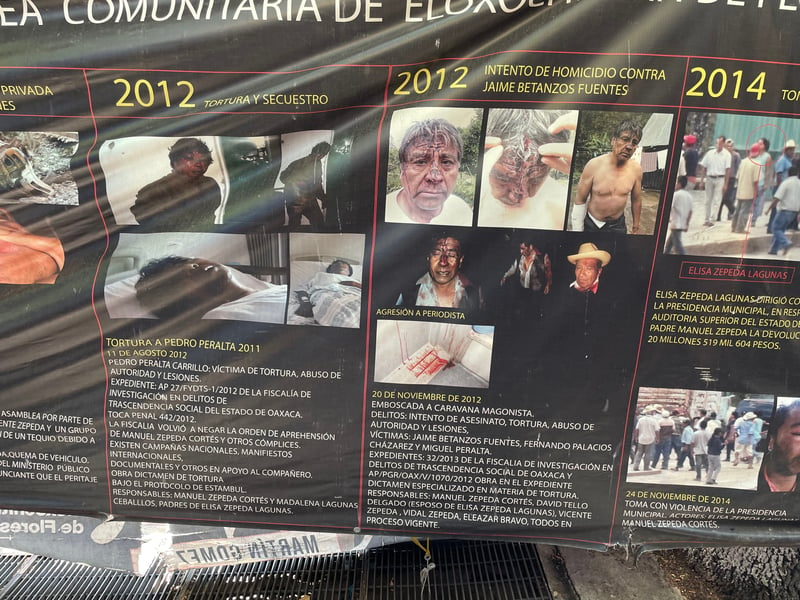
The conflict stems from an incident in December 2014, when members of the communal town council of Eloxochitlán de Flores Magón, Oaxaca, clashed with neighbors flying the flag of then-dominant political parties. A skirmish resulted in the detentions of eight local supporters of the Indigenous system of self-governance known in Spanish as usos y costumbres and arrest warrants issued for over 30 others.
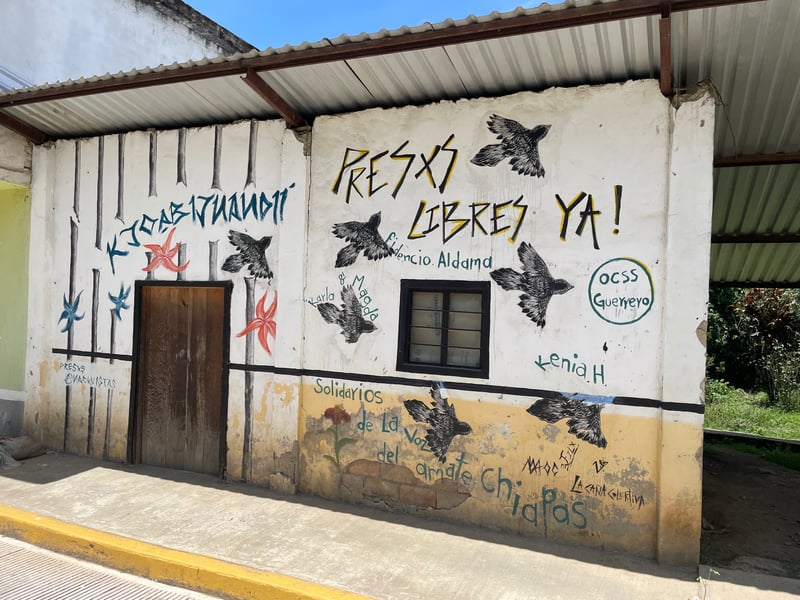
But families of the arrested men — seven of whom remain in prison to this day — say the charges are part of a fraudulent campaign against them and their loved ones by the family of a local strongman who has appropriated party politics to corrupt the town council and divert public funds and resources for personal gain.
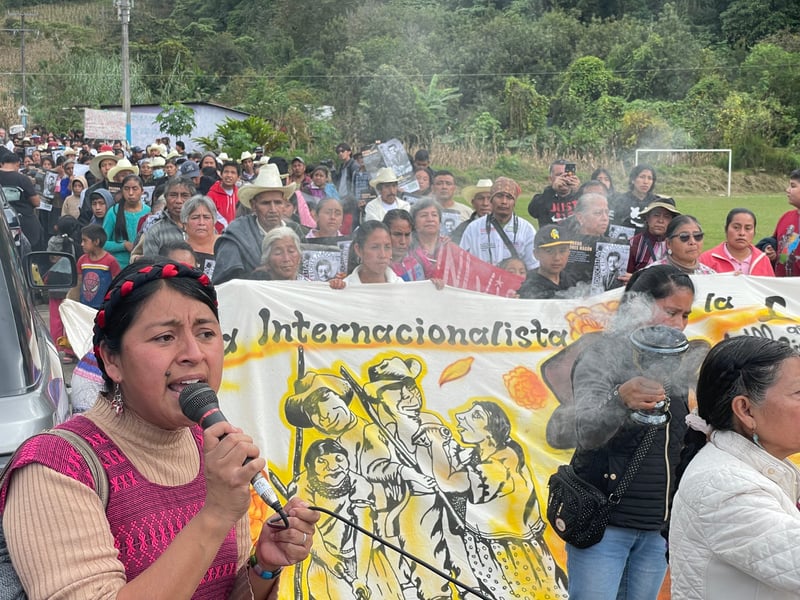
“The political parties don’t want us to really be autonomous, they want to divide us,” said Argelia Betanzos, 43, daughter of political prisoner Jaime Betanzos, 69, and lawyer for the incarcerated group.
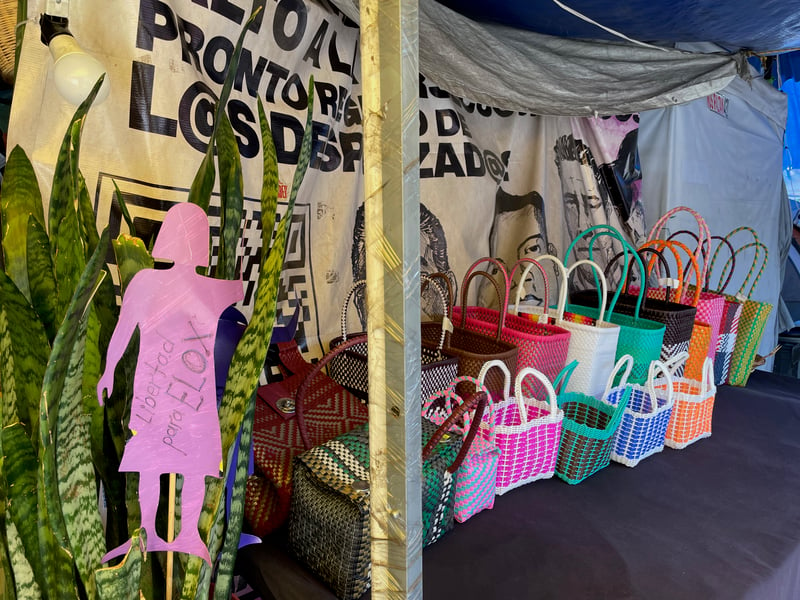
Dozens of other families continue to face persecution, harassment and the threat of false arrest. Many live displaced from their hometown, struggling to make a living on the streets of urban centers like Oaxaca’s capital and Mexico City.
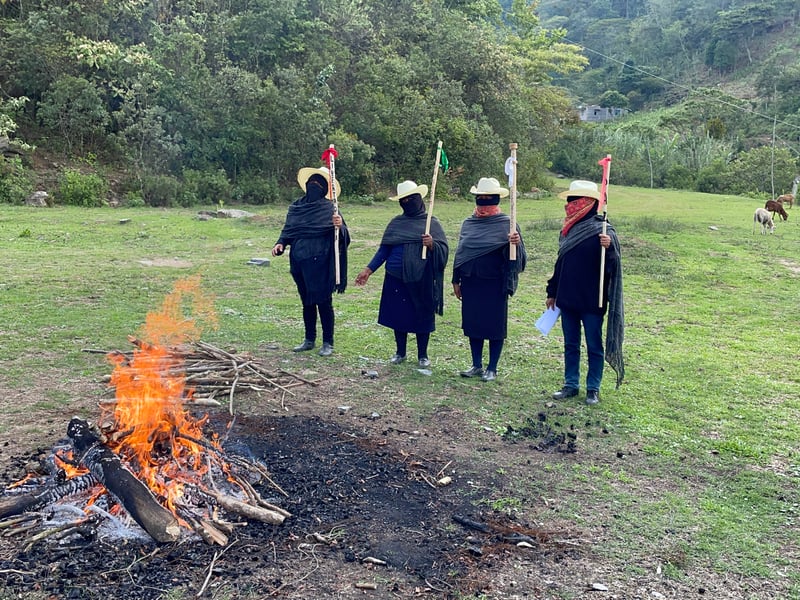
But some have had enough of hiding. Amid this intense localized struggle, four Indigenous Mazatec women from Eloxochitlán have returned home and formed a self-defense group in order to regain the life they once knew as much as possible and fight for the freedom of their husbands, uncles and brothers.
“Being displaced is an abrupt, drastic change; you’re no longer free,” said Julia who, like her companions Cecilia, Fany and Paula, preferred not to give her last name due to safety concerns.
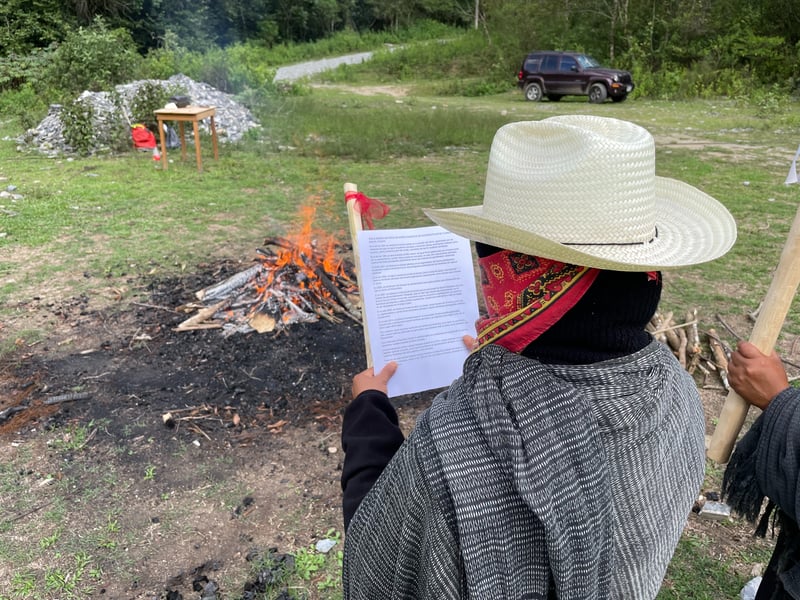
Sleeves cover their arms to the wrist and black shawls wrap over their shoulders. Bandanas and balaclavas hide their faces and broad-rimmed white sombreros keep the midday sun out of their eyes.
“We dress like this to call the attention of the government so that it does not forget about us and our suffering,” Julia said.
They carry wooden truncheons with them, but their real defense, they say, is what is written on them: “Enough,” “Freedom now,” “Peace,” “Security.”
“Our weapons are the word and the truth,” Julia said.
Despite the implication of calling themselves a self-defense group, they have not yet had to fend off any physical attacks to their persons. But they report harassment by the local strongman Manuel Zepeda and his supporters, who are rumored to call for their arrests and illegal searches of their homes in town council meetings.
“We are not what they say we are: murderers,” said fellow self-defense member Cecilia. “We are peaceful people. We just like to work, raise chickens and sow maize, beans, coffee. We just want our families back, and we’re going to defend them.”
Zepeda — whose forcible takeover of the municipal government in November 2014 precipitated the following month’s violence — and his family say otherwise. His daughter Elisa Zepeda claimed the people she accused had beaten her with a machete and gouged out her mother’s eye.
The charge that has kept at least five of the men in prison for almost nine years, however, was one of homicide. Elisa Zepeda claims they killed her brother.
She detailed her version of events in an article published in November 2018 on the website of ONU Mujeres, the Mexico office of the United Nations Entity for Gender Equality and the Empowerment of Women.
That account is apocryphal, said Betanzos, who is also active in Mexico City’s feminist anti-monument movement.
She has documentation to refute each of Elisa Zepeda’s claims against her father and the other political prisoners. Such documents seen by Courthouse News include over a dozen writs of amparo — similar to habeas corpus in U.S. law — that found no evidence to support the prisoner’s arrest warrants, as well as initial police reports from the December 2014 scuffle that differ from Elisa Zepeda’s later retelling of events.
Elisa Zepeda claimed in the ONU Mujeres article to have a photo of her injuries from the scuffle, including machete cuts to her head. The photo does not appear in the initial police report of the incident. Her account of her brother’s alleged murder also differs from the report.
She used the article and the legitimacy of the ONU Mujeres office to aid her campaign for the Oaxaca state Congress in 2018 and gain her current position as the state’s Secretary of Women, Betanzos said.
Elisa Zepeda, the ONU Mujeres and U.N. Women did not respond to multiple requests for comment.
However, during the course of Courthouse News’ investigation, the ONU Mujeres office contacted Betanzos with a promise to organize a meeting at which she can respond to Elisa Zepeda’s allegations.
Betanzos has also petitioned Oaxaca’s human rights ombudsman, federal Human Rights Undersecretary Alejandro Encinas, Oaxaca Governor Salomón Jara Cruz and the Secretariat of the Interior. None responded to requests for comment.
The Oaxaca ombudsman issued a 77-page recommendation to Mexico’s National Human Rights Commission (CNDH) in 2015, then “washed its hands of the case,” Betanzos said.
She and other activists met with CNDH social workers last March, but has yet to receive a reply to her petition.
A CNDH press officer told Courthouse News the commission “has no information on eight people deprived of their liberty in that town.”
President Andrés Manuel López Obrador campaigned on a promise to free Mexico’s political prisoners, one he has yet to fulfill nearly five years into his six-year term. He did, however, christen the year 2022 in the name of Mexico’s most famous political prisoner Ricardo Flores Magón, who was born in Eloxochitlán.
“I don’t think he has read his history well,” said Carmen Monfil, daughter of political prisoner Herminio Monfil Avendaño. “What happened to Flores Magón is the exact same thing that is happening to our friends and families who are unjustly incarcerated for defending their land and what they believe to be good. But sometimes powerful people want everything for themselves.”
A spokesperson for López Obrador did not respond to a request for comment.
The campaign against their fathers and neighbors is merely a ruse to hide the Zepedas’ real actions in Eloxochitlán, Betanzos and Monfil said.
A first grade teacher earning just 60 pesos (around $3) a day, Manuel Zepeda now owns and operates a successful gravel and stone company after having served as town mayor. His daughter followed in his footsteps before moving up to the state government.
Current mayor Felipe Palacios Cházares, opponents say, is a crony who continues to funnel public money to Zepeda’s company and maintains Eloxochitlán in a state of utter lawlessness.
In May, municipal police entered the home of the Romero family, a small adobe hut nestled in the dense forest on a mountainside above Eloxochitlán, to arrest the male head of household for drunkenly protesting a 985-foot stretch of road that he deemed an inadequate, token public work. When his 15-year-old son Gelasio stepped between him and the officers to stop the arrest, police shot and killed the teenager, his family said.
The incident was covered by local news site Ruta 135, which claimed that the police were the victims, rather than the aggressors. Ruta 135 is edited by Palacios’ brother Fernando Palacios Cházares.
“I think it will be very difficult to get justice for my son’s death,” Gelasio’s mother Alicia Romero told Courthouse News through a Mazatec translator ahead of a traditional day of mourning 40 days after the incident.
“Here we are in 2023, and nothing’s changed, everything stays the same,” said Ana Bertha Bolaños Pacheco, sister of political prisoner Alfredo Bolaños Pacheco. “How can we compete with these people who have money and resources?”
Although tragic, their struggle is not unique in Mexico, according to Allyson Benton, a political scientist from the University of Essex who has researched the usos y costumbres system. She has documented several cases of strongmen overtaking municipal administrations in this way.
Indigenous self-governance obviously predates the arrival of Europeans in the Americas, but the usos y costumbres model was introduced by the then-ruling PRI party in the 1980s and ‘90s. It was used as a means to reinforce party control in rural communities like Eloxochitlán, which has held the designation since 1995.
While municipal elections in usos y costumbres communities are nonpartisan, the local control often benefits the political party system at higher levels of government, Benton said.
“Usos y costumbres regimes typically deliver very high margins to first-place parties in state and federal elections,” Benton said. “Which means that there is some kind of local control going on [from higher up].”
Benton stressed that she stopped her research on usos y costumbres in 2015 and was unable to definitively comment on the Eloxochitlán case. While her research did document widespread gender discrimination among usos y costumbres regimes, it was not ubiquitous and began to be phased out toward the end of her time researching them.
Such cases, however, make claims like Elisa Zepeda’s easily believable. Her ONU Mujeres article appears to place a modern, neoliberal form of feminism onto a culture in which Betanzos and other women from the community say it does not apply. Gender roles may follow certain cultural traditions, Betanzos said, but women were actively involved in municipal administration in Eloxochitlán before the Zepedas took it over.
“Anybody who wants to claim that [gender discrimination prevails in usos y costumbres regimes] can make a credible case, because it jibes with a lot of the practices that went on in many municipalities until very recently,” Benton said.
Neither is nonviolent self-defense a tactic unique to the women of Eloxochitlán, according to Nathaniel Morris, a historian from University College London. Their campaign, he said, appears to be a mixture of the nonviolent side of the Zapatista uprising in the late 1990s and the rhetoric of the 2013 autodefensa (self-defense) movement in Michoacán.
“By invoking the autodefensa movement, they’re saying that the battle isn’t with a corrupt state, it’s with these violent and inherently non-state groups who are oppressing them,” said Morris. “The idea is that the Internet talks about this and it makes it increasingly difficult for violent repression to take place and to be carried out against them.”
Government inaction, however, can end up being as detrimental as state violence. And the ruling Morena party appears to be in no hurry to clean up such bad actors. As the list of forcibly disappeared people in Mexico reaches new and horrific heights, the party focuses the majority of its efforts on media campaigns in an increasingly polarized political climate.
Evangelina Sánchez, a social historian at the Autonomous University of Mexico City, said that López Obrador would be “biting his own tail” were he to fulfill his promise to free Mexico’s political prisoners.
She has documented cases from the latter half of the 20th century in which PRI politicians ordered forced disappearances by the dozens to repress movements to liberate political prisoners.
Elisa Zepeda made the switch to Morena in 2018, and her family’s control over the municipal government in Eloxochitlán could bring in votes for the party in what is sure to be a contentious 2024 presidential election.
“There is a contingent with weight in Morena, and they want to keep it,” Sánchez said.
Meanwhile, despite the natural beauty of Eloxochitlán, the self-defense women continue to live in a nightmare of lawlessness. Three or four evenings a week, they light a bonfire at the entrance to their neighborhood and shoot off fireworks to announce their vigilance over their homes and families.
“Who else can we turn to?” Julia said after getting the fire going. “We’ve marched all over Mexico City and Oaxaca City demanding they grant our family members their freedom, and we haven’t been heard. That’s why we’re out here doing this.”
 Follow @copycopeland
Subscribe to our free newsletters
Our weekly newsletter Closing Arguments offers the latest about ongoing trials, major litigation and rulings in courthouses around the U.S. and the world, while the monthly Under the Lights dishes the legal dirt from Hollywood, sports, Big Tech and the arts.