
 Search Articles


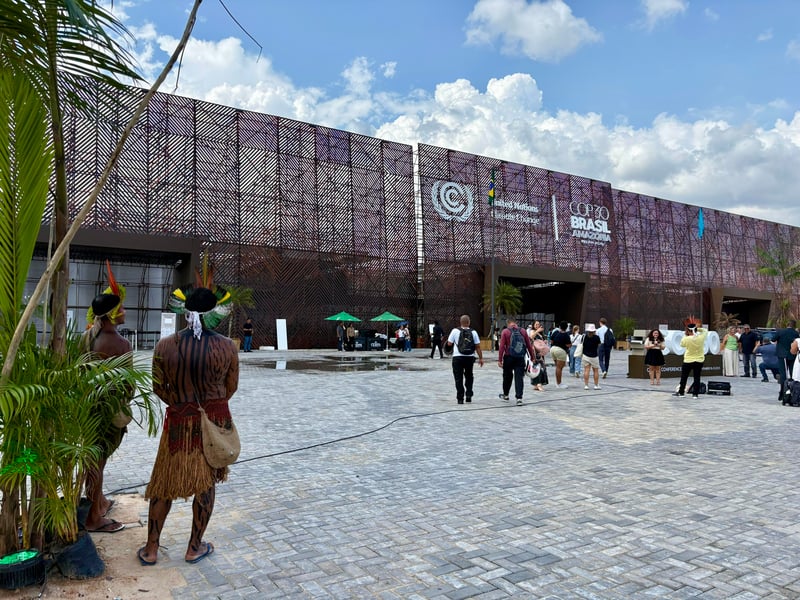
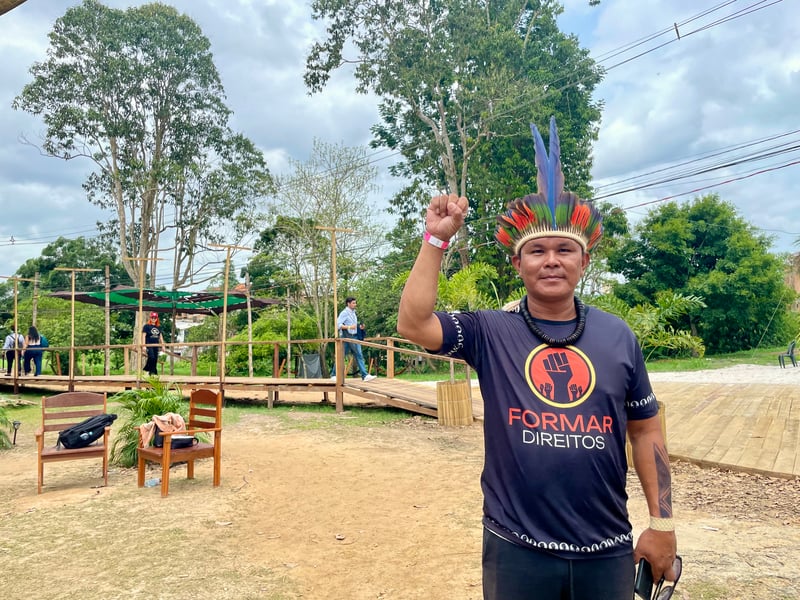
BELÉM, Brazil (CN) — Cleudo Tenharim, 40, left his village in southern Amazonas on Nov. 1. After three days of traveling by car to Manaus and another five by boat, he arrived in Belém to take part in the United Nations Climate Change Conference.
The summit began Monday and runs through Nov. 21.
He is one of roughly 3,000 Indigenous people staying at the COP Village, a site about 2 miles from the conference’s Blue Zone, where official negotiations take place.
“We’re here with the same goal of securing our rights,” Tenharim said. “With so much diversity among the peoples who are here, not only from Brazil, I can say that cultural diversity changes, but what unites us is our connection with nature.”
In the Blue Zone, the global Indigenous delegation includes about 900 participants — nearly triple the previous edition in Baku — according to Brazil’s Ministry of Indigenous Peoples.
“This COP has the highest participation and leadership of Indigenous peoples,” Sonia Guajajara, Brazil’s minister of Indigenous Peoples, said during an official session Thursday dedicated to hearing leaders from all regions and incorporating their priorities into climate decisions. “We want to keep working so that Indigenous participation in the Blue Zone grows, so it’s not just a physical presence and the issue is at the center of the global debate.”
Ceiça Pitaguary, Brazil’s national secretary for Indigenous environmental and territorial management, said Indigenous peoples prepared themselves “to arrive in Belém and position themselves as protagonists in this climate discussion and, in doing so, encourage negotiators to recognize the protection of territories as a way to mitigate these effects.”
Not everyone, however, has access to the main negotiation floor — including Tenharim, who said he wished he had a passport so he could enter the Blue Zone.
Tensions around the restricted access escalated during the summit’s first week. On Tuesday, a group of Indigenous demonstrators briefly entered the Blue Zone after a march on health and climate, before being removed by security.
On Friday morning, dozens of Munduruku — an Indigenous group living mainly in the northern states of Pará and Amazonas and the western state of Mato Grosso — families blocked the main entrance in a peaceful protest demanding an emergency meeting with President Luiz Inácio Lula da Silva and the repeal of a decree that advances waterway projects in their territory. They also rejected jurisdictional proposals and carbon-credit plans under discussion at COP30, calling them a “sale of the forest.”
The Brazilian Army and National Force closed the main gate during the protest, and U.N. participants were rerouted through a side exit with manual security checks, according to conference organizers.
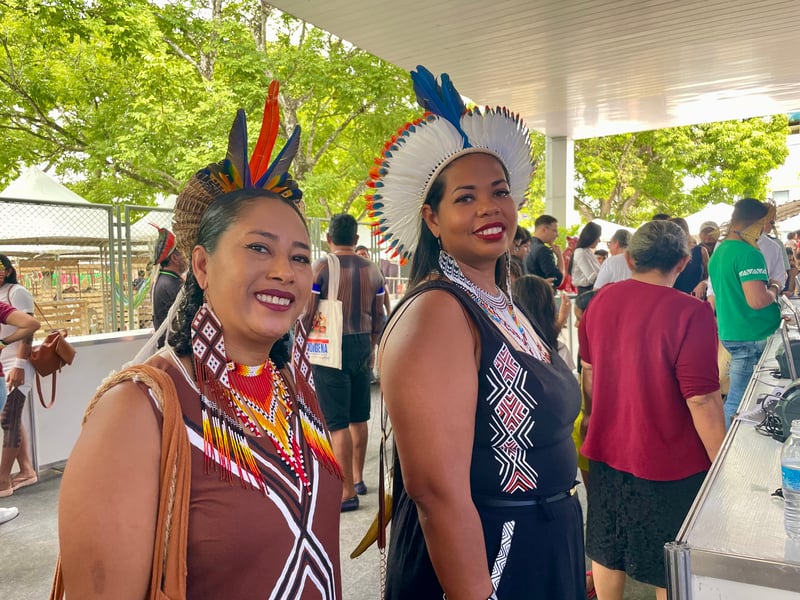
Gabriela Florencio Jesus Souza and Adriana Pesca, both 39 and teachers from the Pataxó community of Coroa Vermelha in the northeastern state of Bahia, also do not have access to the Blue Zone.
“Talking about the climate crisis without Indigenous peoples at the table feels like a bad joke,” Souza said. Pesca added, “Creating a unified space for diplomats while pushing Indigenous peoples out of this discussion disrespects diversity and, above all, the peoples of this land.”
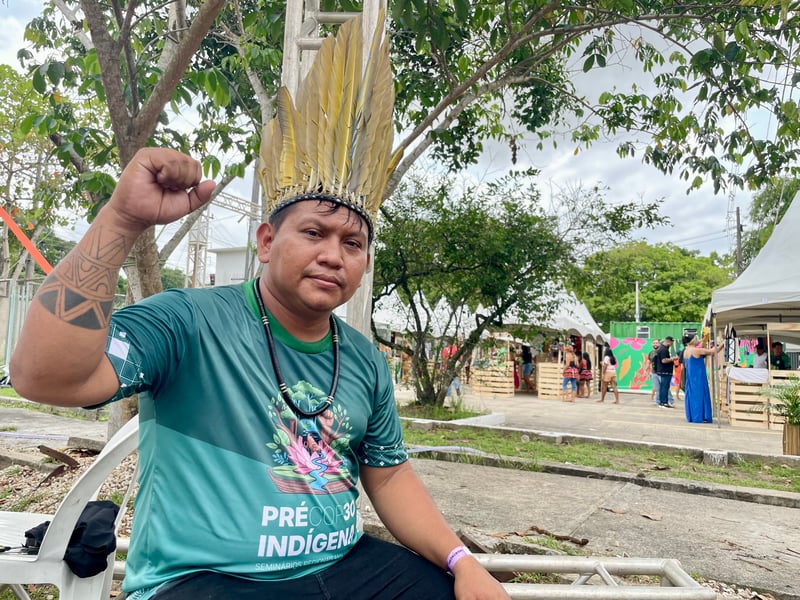
Although he sees the conference as still “Eurocentric,” Wendel Apurinã, 31, from the northern state of Amazonas, said it is important to be in the COP Village to “know that you’re not alone.”
“It means knowing that our relatives from different parts of the country, and from other countries, are together in this struggle against the climate crisis,” he said. “And showing the world that Indigenous peoples also know what they want.”
The COP Village hosts political debates, training sessions and exchanges between peoples. Throughout the two weeks, leaders take part in meetings on land demarcation, climate adaptation, direct financing for communities and consultation protocols, as well as workshops with experts on international instruments such as the International Labor Organization’s Convention 169.
Convention 169 requires governments to consult Indigenous peoples before any action or policy that affects their territories, livelihoods or natural resources. It also guarantees territorial protection, participation in decisionmaking and the right to maintain their own institutions, cultures and forms of organization.
“It’s very important for us, the people who live in the villages, to know our rights,” Tenharim said. “When we don’t, we end up accepting whatever comes from outside. When we do, we can stand our ground.”
There are also cultural presentations and meetings with foreign delegations aimed at strengthening alliances and preparing groups to pressure negotiators in the Blue Zone.
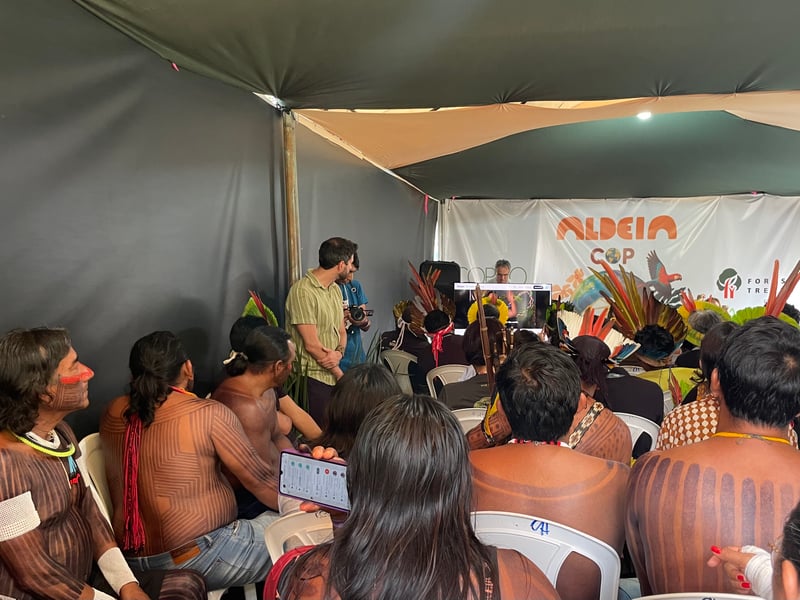
During an official session, André Corrêa do Lago, president of COP30, said the conference taking place in Brazil is positive because it reinforces the shift in how Indigenous peoples are perceived — as guardians of territories, which the rest of society has largely failed to protect.
He also highlighted the Tropical Forests Forever Fund, created by the Brazilian government during the pre-COP30 leaders’ summit on Nov. 6–7. The fund allocates 20% of its financing directly to Indigenous peoples and local communities and has so far secured $5.5 billion from Norway, Brazil, Indonesia, Portugal, France and the Netherlands.
Kleber Karipuna, national coordinator of the Articulation of Indigenous Peoples of Brazil, said during a panel on Wednesday that it is no longer necessary to explain how much Indigenous and local territories contribute to addressing the climate emergency.
“What we need now is to take this recognition out of political speeches and put it effectively into practice,” he said. “We came with that mission for COP30.”
Karipuna presented the Nationally Determined Contributions developed by the Articulation of Indigenous Peoples of Brazil, which offer concrete proposals to the Brazilian government and criticize the generic and political nature of the official targets submitted by countries.
The Indigenous contributions include numbers, deadlines and specific actions, such as the demarcation of 107 lands already eligible for approval and another 160 under review — steps the group says would have an immediate impact on both climate action and territorial rights.
The document outlines seven pillars and 36 actions covering mitigation, adaptation based on Indigenous life plans, a just transition with the elimination of fossil fuels and mining in Indigenous lands, and direct climate financing to communities through funds managed by the peoples themselves. The Articulation of Indigenous Peoples of Brazil is pushing for these proposals to be attached to the nation’s official NDC and integrated into COP negotiations.
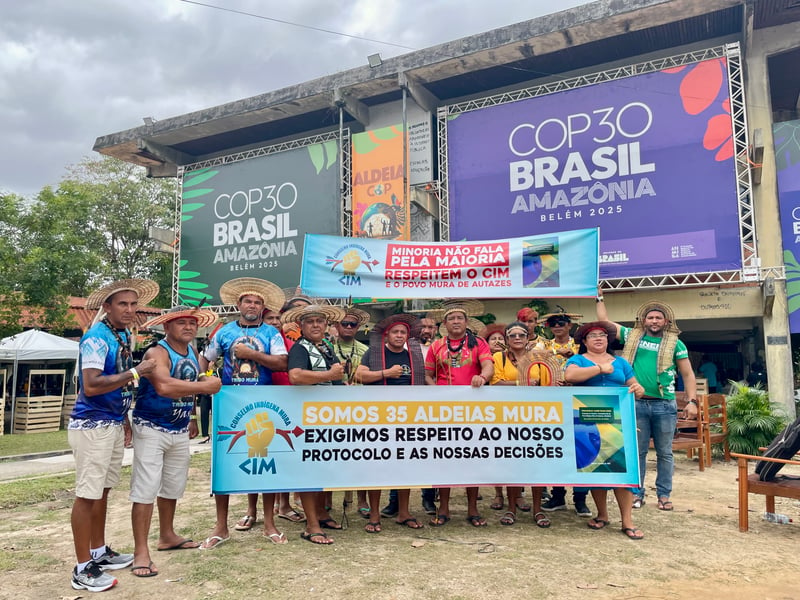
Paulo Celso de Oliveira, an Indigenous lawyer from the Pankararu people, from the northeastern state of Pernambuco, who is taking part in discussions in both the COP Village and the Blue Zone, said the climate agenda will only advance once Indigenous rights — such as land demarcation and free, prior and informed consent — are put into practice.
“International agreements have advanced,” he said, citing the U.N. Declaration on the Rights of Indigenous Peoples and the Organization of American States’ Declaration on the Rights of Indigenous Peoples. “But it’s important that they be applied in concrete ways that affect Indigenous peoples’ lives.”
He added he remains optimistic about the expectations for COP30.
“I believe that because this is a COP held in Brazil, here in the Amazon, beyond the formal discussions, our culture can have an influence,” he said. “I don’t believe all these people coming together will amount to nothing.”
Courthouse News reporter Marília Marasciulo is based in Brazil.
Subscribe to our free newsletters
Our weekly newsletter Closing Arguments offers the latest about ongoing trials, major litigation and rulings in courthouses around the U.S. and the world, while the monthly Under the Lights dishes the legal dirt from Hollywood, sports, Big Tech and the arts.