
 Search Articles


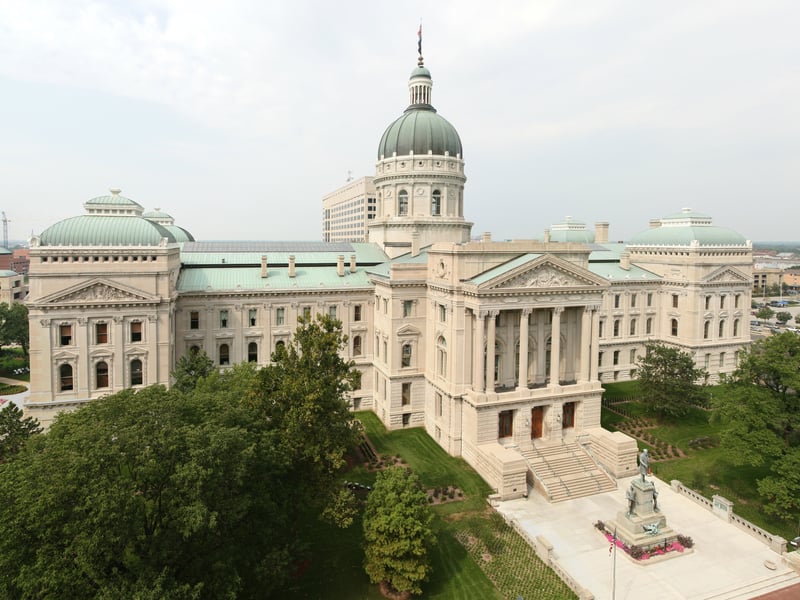
INDIANAPOLIS (CN) — The Indiana state House of Representatives passed a new Republican friendly congressional map on Friday that critics claim is politically and racially gerrymandered.
The proposed map passed 57–41 and redraws all nine of Indiana’s congressional districts, creating a Republican-leaning map that could flip the two U.S. House seats currently held by Democrats.
Republican Indiana House Representative Ben Smaltz, who authored the redistricting bill, repeated throughout the weeklong voting process that mid-decade redistricting is legal and that the map was drawn for “political performance.”
“The Supreme Court could not be clearer, states may redraw districts whenever they deem appropriate,” Smaltz said. “Provided constitutional and statutory requirements are met.”
Smaltz made his comments during closing remarks, urging colleagues to back the bill, just a day after the U.S. Supreme Court upheld a Republican-drawn congressional district map in Texas.
Before the vote, Indiana House Democrats blasted the proposal, particularly the breakup of Indianapolis and Marion County’s urban districts.
Democratic U.S. House Representative André Carson’s Indianapolis district would be split into four sprawling districts stretching from the city’s center to the state’s edges.
“When you overlay a map of black household density, there is a disturbing reality, said Democrat Indiana State House Rep. Carey Hamilton. “The lines surgically divide black neighborhoods among the new districts that would be carved into the heart of Indianapolis.”
The Republican supermajority rejected every amendment offered by House Democrats, including proposals to require public hearings in each congressional district and to place redistricting on the ballot for voters to decide.
At Tuesday’s lone public hearing, dozens of Hoosiers criticized the bill — among them former Republican Indiana Lieutenant Governor Sue Ellspermann, who said mid-decade redistricting did not make sense.
“We must not let partisan political pressure impact the decisions we make,” Ellspermann said. “For those who believe you can do this and go home, be forewarned, Hoosiers will remember and they will hold you accountable.”
Indiana Attorney General Todd Rokita championed the passage of the map in a statement, saying the bill was on strong legal ground.
“This specific map is legally solid. If any group or individual is silly enough to sue, we will defeat their attack in court,” Rokita said. “As the United States Supreme Court emphasized once again last night, redistricting for political reasons is constitutional.”
The bill now heads to the Indiana State Senate, where its fate is uncertain. Earlier this year, the chamber resisted taking up redistricting, but faced mounting pressure from Republican Indiana Governor Mike Braun and President Donald Trump.
Since that time, over a dozen Indiana lawmakers have been targeted with bomb threats and swatting attempts tied to the redistricting fight.
Julia Vaughn, the Executive Director of the voting rights group Common Cause Indiana, criticized Indiana House Republicans for passing the bill.
“Hoosiers spoke clearly and said they did not want mid-decade redistricting and Indiana House Republicans ignored them. Their fellow Republicans in the Senate have been harassed and intimidated, and House Republicans did not have their colleagues’ back. Shame on those who put DC party bosses above their own constituents,” said Vaughn.
Subscribe to our free newsletters
Our weekly newsletter Closing Arguments offers the latest about ongoing trials, major litigation and rulings in courthouses around the U.S. and the world, while the monthly Under the Lights dishes the legal dirt from Hollywood, sports, Big Tech and the arts.