
 Search Articles


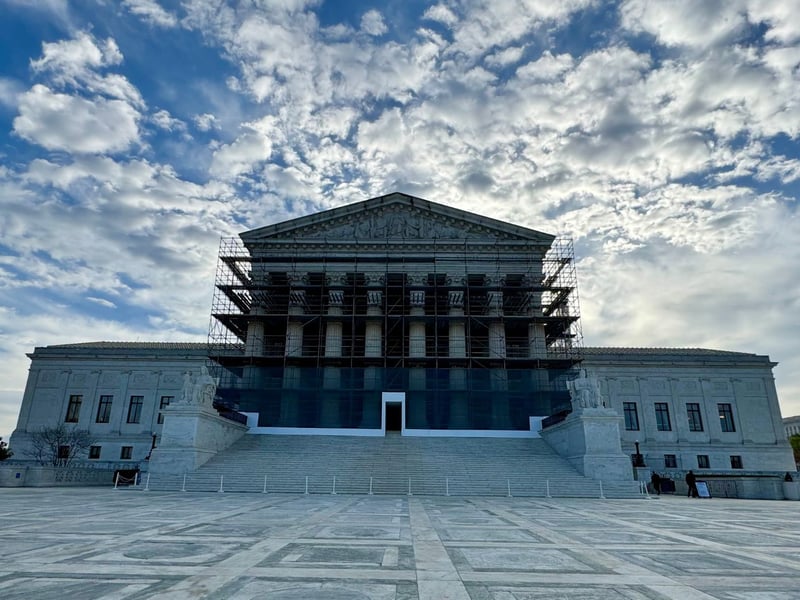
WASHINGTON (CN) — Regulators pushed the Supreme Court on Tuesday to reject a request to overturn 90 years of precedent via the emergency docket, arguing that President Donald Trump wants more executive authority than he is due.
“No other president in our lifetimes has ever attempted to violate for-cause removal statutes in this manner,” the independent regulators wrote. “The current chief executive is not being held to a different standard. He is being asked to follow binding precedent unless and until the court overturns it, just like his predecessors for nearly a century.”
Last week Trump asked the justices to block the reinstatement of independent officials to the National Labor Relations Board and the Merit Systems Protection Board. U.S. Solicitor General John Sauer claimed Trump was being forced to delegate his executive power to the agency heads.
Board members Cathy Harris and Gwynne Wilcox said that a “blitzkrieg-to-judgment” is not the way to revisit settled precedent. They warned the justices about the potential vast consequences of upending regulatory independence across the government, focused specifically on the effects to the Federal Reserve, which sets monetary policy and regulates banks.
“It is telling that nowhere in its 39-page application did the Solicitor General say a word about what overturning Humphrey’s Executor —or narrowing it into oblivion — would mean for the Federal Reserve Board, despite this moment of considerable economic turmoil,” regulators wrote.
The Federal Reserve controls important tools for combating inflation like raising interest rates. The board operates independently, but Wilcox and Harris said the president could seek control of the regulator.
Granting Trump’s request would overturn the Supreme Court’s landmark 1935 ruling Humphrey’s Executor v. United States , which limited presidential authority over independent regulatory commissions.
For-cause removal protections shield independent board members from political interference. Members are appointed by the president and confirmed by the Senate, but Humphrey’s Executor determined they can only be fired for misconduct — not because their decisions aren’t favorable to the current administration.
Before they were fired by Trump, Harris chaired the Merit Systems Protection Board, which reviews disputes from federal workers, Wilcox sat on the National Labor Relations Board, which resolves hundreds of unfair labor practice cases every year.
Harris, a lesbian, was confirmed to the Merit Systems Protection Board in 2022 and elevated as chair in March 2024. Before joining the board, she worked on sexual harassment and LGBTQ rights cases and was an assistant district attorney for the New York County District Attorney’s Office.
Harris sued Trump and other administration officials after being fired in an email in February claiming that her removal violated statutory tenure protections.
Wilcox, the first Black woman to serve on the National Labor Relations Board and as its chair, was similarly fired in an email. A week after taking office, Trump terminated Wilcox, stating that he needed a board of his choosing to carry out the administration’s policies.
Wilcox also sued the president and other administration officials for violating her statutory tenure protection.
Both Wilcox and Harris prevailed at the lower court, but a panel on the D.C. Circuit paused their reinstatements. However, the court reversed en banc, calling for the reinstatement of Wilcox and Harris.
Harris and Wilcox were briefing reinstated by the D.C. Circuit before Chief Justice John Roberts, a George W. Bush appointee, temporarily paused the appeals court ruling so the Supreme Court could review Trump’s emergency appeal.
Over the last decade, however, the Roberts court limitedHumphrey’s Executor in Seila Law v. Consumer Financial Protection Bureau and Collins v. Yellen . Instead of insulating independent board members, the Supreme Court has shifted authority back to the president.
In February, Attorney General Pam Bondi informed lawmakers that the administration no longer believed Humphrey’s Executor to be good law. Trump said he intends to ask the high court to overturn the landmark precedent if the justices review the merits of his appeal.
As of now, however, Humphrey’s Executor hasn’t been overturned. Despite the administration’s claim that there was a lack of clarity on how to apply Humphrey’s Executor , Harris and Wilcox said Trump came up short of showing a likelihood of success under existing law.
“To be clear: There is no ‘lack of clarity,’” the regulators wrote
The Trump administration claimed that Humphrey’s Executor had been “narrowed into nonexistence,” only applying to agencies that were identical twins of the Federal Trade Commission in 1935.
The Merit Systems Protection Board exercises far less significant authority than the FTC, the board members said.
“If the board’s structure is not constitutional under Humphrey’s Executor , nothing is,” the regulators wrote
Harris and Wilcox pushed the justices to reject Trump’s argument that federal courts are powerless to intervene. They said holding otherwise would create a “remedial blackhole” making laws passed by Congress completely unenforceable.
“The court should be particularly careful of going down this path, because it would prevent the court from ever preserving any subset of removal statutes, and risks undermining the foundations of judicial review in cases involving the executive,” the regulators wrote.
 Follow @KelseyReichmann
 Follow @kelseyreichmann.bsky.social
Subscribe to our free newsletters
Our weekly newsletter Closing Arguments offers the latest about ongoing trials, major litigation and rulings in courthouses around the U.S. and the world, while the monthly Under the Lights dishes the legal dirt from Hollywood, sports, Big Tech and the arts.