
 Search Articles


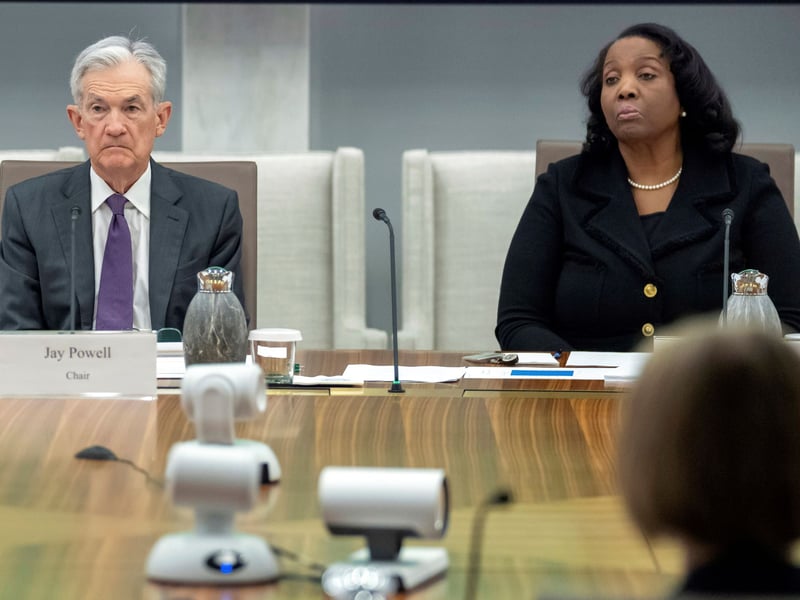
WASHINGTON (CN) — President Donald Trump’s effort to control monetary policy faces Supreme Court review next week, where the justices could decide whether the Federal Reserve is truly independent.
Fed Chair Jerome Powell warned that the Justice Department had opened a criminal investigation as part of a pressure campaign to lower interest rates and temporarily boost the economy. But the Supreme Court’s review of Trump’s authority to fire Powell’s colleague on the Board of Governors, Lisa Cook, could fundamentally alter the central bank and the nation’s economy.
“This is a case that’s about much more than Cook,” Lev Menand, a professor at Columbia Law School and director of the Project on Public Economic Law, said. “It’s about whether President Trump will be able to take over the Federal Reserve Board in the coming months.”
Same but different
For nearly a century, presidents have been barred from removing regulatory commission board members under Humphrey’s Executor v. United States. The landmark 1935 ruling prohibited President Franklin D. Roosevelt from removing a Republican member of the Federal Trade Commission without cause.
For-cause removal protections, as they became known, only allowed presidents to remove a commissioner for inefficiency, neglect of duty or malfeasance in office.
But Humphrey’s Executor could become extinct after the conservative majority allowed Trump to ignore the 90-year-old precedent to terminate FTC Commissioner Rebecca Slaughter last September. In the months prior, the Supreme Court gave Trump permission to terminate independent officials heading the National Labor Relations Board, Merit Systems Protection Board and Consumer Product Safety Commission.
When the justices heard oral arguments in Slaughter’s case in December, the court seemed likely to gut, if not completely overrule, Humphrey’s Executor — with one caveat.
“General Sauer, can I ask you about the Federal Reserve?” Justice Brett Kavanaugh, a Trump appointee, asked the government’s lawyer during oral arguments. “The other side says that your position would undermine the independence of the Federal Reserve, and they have concerns about that, and I share those concerns.”
Declaring independence
The Federal Reserve wields vast authority over the American and international economy. Aside from setting interest rates and managing price inflation, the Fed regulates financial conglomerates, maintains the financial system and provides services such as acting as a lender.
Heather Boushey, a former member of the White House Council of Economic Advisers, said the Fed’s dual mandate is full employment and price stability.
“Being able to assess whether or not the economy is at a low unemployment level, whether or not it could go lower, indeed, and whether or not prices are stable are both questions about access to quality data that people can rely on that we know is credible,” Boushey, a professor at the Kleiman Center for Energy Policy and senior research fellow at the reimagining the economy project at the Harvard Kennedy School, said.
“It also requires that the Federal Reserve has the ability and the time to be able to make their policy decisions around the price of what it costs for borrowing, around the interest rates that they set, and that they are able to have the time to do so outside of day-to-day political considerations.”
Central bank independence and insulation from presidential control can be traced back to the creation of the Bank of England in 1694. These principles are shared throughout the global financial system, with only 12 nations allowing the removal of central bank board members at the executive’s discretion. Congress protected the Federal Reserve from at-will presidential removal in the Federal Reserve Act of 1913 and in the 1935 Banking Act.
It’s unclear if or how the Supreme Court would distinguish the Fed from other regulatory boards if the justices overturned Humphrey’s Executor. However, there are signs that the court could take this route.
“We know from the Wilcox case, as well as from oral argument in Slaughter, that the justices have cold feet about their constitutional theory, the unitary executive theory, that hands the president the power to just remove whoever he wants, notwithstanding the law,” Menand said.
The high court allowed Trump to fire National Labor Relations Board member Gwynne Wilcox in an emergency ruling last year. In the short, unsigned opinion, the majority said the Federal Reserve’s for-cause removal protections would not be impacted by Wilcox’s termination.
“The Federal Reserve is a uniquely structured, quasi-private entity that follows in the distinct historical tradition of the First and Second Banks of the United States,” the majority wrote.
Aaron Nielson, a professor at the University of Texas School of Law, said the Fed could be separated from other agencies because it controls monetary policy, not executive power.
“Under a straightforward application of precedent, the president enjoys a broad constitutional power to remove the leadership of executive branch agencies, and that is true even if Congress has designated such agencies as ‘independent’ or purported to provide their leaders with statutory protections from removal,” Nielson wrote.
But the Federal Reserve is different, Nielson argued.
“Whereas the modern FTC indisputably exercises executive power, the Fed’s core function is monetary policy, which need not and often does not require executive power,” Nielson wrote.
What’s the cause?
Unlike his attempts to fire members from other regulatory boards, Trump advanced unsubstantiated claims of mortgage fraud to justify Cook’s termination. The administration said Cook claimed properties in both Michigan and Georgia as her principal residence in mortgage agreements. Lenders typically offer lower interest rates for principal-residence mortgages.
Cook denies the accusation, and the Justice Department has yet to file any charges against her.
At issue before the Supreme Court is what sort of actions constitute a cause for removal.
Cook pointed to federal statutes governing presidential removals of other executive officers that include instances of inefficiency, neglect or malfeasance in office. Trump, however, says courts can’t review the president’s finding that sufficient cause existed to remove Cook.
The White House argued courts can review the boundaries of the president’s removal of Federal Reserve governors for cause, such as when there is no cause cited.
“But — critically for this case — when, as here, the president provides a cause, courts may not review his factual findings or his application of the for-cause standard to the facts, or otherwise second-guess his judgment that the removal is justified,” Solicitor General John Sauer wrote.
Cook said Trump’s arguments defied common sense and undermined the Fed’s independence.
“The president’s view that he can remove any governor based on any unproven allegation of any pre-office wrongdoing suffers from precisely that fatal defect,” Cook wrote, noting the White House had vast resources and a fair chance of finding at least a technical violation of some act on almost anyone.
“Congress did not mean for the nation’s monetary policy to turn on that game of find-an-alleged-crime.”
Checks and balances
The Federal Reserve Board is made up of seven members. Trump appointed Michelle Bowman and Christopher Waller during his first term. Last September, Trump added a third member, Stephen Miran.
Philip Jefferson, Michael Barr and Cook, the first Black woman to serve on the board, were all nominated by President Joe Biden. Powell was nominated by President Barack Obama, but Trump nominated him for chair in 2017. Biden extended Powell’s leadership, nominating him for a second term in 2022.
The Supreme Court deferred its decision on Trump’s emergency appeal requesting to remove Cook from the board until arguments on Jan. 21. If the justices grant his appeal, Trump would get another nomination, giving him a majority on the board.
Menand said gaining control of the board would vastly expand Trump’s authority.
“The central bank controls the monetary levers and is the backbone of the payment system,” Menand said. “The monetary levers can be abused to lend money, to buy assets in ways that further the administration’s priorities and allow the administration to evade checks by the legislature that is supposed to, under our constitutional system, have the power of the purse.”
Democratic Senator Elizabeth Warren told reporters that a Trump takeover of the Fed would have catastrophic impacts on the American economy.
“The Fed can set interest rates to please a president who wants to juice the economy ahead of the midterm election,” Warren said.
She warned the Fed could expedite Wall Street deregulation, causing taxpayer bailouts and devastating financial crashes. Warren was also concerned about Trump’s personal financial conflicts.
“If Trump has his majority, nothing would stop him from providing special Fed privileges like master accounts and emergency bailout loans to his own crypto company, World Liberty Financial, which, just last week, applied for a federal banking charter,” Warren said. “And nothing would stop him from yanking privileges from banks that refused to do his bidding.”
Trump argued that concerns from Cook and others about the Fed’s independence or the financial markets were pursuing tangents instead of the legal questions before the justices.
“But this case does not involve the constitutionality of the Federal Reserve Board’s removal protections,” Sauer wrote. “Nor are the effects of Federal Reserve independence on ‘the financial markets,’ the ‘dollar’s dominant role,’ or ‘general market conditions’ at issue.”
Before the court, Trump said, was whether Trump violated Cook’s due process rights, if there was cause to remove her and whether she should remain on the board in the interim.
 Follow @KelseyReichmann
 Follow @kelseyreichmann.bsky.social
Subscribe to our free newsletters
Our weekly newsletter Closing Arguments offers the latest about ongoing trials, major litigation and rulings in courthouses around the U.S. and the world, while the monthly Under the Lights dishes the legal dirt from Hollywood, sports, Big Tech and the arts.