
 Search Articles


MANHATTAN (CN) — Last year, Jordan Neely’s cause of death was ruled “compression of the neck” by a forensic pathologist working for the New York City medical examiner.
“In parentheses, I wrote ‘chokehold,’” Dr. Cynthia Harris, the examiner who performed Neely’s 2023 autopsy, told a Manhattan court last week.
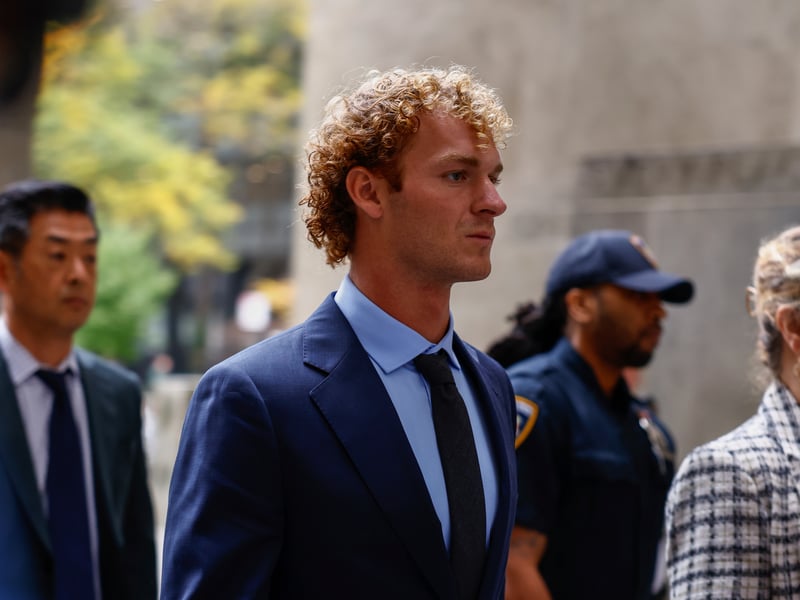
But on Thursday, Harris’ conclusion was called into question by another autopsy doctor: Satish Chundru, an independent forensic pathologist from Texas. Chundru testified as an expert in the defense case of Daniel Penny, the 26-year-old Marine veteran accused of strangling Neely to death on a New York City subway last year.
“This is not a chokehold death,” Chundru said Thursday.
Speaking candidly to the jury, Chundru poked holes in Harris’ testimony to stoke doubt over the lethality of Penny’s chokehold. Harris said last week that Penny would have needed a “considerable amount of constrictive squeezing force” to cause the hemorrhages she found on Neely’s neck.
Chundru disagreed. He lambasted Harris’ conclusion as one that was fast tracked and riddled with speculation. Harris sat in the second row of the courtroom gallery with prosecutors, where she took notes as Chundru tore into her assessment of Neely’s death.
“When you have a chokehold death, there’s really two phases. Phase one is unconsciousness; you have to put enough consistent pressure to render the person unconscious,” Chundru said. “Phase two is you have to sustain that pressure for an extended period of time that leads to death.”
After reviewing cell phone footage of the struggle, Chundru determined there was no proof Penny applied enough pressure to render Neely unconscious before he died. Rather, he concluded that Neely died while resisting Penny’s grasp, from the “combined effects” of a sickle cell crisis, schizophrenia and Neely’s use of K2 — a synthetic marijuana.
“Did Mr. Penny choke Mr. Neely to death on May 1, 2023?” Penny’s defense attorney, Steven Raiser, asked Chundru.
“No,” Chundru replied.
But Chundru faced a grueling cross-examination Thursday afternoon as prosecutors hammered him with questions about his history as a forensic pathologist-for-hire.
Under fiery questioning from Assistant District Attorney Dafna Yoran, Chundru acknowledged that a majority of his work is in cases like this, where he is hired by defense attorneys to disprove the conclusions of county medical examiners. He’s paid handsomely to do so — Chundru said his revenue is roughly $5 million per year, and he’s billed Penny’s defense team for about $90,000 so far.
Still, Chundru insisted: “I always try to find the truth.”
But Yoran got Chundru to walk back some of his testimony. On direct examination, Chundru downplayed the hemorrhaging found in Neely’s neck as minimal. On cross, he admitted that some hemorrhages were found “deep inside the neck,” indicative of Penny using some force as he restrained Neely.
Chundru also conceded that, had Neely gone unconscious at one point from Penny’s squeeze, Penny continued applying pressure for long enough afterward to cause Neely serious brain injury or death.
Neely was 30 years old when he died after his confrontation with Penny aboard a Manhattan F train last year. Penny told responding officers that Neely was acting erratically and shouting threats to passengers, prompting him to grab Neely from behind with the chokehold.
Earlier at trial, witnesses said that Neely yelled “someone is going to die today” as he ranted on the train car. One witness described the episode as “satanic.” Penny insisted that he never meant to harm Neely and just wanted to protect other passengers.
Prosecutors haven’t questioned his intentions, but say he went “way too far” in restraining Neely.
Penny faces up to 15 years in prison if he is convicted on the top count of second-degree manslaughter. The second count, criminally negligent homicide, carries a maximum sentence of four years.
 Follow @Uebey
 Follow @uebey.bsky.social
Subscribe to our free newsletters
Our weekly newsletter Closing Arguments offers the latest about ongoing trials, major litigation and rulings in courthouses around the U.S. and the world, while the monthly Under the Lights dishes the legal dirt from Hollywood, sports, Big Tech and the arts.