
 Search Articles


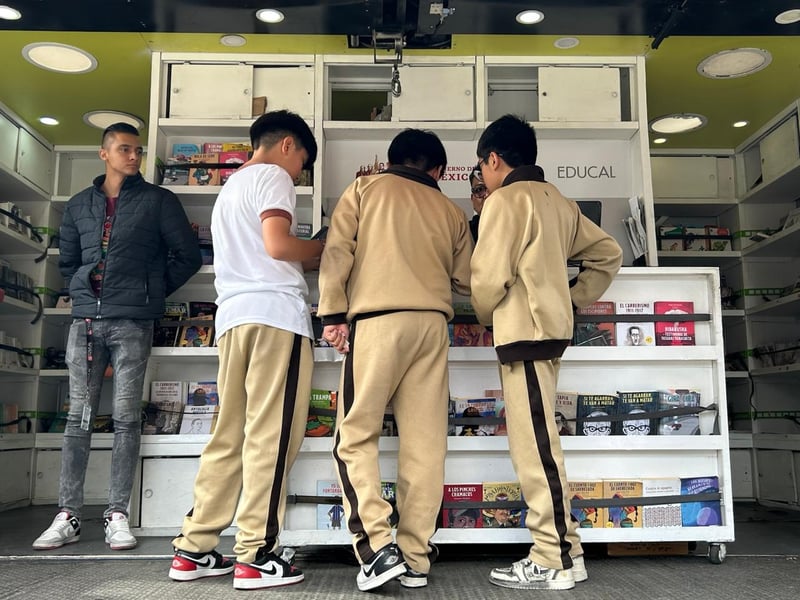
MEXICO CITY (CN) — Summer was near on a warm morning in early June when students at a school in San Juan de Aragón, a working class neighborhood on the northeastern edge of Mexico City, gather around a parked bus during recess.
Some linger outside, waiting for friends; others step eagerly inside. The old bus, now repainted and modified, is no ordinary vehicle — it’s a Librobus, a mobile library filled from wall-to-wall with affordable books.
Librobuses are part of a government-backed initiative run by the Fondo de Cultura Económica (FCE), Mexico’s state-owned publishing house. Every weekday, four of these retrofitted buses visit schools across Mexico City, particularly in neighborhoods lacking bookshops or libraries. The goal: to make books accessible and reading desirable for children and teenagers who might otherwise grow up without any literary exposure.
Roberto Rico Ramírez, an author in his late 60s, is the project’s longtime coordinator. On that morning earlier this month, he drove across the city before sunrise to reach the school. Ramírez and his small team carry out four such visits daily, year-round.
“The project builds community," he said, standing beside the bus as students crowded around. “It’s like a celebration when the Librobus arrives.”
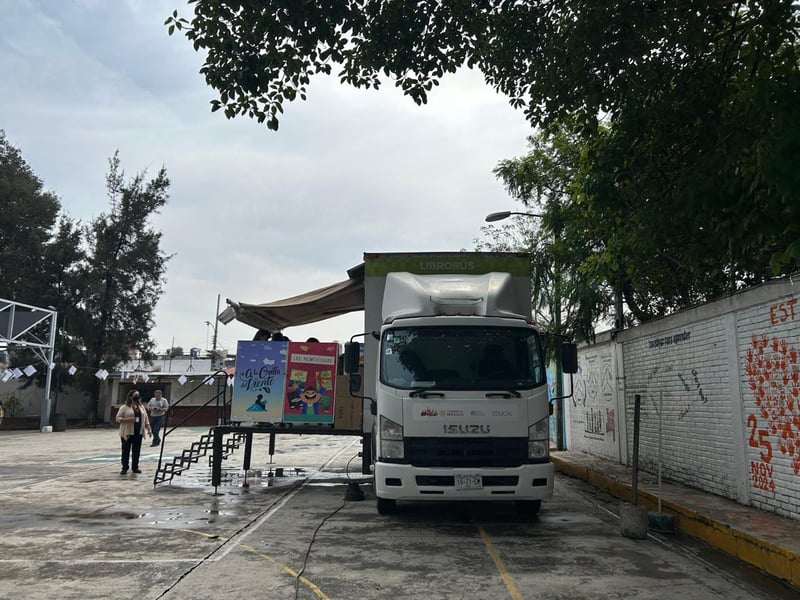
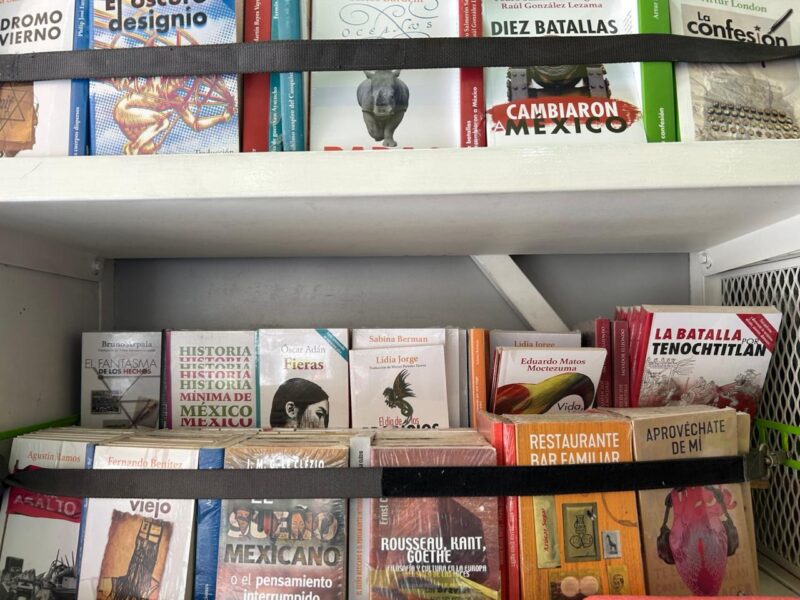
The bus, once a standard public vehicle and since donated by the city network, now opens on one side to reveal a small staircase. Inside, narrow shelves packed with hundreds of titles line the walls, from poetry and history to illustrated children’s stories and teen fiction. Students browse in small groups, flipping through books, reading aloud and picking favorites to purchase. Later that day, a team of volunteer storytellers arrive to read alongside the students, transforming the visit into an event.
The Librobus program launched in 2019 with the idea of recycling retired buses for a new cultural mission. It soon became one of the FCE’s flagship efforts to democratize access to literature. “It’s a central part of our mandate,” said Ezra Alcázar, the FCE’s head of international relations. “We are publicly funded, so we believe that money should return to the people, in the form of affordable access to books.”
That access remains unequal. More than 35% of Mexico’s population lives under the poverty line, and books are often seen as a luxury. Many children grow up in communities with no libraries or bookstores at all. “We’re not just bringing them stories,” said Ramírez. “We’re bringing the idea that the world could be different.”
Ahead of each visit, schools often prepare students with reading workshops and creative assignments. At the San Juan de Aragón school, teachers helped students draw their own book covers and encouraged them to save coins to buy a book — many priced below 20 pesos (around $1 U.S. dollar). The FCE offers a special collection for schools, designed to be cheaper than a snack or meal in the school’s kiosks.
“These are families that may have never bought a book before,” said Ramírez. “Now they can.”
Lucero Alfaro Ferrer, a teacher at the San Juan de Aragón school, helped organize the visit. “Kids today are always on their phones,” she said. “But we’re trying to awaken something different: to remind them of the magic of reading a book with paper pages. They treat Librobus like a special guest and, before its arrival, they were excited, saving pesos and designing their own book covers to welcome the program in the schoolyard.”
Although Librobus is one of the strongest, most efficient ways of bringing books to young people, the FCE works incessantly to expand access through different programs.
In 2021, they bore “21 para el 21” (21 toward the 21 in Spanish, referring to that year). Paco Ignacio Taibo II, now head of the FCE, and then-president Andrés Manuel López Obrador came up with a collection under that name, offering books written by 21 Mexican authors that reflect the identity of the country.
“It became a small library of great works of the Mexican literature that ‘everyone’ should own,” said Alcázar. It included notable female authors such as Elena Garro, Guadalupe Dueñas, Amparo D’Avila and Inés Arredondo, as well as 19th-century poetry and narrative journalism. The FCE printed 100,000 copies of each and distributed them for free across the country.
Now they’re seeking to do so again, but in a more ambitious, transnational mission: 25 toward the 25 will bring 2.5 million books to eight Latin American countries. These books were all written during the 20th century, and can help outline the identity of such a large, complex, diverse region, according to FCE authorities. From Chilean contemporary sci-fi author Nona Fernández to Peruvian poet Blanca Varela, the aim is to make the most of FCE libraries across Latin American capitals and distribute books across them.
“The idea behind this new book collection is to offer a kind of memory, or reflection, on what has happened in Latin America literarily, socially and historically,” said Alcázar.
Last month, Taibo II, who is a well-known author and journalist as well as head of the FCE, joined Mexican President Claudia Sheinbaum in her daily morning press conference, known as “la mañanera.” There, he spoke about librobuses, referring to such policies as “culturally provoking” ventures.
“A book costs half a sandwich in high school,” he said. “And books allow critical thought — they’re great vehicles of information.”
 Follow @luciacholakian
Subscribe to our free newsletters
Our weekly newsletter Closing Arguments offers the latest about ongoing trials, major litigation and rulings in courthouses around the U.S. and the world, while the monthly Under the Lights dishes the legal dirt from Hollywood, sports, Big Tech and the arts.