
 Search Articles



MARSEILLE, France (CN) — Hitmen in Marseille’s drug wars are becoming increasingly younger. The teens are killing for less money than before, post videos of their murders on social media and benefit from a penal system that lets minors off easy.
Experts argue a lack of youth programs and social services, poorly supported institutions and the massively lucrative drug trade’s financial appeal all contribute to the trend. Apps like Snapchat have fueled the fire.
“We need concrete solutions for young people to bring them back on the right path,” Hassen Hammou, a local social and political activist and founder of Trop Jeune Pour Mourir, translating into Too Young to Die, told Courthouse News. “But behind that, it is collaborative work — associations, police, prevention, justice. If we don’t talk to each other enough, we won’t be able to find solutions.”
This month, a 14-year-old killed an innocent taxi driver on a botched assignment. Within 48 hours, a 15-year-old boy was set on fire. The murders were part of a turf war between two gangs battling for ground in the city’s 3rd arrondissement.
Though minors had previously been involved in Marseille’s drug networks, the recent murders highlight a trend in which teenagers are given increasingly violent and high-risk positions in the gang hierarchy. This has become more common in recent years.
Experts argue that curbing the trend will require a strategy stemming from local communities, one that grows from domestic policy into multilateral collaboration efforts. It may also cost billions of dollars.
Franck Rastoul, the head of the public prosecutor’s office at the Aix-en-Provence Court of Appeal — which oversees Marseille and multiple other cities — told Courthouse News that any solution will require a widespread international effort.
“At the international level, billions of dollars are generated by drug practices and are therefore reinjected into the economies of all countries,” he said. “We need to work on money laundering phenomena to be able to ultimately stem the dispersion of these sums into all strata of society.”

Minors have long been part of Marseille’s drug trafficking networks. Typically, teenagers would act as guetteurs , or lookouts, perched in strategic locations generally around the city’s social housing complexes.
In Les Minots: Une enquête à Marseille , a book documenting the role of minors in the city’s drug landscape in roughly the past two decades, the author Romain Capdepon described how these kids had often been given schedules, as if they worked a standard job.
But in recent years, teenagers have become increasingly prevalent as both the victims and the perpetrators of violence.
“This is a phenomenon that we had known for monitoring points of sale, but today we’re also finding young people in extremely serious situations, particularly murder or attempted murder,” Rastoul said. “We have more and more profiles of increasingly young offenders in all links of the chain.”
Teenagers are recruited through channels like Snapchat, the disappearing-video app where videos of murders are sometimes posted.
Ramzi Aidoudi, a criminal lawyer, is representing a victim allegedly killed by an 18-year-old suspect accused in multiple drug-related murders last year. His body was burned, and videos spread on social media.
“They post the videos to make it known, to make an impression on competitors, to impress others and to say ‘Watch out if you try to mess with us, if you try to step on our toes, this is what will happen to you.’ It’s to incite fear,” Aidoudi told Courthouse News. “So, there is a whole evolution today that is new, that is very, very, very worrying, very frightening. They’re having trouble curbing it, controlling this evolution at the level of the justice and police services.”
Underlying social issues play a role in recruitment.
“We saw them evolve towards more dangerous roles like going as far as committing murders, and I think it’s due to precariousness, that single-parent families are left to their own devices, and they have to deal alone with extremely violent issues with kids,” Hammou said.
Experts argue that another one of the main pulls is the prospect of “easy money.”
“These are young people who are recruited by the networks, who are lured by easy money, and what is quite worrying is that they’re capable of carrying out extreme acts for small reasons, like buying a car or going on vacation,” Rastoul said.
Hammou cautions against falling for this notion.
“It’s the temptation of money, which is not ‘easy’ money — I’ve always said it — it’s difficult money, and it’s blood money,” he said.
Recruiters often convey that because minors face less severe punishment in court, being caught isn’t such a big deal. In the penal system, minors benefit from significantly lighter treatment and sentences compared to adults.
“That’s also how they bait them, by telling them ‘In any case, you’re not at risk.’ They have to believe that they’re not at risk, not much at least,” Aidoudi said. “Criminal law is quite favorable to minors.”
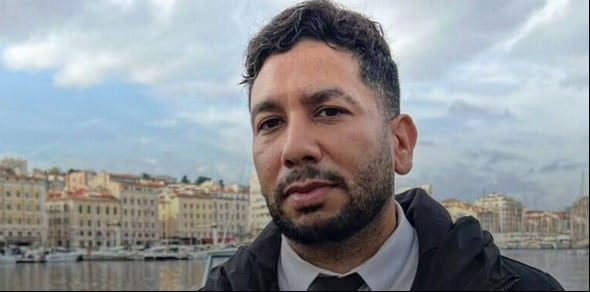
Experts argue that an effective solution must stem from local communities and extend into state institutions and international agreements.
“I think that the first solution is collaborative work — we need resources for the police, we need results, means of investigation and having investigators — and modernity in research means, with regard to the perpetrators,” Hammou said. He also highlighted the need for small-scale youth support systems across communities in Marseille.
Hammou said that kids need more positive examples highlighted in their neighborhoods, which would encourage them to take different paths.
In the international sphere, Rastoul stressed that the drug industry generates billions of dollars per year in revenue, and countries need to work together to stem the flow of drugs across borders.
“We have extremely significant flows in terms of drug trafficking, and Marseille is an important port, so we have imports and a strong transit phenomena,” he said. “On which we’re obviously working in an international dimension, in particular with Spain and Italy.”
Until a multi-tiered approach is put into action, experts argue a long-term solution will be nearly impossible.
“Over 10 years of commitment in the northern areas of Marseille, we’ve realized that our city today lives to the rhythm of these assassinations, and its serious moments that harm the normal lives of people,” Hammou said.
 Follow @lilyradz
Subscribe to our free newsletters
Our weekly newsletter Closing Arguments offers the latest about ongoing trials, major litigation and rulings in courthouses around the U.S. and the world, while the monthly Under the Lights dishes the legal dirt from Hollywood, sports, Big Tech and the arts.