
 Search Articles


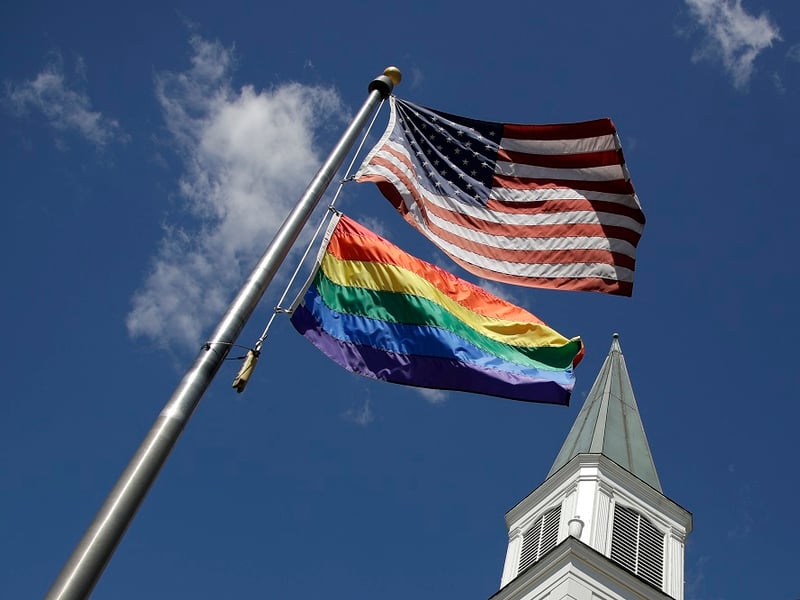
(CN) — A Ninth Circuit panel on Friday grilled the Washington assistant attorney general about whether the state would disavow enforcement of an anti-discrimination law against the Union Gospel Mission of Yakima.
That came after the Christian organization sought an injunction barring the state from enforcing the law against it. The hearing on Friday ended without a formal ruling from the Ninth Circuit — but if the judges’ lines of questioning were any indication, they were receptive to the organization’s arguments that the law infringed on its First Amendment rights.
The Union Gospel Mission of Yakima, a Christian organization in central Washington, first sued Washington Attorney General Bob Ferguson and other state representatives in 2023, arguing its First Amendment rights were being violated under a state anti-discrimination law.
The Washington Law Against Discrimination prohibits religious organizations from exclusively hiring employees of a certain faith unless the position is ministerial. The state Supreme Court in 2021 further narrowed that religious exemption in Woods v. Seattle’s Union Gospel Mission, finding a Christian organization had improperly denied a man a staff attorney position after learning he was in a same-sex relationship.
U.S. District Judge Mary K. Dimke, a Joe Biden appointee, in 2023 dismissed the Yakima mission’s case in lower court, agreeing with the Washington AG that the case was a “veiled attempt to seek appellate review” of the 2021 Woods case.
The court did not have the authority to overturn the decision in that case, Dimke wrote in her decision. Only the United States Supreme Court has the jurisdiction to hear direct appeals from state courts — and the Supreme Court denied the Seattle mission’s petition for writ of certiorari.
The Union Gospel Mission of Yakima operates a homeless shelter, recovery program and thrift store and provides meal services to those in need. The group argued it faced the threat of enforcement after Ferguson’s office opened an investigation into Seattle Pacific University, a religious entity it said had similar hiring practices.
In its opening brief to the appellate court, filed last November, the mission argued it was imperative to only hire employees who agreed with its Christian beliefs. The organization said it expected staff to “abstain from sexual immorality, including adultery, non-married cohabitation, and homosexual conduct.”
The Yakima mission thus urged the Ninth Circuit to find it had standing for an appeal against the state, arguing authorities had not disavowed enforcing the anti-discrimination law against the mission.
“If they stand up here and say ‘We’re not going to enforce this,’ then I don’t have a dog in this fight. If they stand up here and say ‘No, we are,’ or if they don’t answer the question, then I have every reason to be here,” Ryan Tucker, attorney for the Yakima mission, told the panel.
U.S. Circuit Judge Mark Bennett, a Donald Trump appointee, asked the state’s assistant attorney general if the office could disavow enforcement of the law.
Daniel Jeon, assistant attorney general, replied that the office disavowed enforcement with respect to ministerial positions.
“Their statement of faith says that they consider every single employee they have as a minister,” Jeon said, citing the case record. He told the court his office had no intention to investigate the mission.
In the lower court, the mission requested a preliminary injunction to prevent the state from enforcing the anti-discrimination law so it could hire two positions: an IT technician and an operations assistant. Tucker, the mission lawyer, told the Ninth Circuit the group had been needing to fill the positions for more than a year.
In its answering brief, the state argued the mission had not shown that it had ever denied a job to deny someone based on his or her sexual orientation — or even that it had plans to do so.
Still, the mission argued that the attorney general’s investigation into Seattle Pacific University, whose First Amendment challenge to the state’s investigation was partially revived in the Ninth Circuit last month, was enough to prove their organization was at risk of enforcement.
The state argued there were factual differences between the two cases and that the Yakima mission had not met its burden to prove standing. But the Seattle Pacific University case nonetheless looms large over the Yakima mission’s case, U.S. Circuit Judge Anthony Johnstone, a Joe Biden appointee, conceded.
“People have a right to defend themselves at an earlier point than they might [otherwise] because a constitutional right is involved,” U.S. Circuit Judge Milan Smith Jr., a George W. Bush appointee, added.
Overall, the panel appeared skeptical of the state’s argument that despite having no plans to bring enforcement against the mission, it should not have to disavow that option.
“In our recent cases we have talked about, in this exact context, the specific importance of the absence of a disavowal,” Bennett said. “In some ways, the Attorney General has the keys to this litigation in his own pocket.”
Subscribe to our free newsletters
Our weekly newsletter Closing Arguments offers the latest about ongoing trials, major litigation and rulings in courthouses around the U.S. and the world, while the monthly Under the Lights dishes the legal dirt from Hollywood, sports, Big Tech and the arts.