
 Search Articles


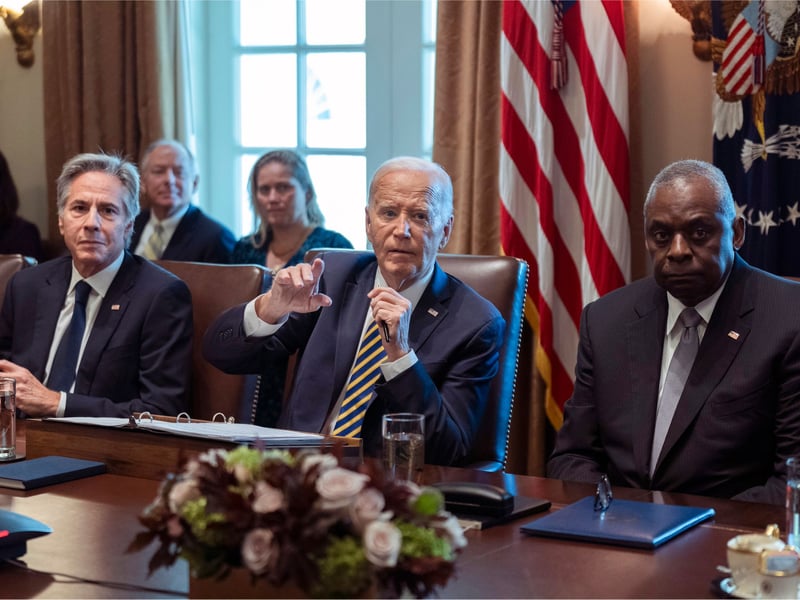
WASHINGTON (CN) — In a move that could save consumers up to $5 billion a year, the Consumer Financial Protection Bureau on Thursday finalized a rule that would clamp down on excessive overdraft fees charged to customers of large banks and credit unions.
The rule caps overdraft fees, which President Biden has described as “exploitative,” at $5 rather than the usual $35 customers are charged. That could save households that pay overdraft fees about $225 per year, the bureau said in a statement announcing the rule.
“For far too long, the largest banks have exploited a legal loophole that has drained billions of dollars from Americans’ deposit accounts,” CFPB Director Rohit Chopra said in the statement. “The CFPB is cracking down on these excessive junk fees and requiring big banks to come clean about the interest rate they’re charging on overdraft loans.”
Such overdraft fees are charged when a bank or credit union covers a transaction because there is not enough money in a person’s account. An overdraft loan works similarly, providing customers a short-term line of credit to cover an overdraw.
The rule requires banks to choose between one of three options when charging for overdrafts. They can cap the fee at $5, limit the fee to an amount that covers costs and losses or disclose the terms of their overdraft loans.
The second option — that is, limiting fees to just costs and losses — is intended to allow banks to offer overdraft as a convenience rather than a “profit center," according the the bureau.
The third option would require banks to treat overdraft loans like other loans, such as credit cards. Consumers would then have the choice to open a line of overdraft credit, allowing them to obtain account-opening disclosures for comparison shopping, receive periodic statements and have the choice to pay automatically or manually.
Thursday’s rule targeted a loophole stemming from the 1968 Truth in Lending Act, CFPB said, that allowed banks to exempt overdraft fees as a finance charge.
In the decades since, the highly profitable overdraft loans have increased consumer costs by the billions, caused tens of millions of consumers to lose access to banking services and resulted in negative credit reporting that has barred them from opening future accounts.
Banking trade groups such as the American Bankers Association decried the rule on Thursday, warning it could backfire. They described the move as overstepping the bureau’s “congressional mandated guardrails.”
The rule could lead banks to stop offering overdraft protections and would make it “significantly harder” for banks to offer such services, Rob Nichols, president and CEO of the association, said in a statement.
“In finalizing the rule, the CFPB is ignoring the strong majority of Americans who have indicated time and again in national surveys that they value and appreciate overdraft protection, and they don’t want it to go away,” Nichols stated.
The rule comes as part of President Joe Biden’s campaign to crackdown on widely unpopular junk fees and improve transparency on charges levied on airline tickets, concert tickets, car rentals, hotels, banking services, credit cards and retirement advice.
Thursday’s rule is set to take effect on Oct. 1, 2025.
Created by Congress following the 2008 financial crisis, the bureau has faced numerous legal challenges to both its rules and its very existence since its creation.
Among those recently challenging it are Elon Musk, the richest man in the world and incoming co-chair of the Department of Government Efficiency.
In November, Musk posted on his social media platform X, commonly referred to as Twitter, calling for an end to the bureau.
“Delete CFPB,” Musk posted. “There are too many duplicative regulatory agencies.”
But the Department of Government Efficiency would be nongovernmental advisory advisory team — and it is unclear whether Musk and co-chair Vivek Ramaswamy would have the authority to make such sweeping changes. As far as the bureau is concerned, it would likely take an act of Congress to “delete” it. That’s a tall task for the narrowly divided House and Senate.
 Follow @Ryan_Knappy
Subscribe to our free newsletters
Our weekly newsletter Closing Arguments offers the latest about ongoing trials, major litigation and rulings in courthouses around the U.S. and the world, while the monthly Under the Lights dishes the legal dirt from Hollywood, sports, Big Tech and the arts.